Property Ownership in Men's Names Prevents Divorce for Women in Pakistan: Insights from a Report

Synopsis
A recent report sheds light on how property registered in husbands' names creates significant obstacles for women seeking divorce in Pakistan, as emphasized by legal experts. The implications of financial control and equity in marital assets are critical in the context of abusive marriages.
Key Takeaways
Property ownership predominantly in men's names creates barriers for women claiming their rights during divorce.
The 'khula' process allows women to initiate divorce without husbands' consent.
Courts have a crucial role in recognizing financial contributions beyond titles.
Financial control often keeps women in abusive marriages.
Recognition of equitable distribution principles can reshape marital dynamics.
Islamabad, April 12 (NationPress) In the context of marital dissolution in Pakistan, whether initiated by the husband or wife, the reality that property is predominantly registered in the husband's name poses a significant barrier for women attempting to assert their rights and recognition within the marriage, as explained by a legal expert and rights advocate.
Rafia Zakaria, writing in the daily Dawn, points out that it is a prevalent practice among married men in the country to maintain financial dominance over assets, ensuring that all marital property is held in their name, even leading to complications during divorce. This predicament intensifies for women entangled in abusive relationships.
Zakaria highlights a relevant case involving Amara Waqas, a former PAF officer who married in 2015. Following tradition, her husband retained control over the assets acquired during their marriage, even post-separation. This included a Suzuki Cultus vehicle, shared household items, and her dowry.
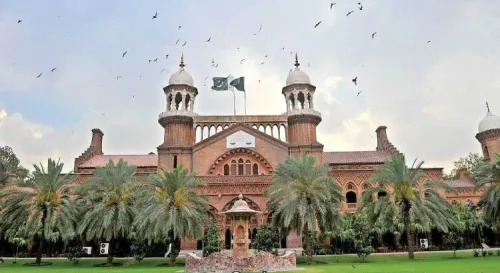
When Waqas sought the return of these possessions, she faced rejection and was told she had no claim to the car since it was registered under her husband's name. After filing for 'khula', she escalated the matter to the Islamabad High Court (IHC) after previous lower court rulings denied her relief regarding the property.
'Khula' is a process in Islamic law enabling a Muslim woman to initiate divorce, typically without her husband’s agreement, by returning the dower (mahr) or offering compensation.
During the recent court proceedings, Waqas aimed to reclaim her share of the property acquired during their marriage, arguing that her financial contribution to the purchase of the Suzuki Cultus entitled her to partial ownership, as noted by Zakaria.
Offering hope to countless women in similar situations, Zakaria emphasizes that Justice Mohsin Akhtar Kayani of the IHC recognized the religious notion of marriage as a partnership. In his judgment, he stated that while husbands are generally the financial supporters, wives contribute significantly in non-monetary ways.
Justice Kayani referenced Surah Baqarah, which mandates that husbands provide appropriate compensation, underscoring that just compensation is a religious obligation. He also cited another verse affirming women’s rights to fair compensation in Islam.
Zakaria noted that the anxiety over financial insecurity keeps many women trapped in harmful marriages.
She pointed out that Pakistani courts have historically not defined what constitutes just compensation beyond the haq meher outlined in the nikahnama. “If marriage is a partnership, it follows that assets should be divided fairly between both parties. This principle of equitable distribution is upheld in several other Muslim nations, including Malaysia, Indonesia, and Turkiye, where courts consider more than just formal ownership,” she remarked.
In Waqas' situation, the Suzuki Cultus became the focal dispute. Despite being registered in the husband’s name, the court acknowledged the wife's financial contribution and her role in domestic support, leading to the conclusion that title alone should not dictate ownership, suggesting the need for further examination.
According to Zakaria, the court's ruling regarding asset distribution in divorce has broader implications for marital dynamics across Pakistan. “In numerous cases, men intimidate their wives with threats of divorce and subsequent financial ruin, arguing that they possess everything because it’s ‘in their name’, expecting courts to uphold this view,” she articulated.
Furthermore, Zakaria stressed that the IHC's recognition of contributions beyond mere title should prompt financially abusive husbands to reconsider their positions, as mere ownership cannot be the sole criterion for asset distribution in a divorce.
Point of View
It is essential to recognize the systemic issues surrounding property rights in marital relationships in Pakistan. The report underscores the need for legal reforms that ensure equitable asset distribution, empowering women to assert their rights and escape abusive situations without fear of financial destitution.
NationPress
13 Oct 2026
Frequently Asked Questions
What is 'khula' in Islamic law?
'Khula' is a legal process in Islamic law that allows a Muslim woman to initiate divorce, usually without her husband's consent, by returning the dower or offering compensation.
How can property disputes affect divorce proceedings?
Property disputes can create significant obstacles for women in divorce proceedings, especially when assets are primarily registered in the husband's name, limiting their ability to claim their rights.
What role does the court play in asset distribution during divorce?
The court assesses contributions made by both parties during the marriage to ensure fair asset distribution, regardless of the formal ownership of property.
What are the implications of financial control in marriages?
Financial control can trap individuals, particularly women, in abusive marriages due to fear of economic insecurity and lack of access to shared assets.
How do other Muslim countries handle property distribution in divorce?
Many Muslim countries, such as Malaysia and Turkiye, employ equitable distribution principles that consider both parties' contributions during marriage, beyond just ownership titles.