Pakistan's honour killing crisis: Women's rights failing on every front

Synopsis
Gulaan Bharo said she knew she would be killed — and she was. Her murder by her husband on 2 May is the latest indictment of Pakistan's broken justice system, where FIRs go unregistered, judges lose control of courtrooms, and Qisas and Diyat settlements let perpetrators walk free. Analysts say the legal framework exists on paper; the will to enforce it does not.
Key Takeaways
Gulaan Bharo , 25 , was killed by her husband on 2 May in an 'honour' killing; she had predicted her own death.
Bharo was a mother of two children and had initially sought shelter before her family persuaded her to return.
Analyst Mohammed Sarwar Khan says Pakistan's legal framework is adequate on paper but enforcement and deterrence remain critically weak.
Systemic failures cited include refusal to register FIRs, delays, settlements under Qisas and Diyat laws, and judicial leniency on honour crimes.
District court judges are described as lacking control over their own proceedings, with no accountability for repeated weak judgments.
Critics argue patriarchal social values and institutional dysfunction are deeply intertwined, making reform structurally difficult.
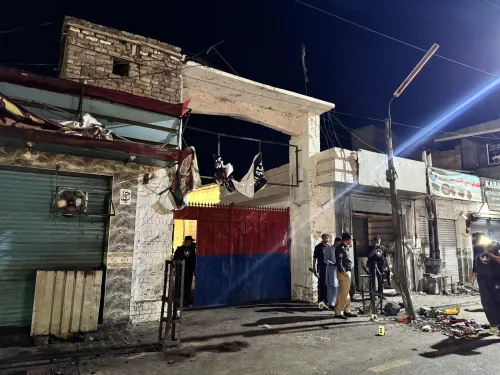
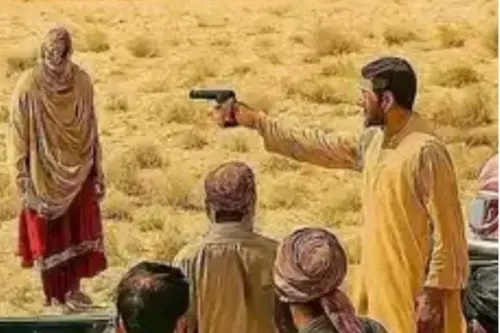
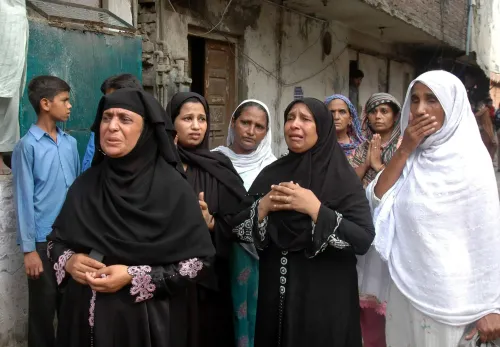
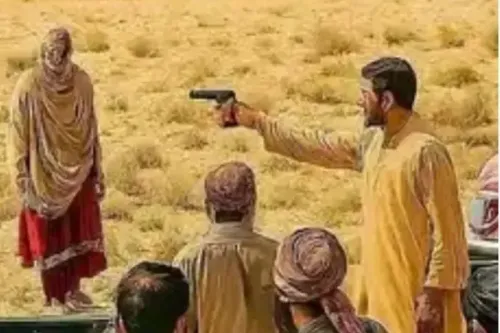
Pakistan is systematically failing to uphold its constitutional and moral obligations toward women, according to local media analysis published amid the brutal killing of Gulaan Bharo, a 25-year-old mother of two who was murdered by her husband on 2 May in what authorities have categorised as an 'honour' killing. The case has reignited scrutiny of Pakistan's deeply entrenched gender-based violence crisis and the institutional failures that allow it to persist.
Gulaan Bharo's Killing and Its Warning Signs
Bharo's death was not unforeseen — it was foretold by the victim herself. In a chilling statement reported by Dawn, she had said: 'I know I will be killed. I am a mother of two children, but for the sake of my father's dignity, I will sacrifice myself and go back to live with him.'
According to reports, Bharo had initially refused to return to her family and had requested placement in a shelter. Her family, however, persuaded her otherwise. She was killed shortly after. Her case adds her name to a list of thousands of Pakistani women killed by men who are, by social contract, meant to protect them.
Legal Framework Exists — Enforcement Does Not
Analyst Mohammed Sarwar Khan, writing in a Pakistani publication, argues that Pakistan's legal architecture for addressing gender-based violence is, on paper, adequate — but enforcement and deterrence remain critically weak. 'On paper, the legal framework for dealing with such crimes seems adequate to punish the offender, yet based on the incidence of gender-based violence, enforcement and deterrence are still problematic,' he wrote.
Khan points to a systemic pattern of failure: refusals to register First Information Reports (FIRs), prolonged delays, settlements reached under the Qisas and Diyat laws that effectively allow perpetrators to escape punishment, and a judicial culture that goes soft on so-called 'honour'-related crimes. 'There is, consequently, an indecent litany of such offences and systemic failures,' he noted.
Judiciary and Parliament Under Fire
The critique extends beyond law enforcement to the legislature and the courts. According to Khan, both parliament and the judiciary have failed to clearly define the chain of responsibility for protecting women across different stages of the criminal justice process. He also flagged the absence of a legal doctrine of operational autonomy in policing, which he argues is essential for impartial justice.
At the district court level, the situation is described as particularly dire. 'In the district courts, judges are not in control of their courtrooms, nor the judicial process, which is mired by adjournments, delays, escalating costs, lack of information, tactical abuse of process,' Khan said. He further noted that there is 'no meaningful check or consequence for a judge repeatedly issuing weak judgments.'
Patriarchal Culture as the Root Problem
Khan argues that institutional dysfunction cannot be separated from the broader social context. The culture of patriarchy, he contends, is deeply entwined with the inefficiency of state institutions — each reinforcing the other. 'The system is so flawed and out of sync with society and its justice needs, and there is no justification for doggedly persisting with it,' he said.
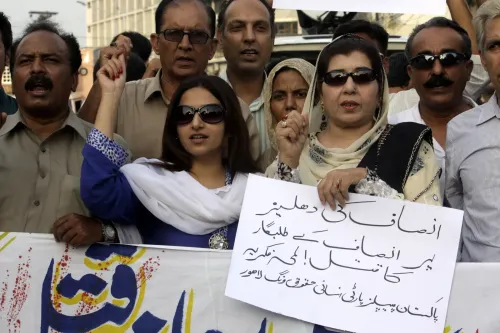
This comes amid persistent documentation by human rights organisations of Pakistan's gender-based violence epidemic, with thousands of women reportedly killed in the name of 'honour' each year, the majority of cases going unpunished. As pressure mounts from civil society and international observers, the question is whether Pakistan's institutions have the political will to break the cycle.
Point of View
Which allow blood money settlements in violent crimes, have long functioned as a structural escape hatch for perpetrators of gender-based violence. What is striking in Khan's analysis is the breadth of failure: police, prosecutors, district judges, parliament, and social norms are all implicated simultaneously. Piecemeal reform of one layer without the others has historically changed nothing. The deeper question mainstream coverage sidesteps is whether Pakistan's political establishment — which relies on conservative rural constituencies where patriarchal norms are electorally useful — has any real incentive to dismantle the very system that Bharo's death exposes.
NationPress
22 Oct 2026
Frequently Asked Questions
Who was Gulaan Bharo and how did she die?
Gulaan Bharo was a 25-year-old Pakistani woman and mother of two who was killed by her husband on 2 May in what has been classified as an 'honour' killing. She had reportedly predicted her own death, stating she would sacrifice herself for her father's dignity, and had initially sought shelter before her family persuaded her to return home.
Why is Pakistan's legal framework considered inadequate for protecting women?
Analysts argue that while Pakistan's laws on paper provide for punishment of gender-based violence, enforcement is deeply flawed. Key failures include refusals to register FIRs, judicial delays, settlements under Qisas and Diyat laws that let perpetrators avoid prison, and a lack of accountability for judges who issue lenient rulings in honour crime cases.
What are Qisas and Diyat laws and why are they controversial?
Qisas and Diyat are provisions in Pakistani law rooted in Islamic jurisprudence that allow for blood money settlements between the victim's family and the perpetrator in violent crime cases. Critics argue these laws are routinely exploited in honour killing cases, enabling perpetrators to escape criminal punishment through financial settlements with complicit family members.
What systemic reforms have been called for in Pakistan?
Analyst Mohammed Sarwar Khan has called for parliament to clearly define responsibility for protection across the criminal justice process, establish a legal doctrine of operational autonomy in policing, and introduce meaningful accountability for judges who repeatedly issue weak judgments in gender-based violence cases.
How widespread is honour killing in Pakistan?
According to human rights reports, thousands of women are killed in the name of 'honour' in Pakistan each year, with the majority of cases going unpunished. Gulaan Bharo's case is considered emblematic of a broader epidemic of gender-based violence enabled by institutional failure and entrenched patriarchal values.