Honour killings in Pakistan: 470 women killed in 2025, Sindh worst hit
Synopsis
Khalida Chandio's killing in Sindh — filmed and shared on social media — is one of at least 470 'honour' killings recorded across Pakistan in 2025. A senior police officer's own testimony lays bare the structural reality: in these cases, every person in the room — accuser, accused, elder, investigator — is a man shaped by the same patriarchal order.
Key Takeaways
Khalida Chandio , 20 , was shot dead in Sindh , Pakistan, after being labelled kari ; her killing was filmed and circulated on social media.
At least 470 'honour' killings were recorded across Pakistan in 2025 , according to HRCP police figures.
At least 112 women were killed in 'honour' killings in Sindh alone between 1 January and 20 June 2025 .
Rights groups warn the true toll is higher, with many deaths in remote districts misclassified as suicides or accidents.
Three suspects — including Khalida's grandfather and maternal uncle — are in custody; the case is headed to trial.
Deputy Inspector General Asad Raza confirmed the kari label is routinely used to settle land and property disputes, not as moral judgement.
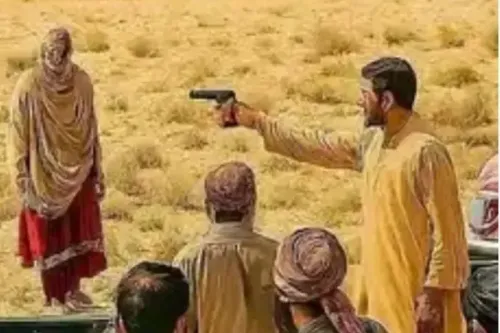
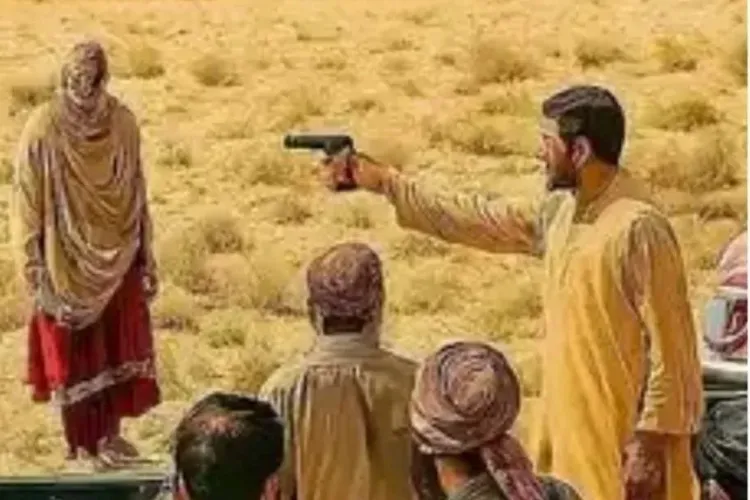
The killing of Khalida Chandio, a 20-year-old woman from Sindh, Pakistan's southern province, has drawn renewed attention to a deeply entrenched pattern of gender-based violence in the country, according to a report by The Guardian. The case, which was filmed and circulated widely on social media, is one of at least 470 such killings recorded across Pakistan in 2025, according to figures cited by the Human Rights Commission of Pakistan (HRCP).
The Case of Khalida Chandio
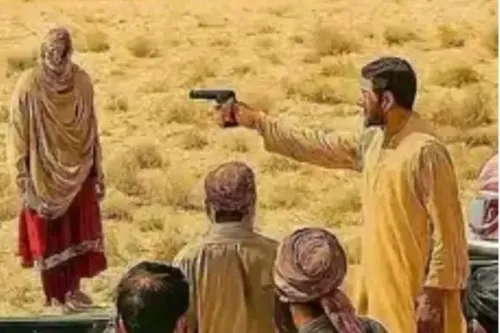
Khalida was shot dead in her village in Sindh after being declared kari — a Sindhi term used to accuse women of illicit relationships, frequently invoked to justify so-called 'honour' killings. According to investigators, the fatal shooting was carried out by her grandfather and maternal uncle on the orders of a tribal elder. Three suspects have been taken into custody, with one more still at large; the case is scheduled to go to trial.
Her mother, Nabul, recounted how Khalida was taken from their home at night and killed just a few hundred metres away. 'Her screams still echo in my ears. We couldn't save her,' Nabul was quoted as saying. Her father, Mohammad Ramzan, said: 'If they believed my daughter had done something wrong, they should have handed her over to the police. She would still be alive today. She could have been with us, or living in a shelter home.'
Scale of the Crisis in Sindh and Beyond
According to the HRCP and the women's rights organisation Sindh Suhai Sath, at least 112 women fell victim to 'honour' killings in Sindh alone between 1 January and 20 June 2025. Police figures cited by HRCP recorded at least 126 such killings in Sindh across the full year of 2025, out of 470 nationally. Rights groups warn that the actual toll is likely higher, particularly in remote districts where deaths may be misclassified as suicides or accidents or go unreported altogether.
Patriarchy as the Root Cause
Asad Raza, Deputy Inspector General of Police and a former district police chief in Ghotki, Kashmore, and Jacobabad in Sindh, told The Guardian that 'honour' killings in Pakistan are driven by deeply entrenched patriarchal power structures in which women are often treated as the 'property of male relatives.' He noted that the kari label continues to be weaponised to settle disputes over land, inheritance, or tribal rivalries — not as a genuine moral judgement.
'A woman may be declared kari not because of any evidence, but because it provides a pretext to kill her and seize property or extract compensation,' Raza was quoted as saying. He further highlighted how the same patriarchal attitudes pervade criminal investigations: 'The victim is a woman, the accused is usually a man, those making the accusation are men, community elders deciding the dispute are men, and often the investigating officer is also a man raised within the same social mindset.'
Why Accountability Remains Elusive
This comes amid longstanding concerns from human rights organisations that Pakistan's legal and law enforcement systems are structurally ill-equipped to address 'honour' killings. The systemic male dominance at every stage — from accusation to investigation — means cases are frequently buried, misclassified, or resolved through informal tribal mechanisms that prioritise family reputation over justice. Notably, Khalida's case drew rare public scrutiny only because the killing was filmed and shared on social media, raising questions about how many similar cases go entirely unnoticed.
Point of View
The problem is not a gap in law but a collapse of institutional will. Pakistan has amended its penal code on honour killings before; the amendments have not moved the numbers. Khalida Chandio's case became visible only because it was filmed. The cases that are not filmed do not become statistics — they become silences.
NationPress
27 Oct 2026
Frequently Asked Questions
What happened to Khalida Chandio in Pakistan?
Khalida Chandio, a 20-year-old woman from Sindh, Pakistan, was shot dead after being declared kari — a label used to accuse women of illicit relationships. Her grandfather and maternal uncle allegedly carried out the killing on the orders of a tribal elder; three suspects are in custody and the case is headed to trial.
How many honour killings were recorded in Pakistan in 2025?
Police figures cited by the Human Rights Commission of Pakistan (HRCP) recorded at least 470 'honour' killings across Pakistan in 2025, including at least 126 in Sindh. Rights groups believe the actual number is higher, as many deaths in remote areas go unreported or are misclassified.
What is the kari label and how is it misused?
Kari is a Sindhi term used to accuse women of illicit relationships. According to Deputy Inspector General Asad Raza, the label is frequently invoked not on the basis of evidence, but as a pretext to kill a woman and seize property or resolve land and inheritance disputes.
Why do honour killings remain so widespread in Pakistan despite laws against them?
Senior police officials acknowledge that patriarchal attitudes dominate every stage of the process — from accusation to investigation — because accusers, elders, and investigators are typically men raised within the same social framework. This structural bias means cases are often buried or resolved through informal tribal mechanisms.
Where in Pakistan do most honour killings occur?
Sindh is among the worst-affected provinces, with at least 112 killings recorded between 1 January and 20 June 2025 alone. Rights organisations note that remote districts are particularly under-reported, as deaths may be misclassified as suicides or accidents.