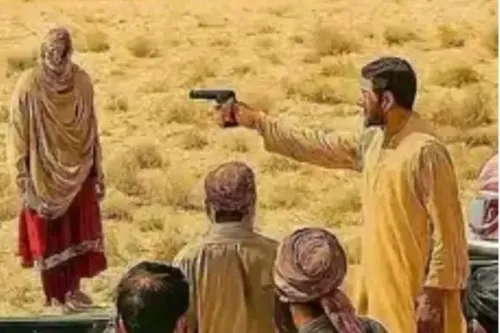
Honour killing in Karachi: Young couple shot dead after court marriage
Synopsis
Nadia and Najeebullah were killed just hours after a Karachi court validated their marriage — the very legal protection that was supposed to shield them. With Sindh recording zero convictions for honour killings despite documented cases, their deaths expose the lethal gap between Pakistan's courts and its streets.
Key Takeaways
Nadia (20) and Najeebullah (25) were shot dead in Malir, Karachi on Monday in an apparent honour killing.
The couple had just left a court where their marriage was legally upheld and a kidnapping case against them was dismissed.
Armed men reportedly tracked their vehicle from the court before opening fire; two others in the taxi escaped.
Pakistan's SSDO data shows Punjab recorded 225 honour killing cases with only 2 convictions ; Sindh recorded cases with zero convictions .
Women account for 90% of honour killing victims, according to rights activist Imran Takkar .
SSDO Executive Director Syed Kausar Abbas has called for immediate reforms in police investigations, legal procedures, and trial timelines.
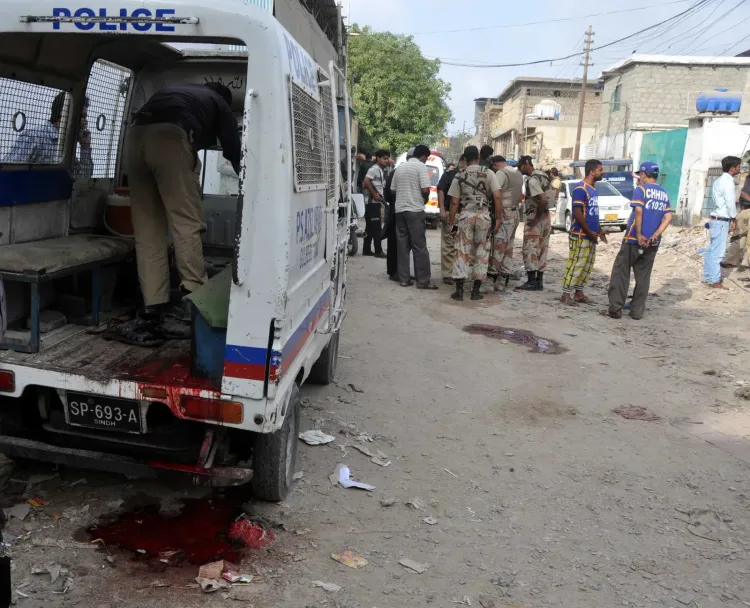
A young couple who had married of their own choice were shot dead by unidentified gunmen in the Malir area of Karachi, Pakistan, in what police have described as an apparent honour killing. Nadia, 20, and Najeebullah, 25, were killed on Monday when armed assailants opened fire on their vehicle, local media reported.
How the Attack Unfolded
According to police, the couple had appeared before a court in Malir earlier that day and submitted their marriage certificate. The court disposed of a kidnapping case that Nadia's father, Aslam, had filed on 19 May after the two wed without family consent. Following the hearing, Najeebullah's father, who had been arrested in connection with the case, was also released.
The couple were subsequently travelling toward the Nadra office in Saudabad — reportedly en route to Hyderabad — when their taxi came under attack. Police said armed men had been tracking the vehicle from the moment it left the court premises. Two other occupants, including the driver, managed to flee during the attack.
A Pattern of Impunity
This incident is part of a deeply entrenched pattern of honour killings across Pakistan, where convictions remain rare despite the scale of reported cases. A recent report by the Sustainable Social Development Organisation (SSDO), supported by official records and international studies, found that weak investigations, judicial delays, and social pressure continue to obstruct justice.
According to the SSDO data, Punjab recorded the highest number of incidents — 225 honour killing cases — yet secured only two convictions. Khyber Pakhtunkhwa reported 134 cases with just two convictions. Sindh, where Karachi is located, documented multiple incidents but recorded no convictions. Balochistan reported 32 cases and obtained only one conviction.
Voices on the Crisis
Social activist Imran Takkar, who works on women's rights, noted that women account for 90 per cent of honour killing victims. He said, 'Women are already considered a weak and oppressed segment of society, and families often withdraw in such cases. If the police builds stronger cases, investigations are conducted in an improved manner, and prosecution plays its role, harsher punishments are possible.'
SSDO Executive Director Syed Kausar Abbas stated that the extremely low conviction rate demonstrates that the existing system in Pakistan has not been able to provide effective protection and timely justice to victims. Abbas stressed that immediate reforms are necessary for strengthening police investigations, improving legal procedures, and ensuring speedy trials.
Systemic Failures Behind the Numbers
A report in The Express Tribune Magazine noted: 'Every now and then, some isolated case of honour killings makes its way to the media. However, beyond individual tragedies lies a bleak national picture, where family forgiveness, judicial delays, and weaknesses in law enforcement allow innocents to continue being killed in the name of honour.'
This comes amid broader concerns raised in a February report that flagged honour killings as a continuing and serious human rights issue in Pakistan, with reported incidents remaining high and conviction rates critically low. The killing of Nadia and Najeebullah — just hours after their marriage was legally upheld by a court — underscores the gap between judicial process and ground-level enforcement that activists have long warned about.
Point of View
Submitted their marriage certificate, and secured a judicial dismissal of the case against them. None of it saved them. Pakistan's honour killing crisis is sustained not by the absence of law but by the near-total collapse of enforcement and prosecution, as the SSDO data makes stark. A national conviction rate that barely reaches single digits across thousands of documented cases is not a legal system functioning under strain — it is one that has effectively normalised impunity. Until police investigations are insulated from social and familial pressure, and until prosecutors are held to account for case outcomes, court orders will remain paper shields.
NationPress
12 Oct 2026
Frequently Asked Questions
What happened to the couple shot dead in Karachi?
Nadia, 20, and Najeebullah, 25, were shot dead by unidentified gunmen in Malir, Karachi, on Monday in what police have described as an apparent honour killing. The attack occurred hours after a court upheld their marriage and dismissed a kidnapping case filed by Nadia's father.
Why was a kidnapping case filed against the couple?
Nadia's father, Aslam, filed a kidnapping case at a police station on 19 May after the couple married of their own choice without family consent. The case was disposed of by a Malir court on the day of the attack, after the couple submitted their marriage certificate.
How low is Pakistan's conviction rate for honour killings?
According to SSDO data, conviction rates are critically low across all provinces. Punjab reported 225 honour killing cases with only two convictions; Khyber Pakhtunkhwa reported 134 cases with two convictions; Sindh recorded cases with zero convictions; and Balochistan reported 32 cases with one conviction.
Who are the key voices calling for reform on honour killings in Pakistan?
Social activist Imran Takkar, who works on women's rights, and SSDO Executive Director Syed Kausar Abbas have both called for stronger police investigations, improved legal procedures, and speedier trials to address the near-total impunity that honour killing perpetrators currently enjoy.
What share of honour killing victims in Pakistan are women?
According to rights activist Imran Takkar, women account for 90 per cent of honour killing victims in Pakistan. He has attributed the low conviction rate partly to families withdrawing cases under social pressure.