Punjab BJP slams AAP: FIRs against farmers no fix for stubble burning
Synopsis
Punjab BJP's Avinash Rai Khanna has called out the AAP government's FIR-and-fine approach to stubble burning as counterproductive, demanding that small and marginal farmers get rental access to Happy Seeders and Super Seeders instead. The statement lands just as a CAQM team reviews ground-level compliance in Sangrur, Patiala, and Malerkotla — highlighting the widening gap between enforcement targets and farm-level reality.
Key Takeaways
Former Punjab BJP President Avinash Rai Khanna on 2 November condemned the AAP government's use of FIRs , fines, and 'red entries' against farmers for stubble burning.
Khanna demanded the government provide balers, Happy Seeders, Super Seeders , subsidies, diesel, and financial assistance at the village level.
He urged dialogue with farmers' organisations rather than police action, citing rising cultivation costs and natural calamities.
A CAQM high-level team reviewed paddy straw management in Sangrur , Patiala , and Malerkotla on 1 November , stressing that on-ground actions must match committed targets.
A Malerkotla ex-situ facility uses paddy straw as boiler fuel and expects to process approximately 17,000 MT annually.
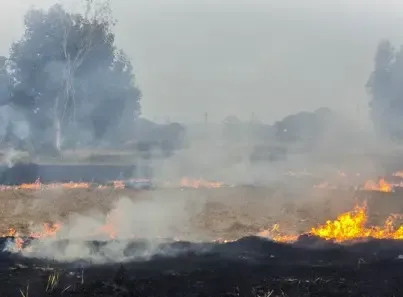
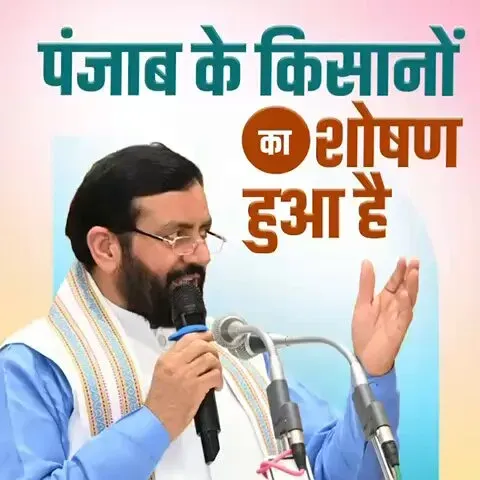
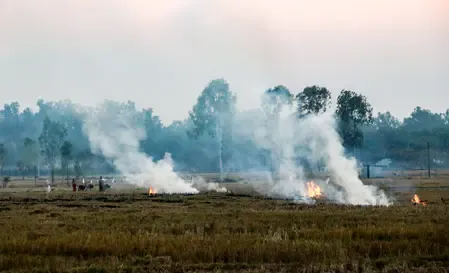
Former Punjab Bharatiya Janata Party (BJP) President Avinash Rai Khanna on Monday, 2 November sharply criticised the Aam Aadmi Party (AAP) government in Punjab over its handling of rising stubble burning incidents, asserting that registering FIRs against farmers, levying fines, and making 'red entries' in land records 'is in no way a solution to the problem.' His remarks come as the state grapples with a fresh wave of farm fires that are significantly worsening air quality across northern India.
Khanna's Key Demands
Khanna, in a statement issued from Chandigarh, called on the AAP government to shift its approach from punitive action to farmer-centric support. He said the state administration must ensure that farmers are provided with 'the necessary machinery, subsidies, diesel and financial assistance on time for proper stubble management.'
'Adequate arrangements should be made at the village level to provide small and marginal farmers with access to balers, Happy Seeders, Super Seeders and other agricultural equipment on a rental basis,' Khanna said.
Farmers Already Under Pressure, Says BJP
The BJP leader argued that imposing additional financial burdens on farmers — already grappling with rising cultivation costs, mounting agricultural expenses, and recurring natural calamities — is 'unfortunate.' He urged the government to hold structured discussions with farmers' organisations to arrive at a practical, ground-level solution rather than resorting to police action.
Khanna's criticism reflects a broader frustration among farm communities and opposition parties that enforcement-first policies have repeatedly failed to curb stubble burning, which resurfaces every post-harvest season across Punjab and Haryana.
CAQM Reviews Stubble Management in Punjab Districts
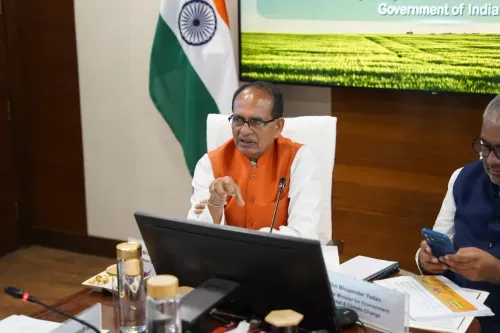
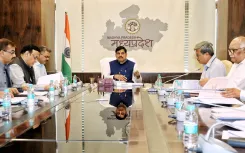
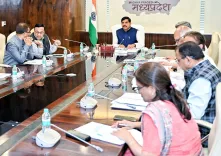
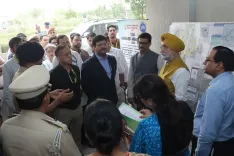
A day before Khanna's statement, a high-level team from the Commission for Air Quality Management in NCR and Adjoining Areas (CAQM) conducted an on-ground review of paddy straw management measures in Sangrur, Patiala, and Malerkotla districts of Punjab.
CAQM officials directed concerned departments to continue making 'concerted efforts' with close monitoring of stubble burning incidents. The team stressed that on-ground actions must match the targets committed by district officers, and advised ensuring 'effective paddy stubble management.'
Ex-Situ Utilisation: A Partial Fix
During the review, the CAQM team visited an ex-situ paddy stubble utilisation facility — a duplex board and paper-making unit in Malerkotla — which uses paddy straw as boiler fuel. Industry representatives informed the visiting team that approximately 17,000 metric tonnes (MT) of paddy straw would be utilised annually in its boiler furnace. While such industrial units offer a promising diversion channel, experts note that their combined capacity remains far short of the millions of tonnes of paddy straw generated each season.
What Happens Next
With air quality in the National Capital Region deteriorating as the winter season sets in, pressure on the Punjab government to deliver tangible results is intensifying. The political battle between the BJP and the AAP over farmer welfare framing is likely to sharpen, even as the CAQM pushes for stricter compliance at the district level. Whether the government pivots toward a subsidy-and-machinery model — as demanded by the opposition — or continues its enforcement approach remains to be seen.
Point of View
Already partly in place through the central government's crop residue management scheme, have not moved the needle. The real bottleneck is last-mile delivery: equipment reaching small farmers in the narrow post-harvest window before the next sowing cycle begins. Khanna's demand for village-level rental hubs is the right ask, but without a logistics framework and a transparent grievance redress mechanism, it risks becoming another headline without harvest. The CAQM's own review — noting that on-ground actions must match targets — implicitly concedes that enforcement has been uneven, which actually strengthens the opposition's case for a support-first model.
NationPress
2 Nov 2026
Frequently Asked Questions
Why is Punjab BJP criticising the AAP government over stubble burning?
Punjab BJP leader Avinash Rai Khanna has criticised the AAP government for registering FIRs against farmers, imposing fines, and making red entries in land records over stubble burning, calling these measures counterproductive. He argues the government should instead provide machinery, subsidies, and financial assistance to help farmers manage paddy straw without burning it.
What solutions has the BJP proposed for stubble burning in Punjab?
The BJP has called for village-level rental hubs offering access to balers, Happy Seeders, Super Seeders, and other equipment for small and marginal farmers. Khanna has also demanded timely provision of diesel, subsidies, and financial support, along with structured dialogue between the government and farmers' organisations.
What is the CAQM and what did it do in Punjab?
The Commission for Air Quality Management in NCR and Adjoining Areas (CAQM) is a statutory body overseeing air pollution control in and around Delhi. On 1 November, a high-level CAQM team visited Sangrur, Patiala, and Malerkotla in Punjab to review paddy straw management measures and directed departments to ensure on-ground actions match committed targets.
What is ex-situ paddy straw utilisation and how much straw is being processed?
Ex-situ utilisation means using paddy straw away from the farm field, such as in industrial boilers or paper mills. A duplex board and paper-making unit in Malerkotla visited by the CAQM team reportedly processes approximately 17,000 MT of paddy straw annually as boiler fuel.
Why do Punjab farmers burn stubble despite bans and penalties?
Farmers burn paddy stubble primarily because the window between rice harvest and the next wheat sowing is very short — often less than three weeks — leaving little time for mechanical removal. The cost and availability of alternatives like Happy Seeders remain barriers for small and marginal farmers, which is why critics argue that enforcement alone without adequate support does not work.