Is There No Tolerance for Poor Quality in Rural Works, Gujarat CM Tells Sarpanches?
Synopsis
In a significant address, Gujarat CM Bhupendra Patel emphasized the importance of maintaining high-quality standards in rural development. He urged sarpanches to ensure accountability and transparency in public-interest projects, highlighting the critical role of villages in national progress.
Key Takeaways
Quality standards in rural development are non-negotiable.
Accountability and workmanship must be prioritized.
Village leaders play a crucial role in ensuring government schemes reach beneficiaries.
Engagement of youth and technology is encouraged for effective service delivery.
Transparency and community participation are vital for development.
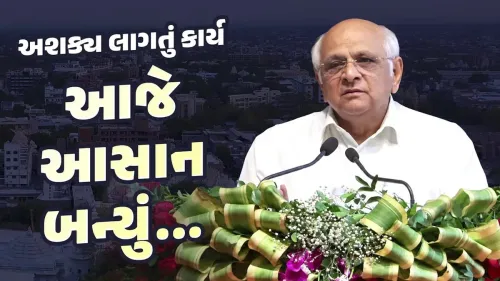
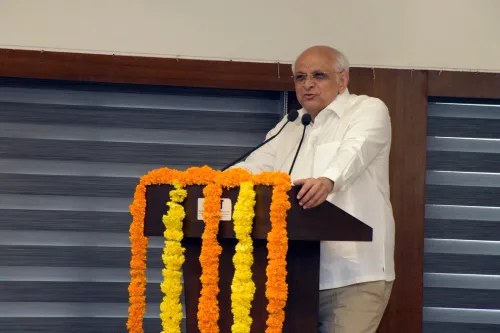
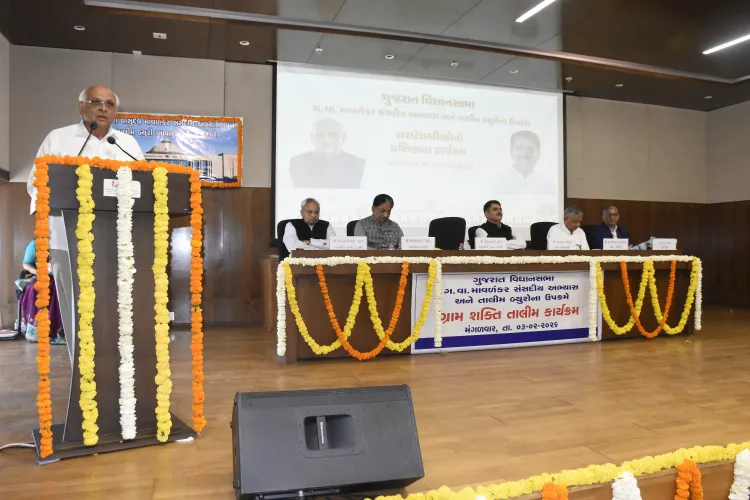
Gandhinagar, Feb 3 (NationPress) Chief Minister Bhupendra Patel announced on Tuesday that there will be no compromise on quality standards in public-interest initiatives at the village level. He emphasized that accountability and craftsmanship should be at the heart of rural development projects throughout Gujarat.
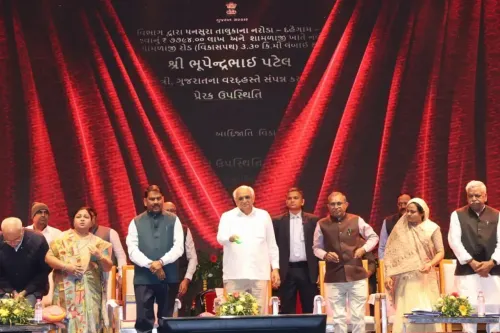
The remarks were made during the launch of the ‘Gram Shakti Training Programme’ at the Gujarat Legislative Assembly Secretariat, organized by the Ganesh Vasudev Mavalankar Bureau of Parliamentary Studies and Training.
Over 260 sarpanches from various villages in Banaskantha, Vav–Tharad, Mehsana, Patan, Sabarkantha, and Aravalli districts of North Gujarat participated in this event.
In his address, Patel remarked that villages are the backbone of national development, asserting that rural projects must be executed with transparency, quality, and responsibility.
“We will not tolerate any decline in the quality of public-interest initiatives,” he stated, adding that genuine national progress can only be realized when development reaches every individual in each village.
Commenting on the Union Budget presented under Prime Minister Narendra Modi, he noted that it was designed with a focus on duty and placed significant emphasis on rural development.
Patel urged the sarpanches, as village leaders, to uphold their duties by adhering to the principle of “Sabka Saath, Sabka Vikas, Sabka Vishwas, and Sabka Prayas” to guarantee that government schemes and services benefit all eligible individuals.
He also called for effective utilization of grants aiming for 100% targets through the Prime Minister’s saturation approach.
Encouraging the sarpanches to formulate systematic development strategies, he advocated for involving youth in village growth and leveraging technology to enhance civic service delivery.
Patel assured support from the state government, encouraging sarpanches to work fearlessly and earnestly to develop villages, which in turn will contribute to a developed Gujarat and a prosperous India.
Assembly Speaker Shankar Chaudhary highlighted that implementing the Prime Minister’s vision of ‘Gram Sachivalaya’ at the grassroots level is the sarpanches' duty.
He pointed out that development extends beyond physical infrastructure, relying heavily on dialogue and community involvement.
He mentioned that improved communication between gram panchayats and Gram Sabhas would mitigate conflicts and fortify democratic foundations.
Panchayat and Rural Housing Minister Rushikesh Patel stated that sarpanches are empowered to allocate a substantial portion of panchayat grants for village development plans.
He noted that all villages in Gujarat have been connected by at least two roads under the Mukhyamantri Gram Sadak Yojana and that this training program will offer practical insights into village governance.
Rural Development Minister Kunvarji Bavaliya mentioned that funds from both central and state schemes are being directly transferred to gram panchayat accounts, indicating that proper use of these funds could bring about significant changes in villages.
He also referenced the increased assistance under the Pradhan Mantri Awas Yojana and support for sanitation improvements through MGNREGA.
Experts at the event briefed sarpanches on the role of panchayats in parliamentary democracy, the VB G-RAM-G rural development scheme, panchayat accounting regulations, and the rights and responsibilities of sarpanches in Gram Sabhas.
Point of View
The emphasis on quality and accountability in rural development by Gujarat's CM is a commendable approach. It aligns with the broader goal of national development, ensuring that the benefits reach the grassroots level.
NationPress
28 Sept 2026
Frequently Asked Questions
What did Gujarat CM Bhupendra Patel emphasize about rural development?
He emphasized that there will be no compromise on quality standards in public-interest works at the village level, highlighting accountability and craftsmanship.
Who attended the 'Gram Shakti Training Programme'?
Over 260 sarpanches from various villages in North Gujarat attended the program.
What principle did Patel urge sarpanches to follow?
He urged them to adhere to the principle of 'Sabka Saath, Sabka Vikas, Sabka Vishwas, and Sabka Prayas'.
What is the Mukhyamantri Gram Sadak Yojana?
It is a scheme that connects villages with at least two roads, improving rural infrastructure.
How will the training program benefit sarpanches?
It will provide practical guidance on village administration and development strategies.