Vice President Radhakrishnan: India seeks power so no nation can dictate to us
Synopsis
Vice President Radhakrishnan told senior military and civil officers at the National Defence College that India's quest for global power is not about dominance — it is about ensuring no foreign nation can ever impose its will on India. Anchoring his address in Viksit Bharat 2047 and constitutional values, he laid out five strategic priorities and called for deeper global cooperation on terrorism, cyber threats and climate change.
Key Takeaways
Radhakrishnan addressed the 66th NDC course in New Delhi on 12 October 2026 .
He said India aims to be the world's most powerful nation to ensure no country can dictate terms to it — not to dominate others.
He cited Viksit Bharat @ 2047 as the defining national objective guiding long-term strategy.
Five national priorities outlined: sovereignty, democratic character, strategic objectives, secure growth environment, and international peace.
He called for global cooperation on terrorism, cyber threats, pandemics, climate change and transnational crime.
The course includes 122 participants , of whom 41 are officers from friendly foreign nations.
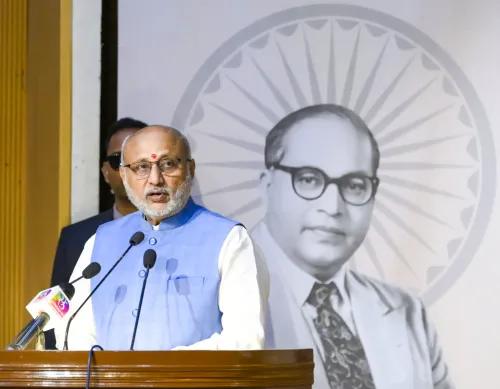
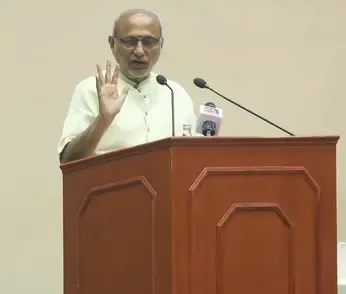
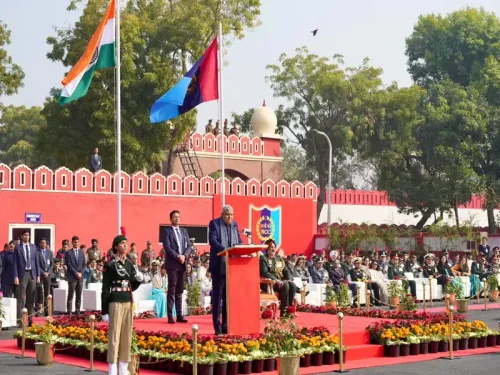
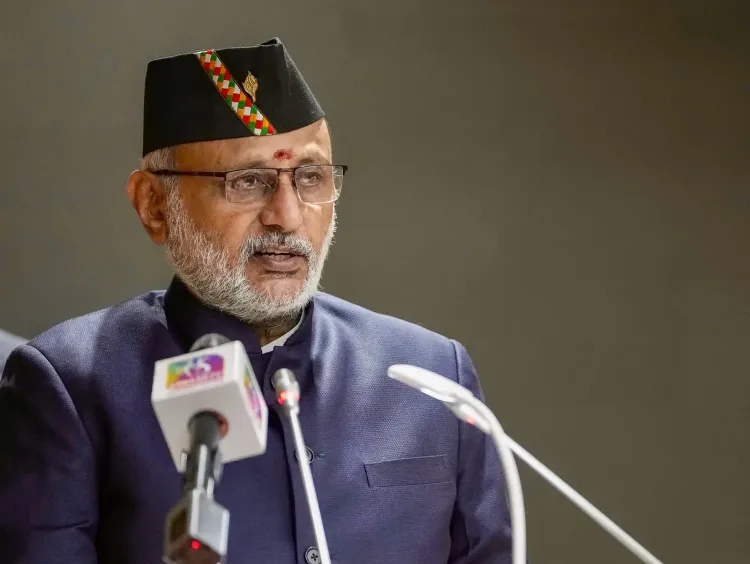
Vice President C. P. Radhakrishnan on Monday, 12 October 2026, declared that India's ambition to become the world's most powerful nation is rooted not in dominance but in self-determination — ensuring that no foreign power can ever dictate terms to New Delhi. He made the remarks while addressing participants of the 66th Course of the National Defence College (NDC) in New Delhi on the theme 'India's Core Values, National Interests and National Objectives'.
The Core Message on National Power
'National strategy must translate national purpose into action and national intent into tangible outcomes,' Radhakrishnan said, framing India's pursuit of strategic strength as a defensive and principled endeavour rather than an expansionist one. He added that every nation's path to its goals is shaped by what that nation fundamentally stands for.
Radhakrishnan underscored that every sovereign nation — big or small — deserves equal respect and that no country should encroach upon another's territorial boundaries, signalling India's commitment to multilateralism even as it builds strategic heft.
Viksit Bharat 2047 as the Strategic Anchor
The Vice President invoked Viksit Bharat @ 2047 — India's overarching development vision for the centenary of its independence — as the defining national objective around which long-term strategy must be organised. He stressed the importance of aligning this vision with available resources, sound policy choices and clearly defined national priorities.
He outlined five broad national priorities: safeguarding India's sovereignty and territorial integrity; preserving its democratic, secular and federal character; advancing its strategic, political, economic and military objectives; ensuring a stable and secure environment for growth and human development; and contributing to international peace and stability.
Constitutional Values as the Bedrock of National Interest
Radhakrishnan argued that India's national interests flow directly from the constitutional values enshrined in its founding document — sovereignty, democracy, secularism, justice, liberty, equality, fraternity, and the unity and integrity of the nation. This framing positions constitutional fidelity not merely as a domestic obligation but as a guide to foreign and security policy.
International Cooperation on Emerging Security Threats
Highlighting the increasingly interconnected nature of modern security challenges, the Vice President called for deeper international cooperation to tackle terrorism, cyber threats, pandemics, climate change and transnational crime. He noted that protecting national interests and advancing shared global interests are 'often mutually reinforcing objectives, requiring coordinated action, information sharing and mutual trust among nations.'
'Strategic leadership ultimately means placing the larger national interest above the boundaries of one's own domain,' he said, in what appeared to be a message both to the Indian officers present and to the 41 officers from friendly foreign nations attending the course.
Who Was in the Room
The 66th NDC course comprises 122 participants in total, drawn from the Indian Armed Forces, civil services, police and other government organisations, alongside the foreign officers. The NDC, which trains senior-level strategic leaders, is one of India's premier institutions for integrated national security thinking. The Vice President emphasised strategic thinking, integrated policymaking and international cooperation as the pillars of contemporary security leadership.
Point of View
Not a sword — is a carefully calibrated message for an audience that includes 41 foreign military officers. It signals India's intent to project strength while maintaining the moral high ground of non-dominance, a posture that resonates with its traditional non-alignment legacy even as it deepens Quad and bilateral security partnerships. The invocation of Viksit Bharat 2047 as a strategic anchor is notable: it domesticates foreign and defence policy within a development frame, blurring the line between economic ambition and national security. What is missing from this speech, however, is any reckoning with the tension between India's stated commitment to multilateralism and its growing tendency toward strategic bilateralism — a contradiction that will only sharpen as its power grows.
NationPress
12 Oct 2026
Frequently Asked Questions
What did Vice President Radhakrishnan say about India's ambition to be a powerful nation?
Radhakrishnan said India aims to become the world's most powerful nation not to dominate others or dictate terms, but to ensure that no foreign country can ever dictate terms to India. He made these remarks at the National Defence College's 66th course in New Delhi on 12 October 2026.
What is the National Defence College course Radhakrishnan addressed?
The 66th Course of the National Defence College (NDC) in New Delhi brings together 122 senior participants, including officers from the Indian Armed Forces, civil services, police and government organisations, as well as 41 officers from friendly foreign nations. The NDC trains strategic leaders in integrated national security thinking.
What are the five national priorities outlined by the Vice President?
Radhakrishnan outlined five broad priorities: safeguarding India's sovereignty and territorial integrity; preserving its democratic, secular and federal character; advancing strategic, political, economic and military objectives; ensuring a stable and secure environment for growth and human development; and contributing to international peace and stability.
How does Viksit Bharat 2047 connect to India's national security strategy?
The Vice President described Viksit Bharat @ 2047 — India's vision for the centenary of independence — as the defining national objective around which long-term security and foreign policy strategy must be organised. He stressed aligning this vision with available resources and sound policy choices.
What global threats did Radhakrishnan call for international cooperation on?
He called for greater international cooperation to address terrorism, cyber threats, pandemics, climate change and transnational crime, arguing that national and shared global interests are mutually reinforcing and require coordinated action, information sharing and mutual trust.