Is English Proficiency More Important Than Human Suffering?

Synopsis
In a powerful statement, CPI-M MP A.A. Rahim challenges the focus on language skills amidst a viral debate on his English speaking. He argues that addressing human pain is far more crucial than perfect grammar, emphasizing the plight of marginalized communities he encountered during his visit to Karnataka. Discover his thought-provoking insights.
Key Takeaways
Language proficiency is often trivialized in political discourse.
Human suffering transcends linguistic barriers.
Empathy and action are vital in addressing marginalized communities.
Criticism should focus on substance rather than superficiality.
Political engagement can take many forms, beyond language skills.
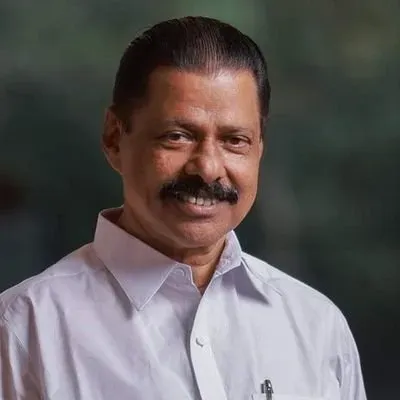
Thiruvananthapuram Dec 29 (NationPress) CPI-M Rajya Sabha member and President of the Democratic Youth Federation of India (DYFI), A.A. Rahim, aimed to conclude the ongoing online discourse regarding his English proficiency following the viral dissemination of video clips from a television interview in Karnataka. He urged that the essence, rather than the form, should be the focal point of evaluation.
In the circulated clips, Rahim's English responses were marked by noticeable pauses while addressing queries from reporters, leading to widespread trolling that questioned his fluency and qualifications. Some social media commentators contended that Rahim's command of English fell short of the expectations for an elected official with a postgraduate degree from the University of Kerala as well as a law degree.
The backlash quickly escalated into a political debate, garnering reactions from various political factions.
This isn't the first instance of Rahim facing such examination.
His English addresses in Parliament have previously attracted ridicule, yet the MP has steadfastly asserted that language barriers will not hinder his ability to express his political viewpoints on both national and global platforms.
As the controversy grew, Rahim responded robustly via a comprehensive Facebook post, redirecting the focus from linguistic skills to the core of political discourse.
He emphasized that human suffering transcends language, clarifying that his trip to Karnataka was intended to observe firsthand what he termed as state oppression.
Rahim expressed no bitterness towards those who critiqued his grammar and acknowledged his language limitations, asserting that he would persist in enhancing his linguistic capabilities.
However, he challenged his critics' priorities, asking whether those proficient in multiple languages had ever stood with marginalized communities whose lives, he claimed, had been devastated by state-led demolitions.
During his visit, Rahim encountered almost a thousand displaced and unheard victims, expressing pride that their narratives are now receiving media attention.
He noted that issues that might have otherwise remained unnoticed are now prompting a wider discussion on rehabilitation and accountability.
Rahim cautioned against trivializing public debate through mockery, urging critics not to overlook the questions raised by marginalized communities in their eagerness to mock language proficiency.
He reaffirmed his dedication to continue advocating for the voiceless and standing with those left behind, contending that empathy and action hold far greater importance than grammatical accuracy.
Point of View
It's essential to recognize that public discourse should prioritize substantial issues over superficial critiques. A.A. Rahim's remarks highlight a crucial conversation about empathy and the representation of marginalized voices, reminding us that language should not become a barrier to meaningful engagement in political discourse.
NationPress
27 Sept 2026
Frequently Asked Questions
What prompted A.A. Rahim's statement on English proficiency?
His comments came in response to viral video clips showcasing his English-speaking skills, which led to widespread criticism and trolling.
What was the main focus of Rahim's Facebook post?
Rahim's post emphasized the importance of human suffering and political engagement over language proficiency.
How does Rahim view language barriers?
He believes that language barriers should not prevent him from articulating his political views on national and international platforms.
What did Rahim encounter during his visit to Karnataka?
He met nearly a thousand displaced victims of state oppression, emphasizing their stories and struggles.
What is Rahim's stance on the criticism he received?
He acknowledged his linguistic limitations but questioned the priorities of his critics, urging them to focus on more significant issues.