What Does the Foundation of the Railway Overbridge in Doraha Mean for Punjab?
Synopsis
The foundation stone for a pivotal railway overbridge in Doraha, Punjab, has been laid, promising to revolutionize transport in the Malwa region. Union Minister Ravneet Singh Bittu reveals the project's significant impact on commuting and economic growth, highlighting advancements in railway infrastructure across Punjab.
Key Takeaways
The railway overbridge in Doraha will enhance connectivity in Punjab's Malwa region.
The project will cost Rs 70.55 crore and is expected to be completed by next year.
Over 190 trains and 3,000 vehicles utilize the Doraha crossing daily.
The initiative aims to alleviate long-standing traffic congestion and commuter inconvenience.
In total, Rs 1,480.09 crore is being invested in railway infrastructure across Punjab.
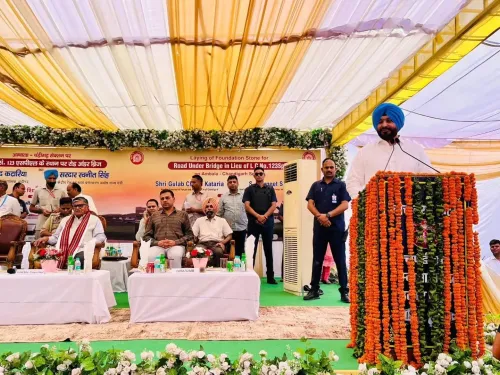
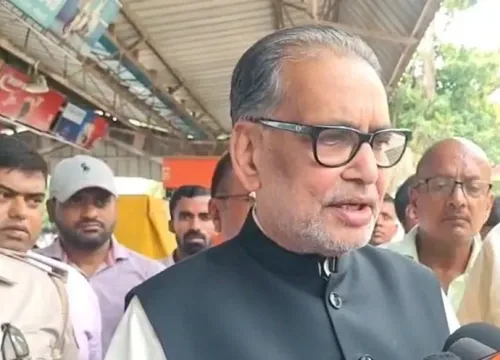
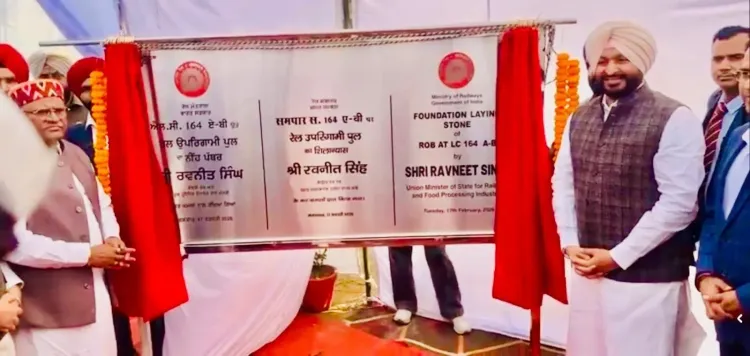
Ludhiana, Feb 17 (NationPress) The initiation of construction for the four-lane railway overbridge in Doraha, located in Punjab’s Ludhiana district, is set to become a transformative infrastructure achievement, significantly enhancing connectivity across the Malwa region, stated Union Minister of State for Railways Ravneet Singh Bittu on Tuesday.
Speaking to the press after laying the foundation stone for this long-anticipated four-lane bridge, the minister revealed that the project, with an estimated budget of Rs 70.55 crore, is projected for completion by next year.
He emphasized that work would commence with urgency, aiming to have the bridge operational as soon as possible, thus providing much-needed relief to commuters who have experienced inconvenience at the level crossing for nearly 12 years.
According to Ravneet Singh, the Doraha level crossing is situated on a critical road connecting Ropar to Ludhiana, serving as a crucial link to the Malwa region.
Highlighting the project's importance, the minister noted that approximately 190 trains pass through this crossing each day, while over 3,000 vehicles utilize it daily.
“The recurring closures due to rail traffic have led to lasting congestion, extensive waiting periods, and considerable hardship for commuters, traders, and transporters. The construction of the railway overbridge will soon alleviate these issues,” he remarked.
Ravneet Singh expressed gratitude to Prime Minister Narendra Modi and Union Railway Minister Ashwini Vaishnaw for endorsing and authorizing the project as a significant gift to the local populace.
This four-lane overbridge is expected to not only simplify daily commutes but also boost economic activities by facilitating the smooth flow of goods and services.
Providing an overview of the ongoing railway infrastructure advancements in Punjab, the minister indicated that projects involving overbridges, underbridges, and low-height subways are currently underway at 166 locations across the state, with a total investment of Rs 1,480.09 crore.
He reiterated that there is no shortage of funding for railway infrastructure in Punjab and reaffirmed the government's firm commitment to modernizing and expanding the state's railway network.
He further indicated that the annual railway budget allocation for Punjab is now nearly 25 times higher than during the 2009-2014 period, amounting to Rs 5,673 crore.
At present, infrastructure projects valued at Rs 26,382 crore are ongoing throughout Punjab, including new track construction, station redevelopment, safety enhancements, and other capacity augmentation efforts.
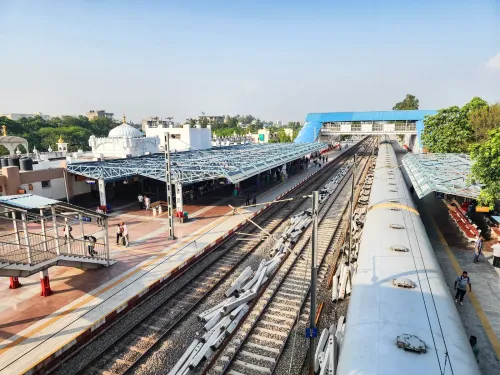
In addition, 30 railway stations in the state are undergoing comprehensive redevelopment under the Amrit Bharat Station Scheme, with an overall investment of Rs 1,311 crore, aimed at providing modern passenger amenities and improved facilities.
The minister also acknowledged the Prime Minister and the Railway Minister for approving the construction of the third and fourth railway lines between Delhi and Ambala.
This vital project is part of a broader initiative to quadruple the heavily trafficked Delhi-Jammu corridor, a key route connecting the National Capital Region with northern states.
The Delhi-Ambala section is recognized as one of the busiest rail corridors in India, handling significant passenger and freight traffic.
The addition of the third and fourth tracks will greatly increase line capacity, enhance operational efficiency, and alleviate congestion.
Spanning a route length of 194 km and estimated to cost Rs 5,983 crore, this project is scheduled for completion within 4 years. It will traverse the districts of Sonipat, Panipat, Karnal, Kurukshetra, and Ambala in Haryana, as well as central, northwest, and north Delhi. The enhanced capacity will enable the introduction of additional passenger and freight trains, improving punctuality and service reliability.
The corridor connects essential economic nodes, including thermal power stations at Ropar, Panipat, and Rajpura, along with agricultural warehouses and industrial centers.
Point of View
This project underscores the government's commitment to improving connectivity and facilitating economic growth. The Doraha overbridge will not only alleviate long-standing commuter challenges but also bolster the region's trade and transportation capabilities.
NationPress
13 Oct 2026
Frequently Asked Questions
What is the estimated cost of the railway overbridge?
The estimated cost of the railway overbridge in Doraha is Rs 70.55 crore.
When is the railway overbridge expected to be completed?
The project is projected for completion by next year.
How many trains pass through the Doraha level crossing daily?
Approximately 190 trains pass through the Doraha level crossing daily.
What is the significance of the Doraha overbridge?
The overbridge will significantly improve connectivity in the Malwa region and reduce congestion at the level crossing.
How many railway stations are undergoing redevelopment in Punjab?
Currently, 30 railway stations in the state are being comprehensively redeveloped under the Amrit Bharat Station Scheme.