India-New Zealand Defence Dialogue 2026: Maritime security, Roadmap 2030 in focus
Synopsis
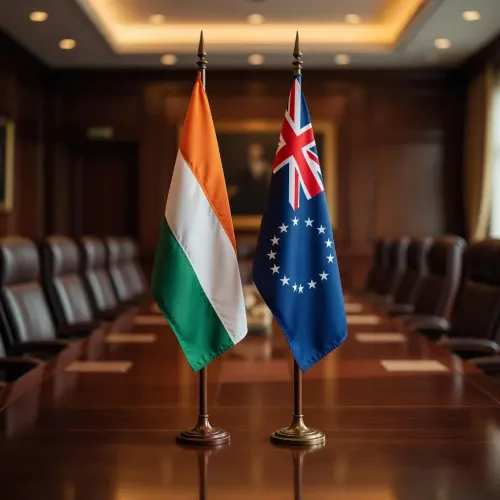
India and New Zealand convened their 2nd Defence Strategic Dialogue in Wellington on 24 August 2026, advancing maritime security and joint training under the Roadmap 2030 — a direct institutional follow-through on PM Modi's landmark Auckland visit in July, which elevated bilateral ties to a full Strategic Partnership for the first time.
Key Takeaways
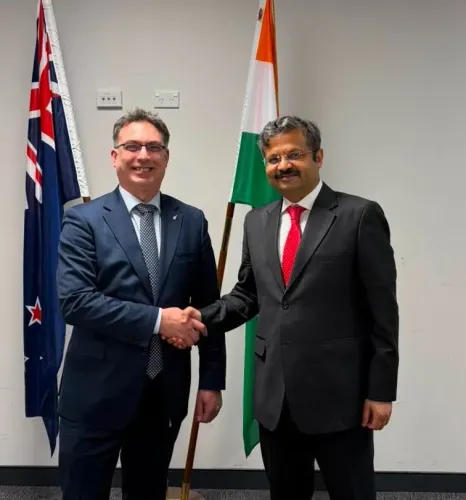
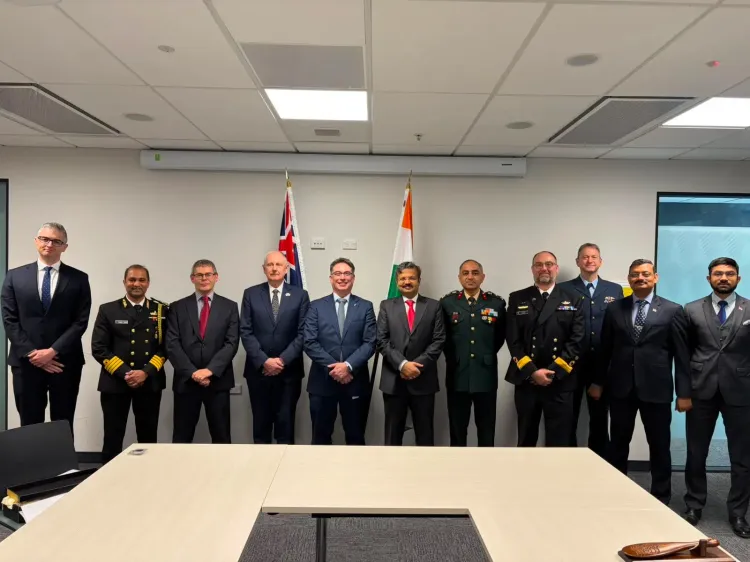
Amitabh Prasad (India) and Richard Schmidt (New Zealand) co-chaired the 2nd India-New Zealand Defence Strategic Dialogue in Wellington on 24 August 2026 .
The dialogue focused on maritime security , joint training , and advancing the Roadmap 2030 bilateral framework.
India's delegation was received by High Commissioner Muanpuii Saiawi .
The dialogue follows PM Narendra Modi 's official visit to Auckland in July 2026 — the first by an Indian PM in four decades — where both sides agreed to elevate ties to a Strategic Partnership .
Cooperation areas span trade, technology, agriculture, dairy, healthcare, defence, and education .
Amitabh Prasad, Joint Secretary at India's Ministry of Defence, and Richard Schmidt, Deputy Secretary at New Zealand's Ministry of Defence, co-chaired the 2nd India-New Zealand Defence Strategic Dialogue in Wellington on 24 August 2026, with maritime security, joint training, and defence cooperation topping the agenda. The dialogue also advanced the objectives of the bilateral Roadmap 2030 framework, signalling a structured, long-term approach to the two countries' strategic partnership.
Key Developments at the Dialogue
The Indian delegation, led by Joint Secretary Amitabh Prasad, was formally received by Muanpuii Saiawi, High Commissioner of India to New Zealand, underscoring the diplomatic weight attached to the meeting. According to India's Ministry of Defence, the dialogue covered concrete areas of collaboration including joint military training exercises and coordinated maritime security measures in the Indo-Pacific region.
This is the second edition of the Defence Strategic Dialogue, reflecting the growing institutional depth of India-New Zealand defence ties — a relationship that has accelerated markedly over the past year.
Modi-Luxon Summit: The Strategic Foundation
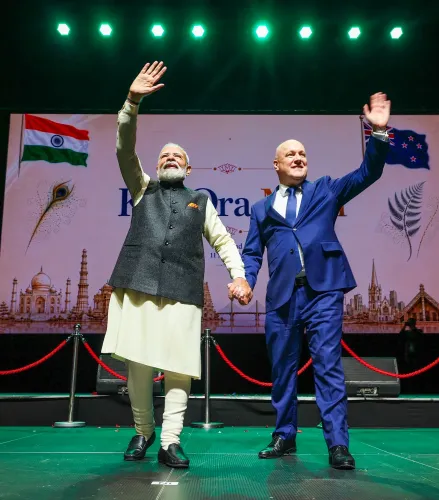
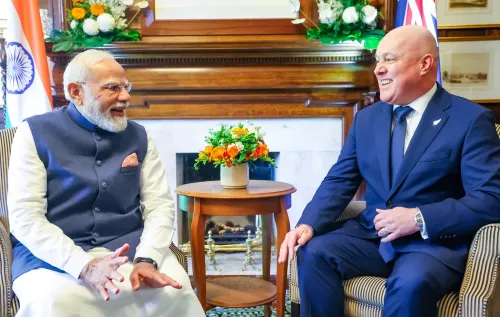
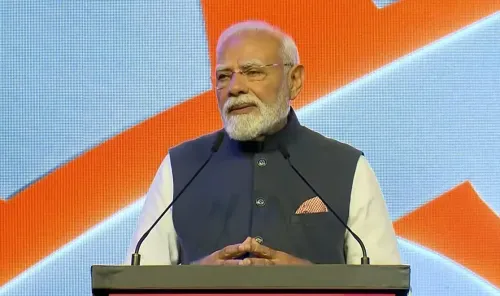
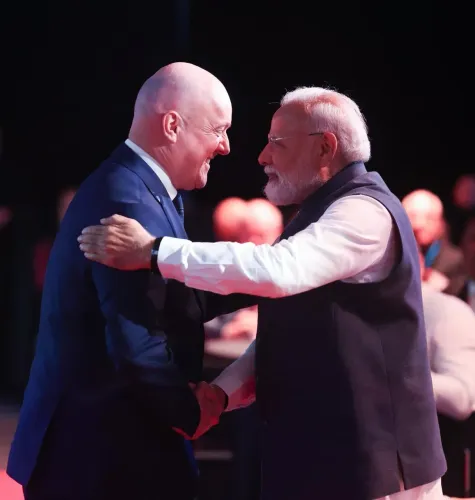
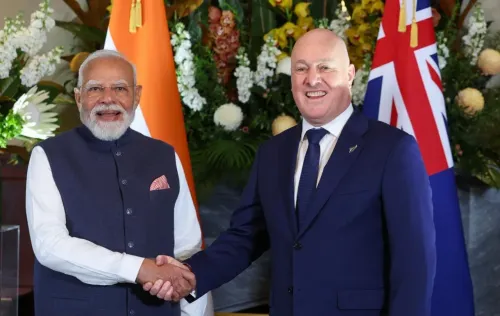
The Wellington dialogue builds directly on the high-level political momentum generated in July 2026, when Prime Minister Narendra Modi made an official visit to New Zealand — the first by an Indian Prime Minister in four decades — and held talks with New Zealand Prime Minister Christopher Luxon in Auckland.
Following those talks, Modi posted on X that his meeting with Luxon was 'extensive and fruitful', adding: 'We have decided to elevate our ties to a Strategic Partnership. We will move forward across every sector with clear goals and concrete outcomes.'
Modi also noted that Luxon's own visit to India the previous year had 'energised' the bilateral partnership, and that his Auckland visit had 'added further momentum to the India-New Zealand friendship.'
Broad Agenda: Beyond Defence
While defence and security form the centrepiece of the upgraded relationship, the Modi-Luxon summit in July covered a wide canvas. In a follow-up post on X, Modi outlined that discussions encompassed trade, technology, investment, agriculture, dairy and food processing, healthcare, traditional medicine, and education.
'Our growing cooperation in defence and security reflects the deep strategic trust between our two countries. This is something we will build on as well,' Modi stated. The August defence dialogue in Wellington is a direct institutional follow-through on those commitments.
Why This Matters for the Indo-Pacific
India's deepening defence engagement with New Zealand fits into a broader pattern of New Delhi building strategic partnerships across the Indo-Pacific — from the Quad (with the US, Japan, and Australia) to bilateral frameworks with Pacific island-adjacent nations. New Zealand, as a member of the Five Eyes intelligence alliance and a Pacific power, represents a strategically significant partner for India's maritime security architecture.
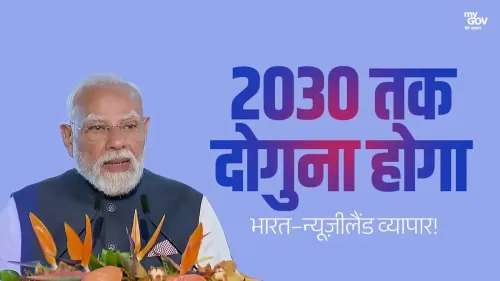
Notably, the Roadmap 2030 provides a time-bound framework that goes beyond diplomatic optics, setting sector-specific goals through the end of the decade. With the second Defence Strategic Dialogue now concluded, both sides are expected to outline next steps for joint exercises and maritime domain awareness cooperation in the months ahead.
Point of View
And the elevation to Strategic Partnership signals that New Delhi is systematically filling in its Indo-Pacific map beyond the Quad. What mainstream coverage underplays is the Roadmap 2030 dimension: unlike many bilateral declarations that fade after the photo-op, a time-bound roadmap creates accountability checkpoints. The real test will be whether joint maritime exercises materialise on a regular schedule and whether intelligence-sharing frameworks — still nascent — gain operational depth. New Zealand's Five Eyes membership makes that last point particularly consequential for India's maritime domain awareness ambitions.
NationPress
8 Oct 2026
Frequently Asked Questions
What was discussed at the 2nd India-New Zealand Defence Strategic Dialogue?
The dialogue, held in Wellington on 24 August 2026, focused on advancing maritime security, joint military training, and defence cooperation, while furthering the objectives of the bilateral Roadmap 2030 framework. It was co-chaired by Joint Secretary Amitabh Prasad from India and Deputy Secretary Richard Schmidt from New Zealand.
What is the India-New Zealand Roadmap 2030?
The Roadmap 2030 is a bilateral framework setting structured, sector-specific cooperation goals between India and New Zealand through the end of the decade. It covers areas including defence, trade, technology, agriculture, and healthcare, and provides a time-bound accountability mechanism for the Strategic Partnership.
When did PM Modi visit New Zealand and what was agreed?
Prime Minister Narendra Modi visited Auckland in July 2026 — the first official visit by an Indian Prime Minister in four decades. He and New Zealand PM Christopher Luxon agreed to elevate bilateral ties to a Strategic Partnership, with commitments across trade, technology, agriculture, defence, and education.
Why is India deepening defence ties with New Zealand?
India is systematically building strategic partnerships across the Indo-Pacific to strengthen its maritime security architecture. New Zealand, as a Pacific power and Five Eyes member, is a significant partner for maritime domain awareness and coordinated security in the region, complementing India's existing Quad engagements.
Who represented India at the Wellington defence dialogue?
Joint Secretary Amitabh Prasad from India's Ministry of Defence led the Indian delegation. The delegation was also received by Muanpuii Saiawi, the High Commissioner of India to New Zealand.