Modi's Auckland visit lifts India-New Zealand ties to Strategic Partnership
Synopsis
For the first time in 40 years, an Indian Prime Minister landed in New Zealand — and Modi didn't just exchange pleasantries. The Auckland visit produced a formal Strategic Partnership, a concluded FTA, 10 signed agreements, and a NZ$7 billion trade target by 2030, resetting a relationship that had long punched below its potential.
Key Takeaways
PM Narendra Modi visited Auckland on 10–11 July — the first Indian PM visit to New Zealand in 40 years .
Bilateral ties were elevated to a formal Strategic Partnership , anchored by the 'Roadmap to 2030' covering six cooperation pillars.
An India–New Zealand Free Trade Agreement (FTA) was concluded alongside 10 bilateral agreements and 8 additional initiatives .
Both sides set a target of doubling bilateral trade to NZ$7 billion (approx. ₹35,000 crore ) by 2030 .
Defence cooperation will deepen through joint exercises, an annual Maritime Security Dialogue and a Joint Working Group on Counter-Terrorism .
Cooperation spans education, climate action, the International Solar Alliance , the Global Biofuels Alliance and direct flight connectivity.
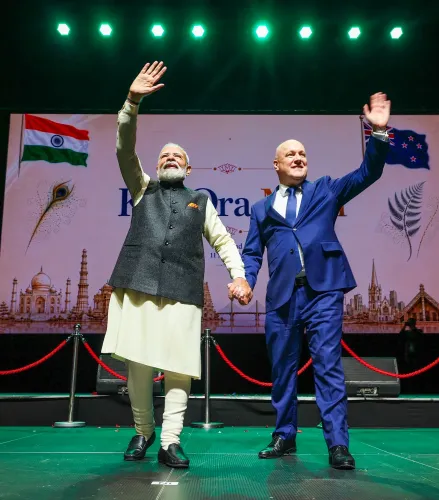
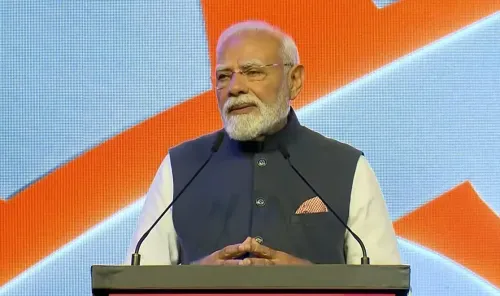
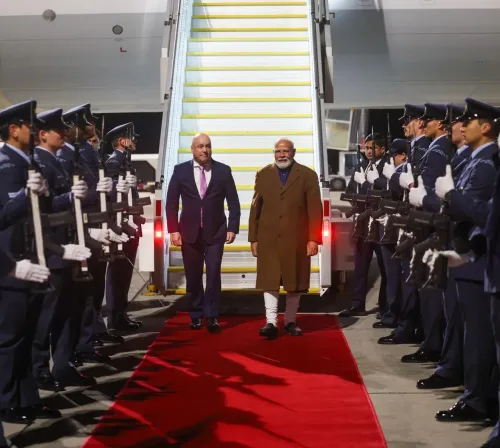
Prime Minister Narendra Modi's two-day official visit to Auckland on 10–11 July has fundamentally recast India–New Zealand relations, elevating them from a cordial but loosely structured bilateral engagement to a formal, institutionalised Strategic Partnership — the first such upgrade in the history of ties between the two nations. The visit was also the first by an Indian Prime Minister to New Zealand in 40 years.
The Roadmap to 2030
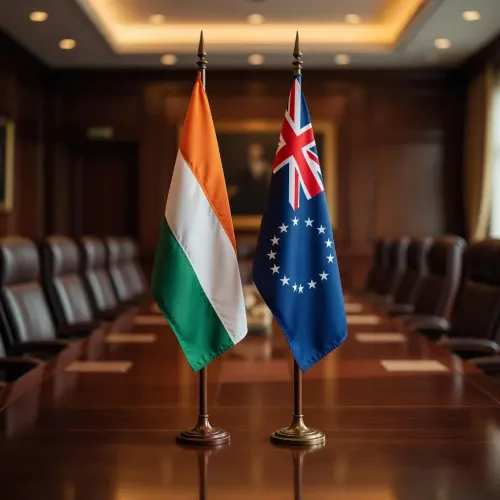
The centrepiece of the visit was the adoption of the 'India–New Zealand Strategic Partnership: Roadmap to 2030', which lays out six key pillars: political and diplomatic engagement, defence and security cooperation, trade and economic partnership, people-to-people links, education and innovation, and regional and multilateral cooperation. According to the Ministry of External Affairs (MEA), the roadmap commits both sides to regular high-level engagements, including meetings between Prime Ministers, Cabinet Ministers and senior officials.
Alongside the roadmap, the two countries concluded an India–New Zealand Free Trade Agreement (FTA), signed 10 bilateral agreements, and announced eight additional initiatives spanning education, agriculture, trade, defence, culture and people-to-people exchanges.
Defence and Security Cooperation
In the defence sphere, India and New Zealand agreed to deepen cooperation through joint military exercises, visits of maritime, air and land units, personnel exchanges and high-level defence dialogues. Both sides committed to implementing the 2025 India–New Zealand Memorandum of Understanding on Defence Cooperation and maintaining structured engagement at Defence Ministry and service levels.
The roadmap further envisages an annual Maritime Security Dialogue, enhanced maritime security cooperation under the Indo-Pacific Oceans Initiative, operationalisation of a Joint Working Group on Counter-Terrorism, and deeper collaboration on cybersecurity. Both countries also agreed to work towards agreements on combating narcotics trafficking and strengthening law enforcement ties between India's National Investigation Agency (NIA) and New Zealand Police.
Trade, Investment and Economic Targets
On the economic front, the two sides have set an aspirational target of doubling bilateral trade in goods and services to NZ$7 billion (approximately ₹35,000 crore) by 2030. While current trade volumes remain modest, the newly concluded FTA is expected to accelerate market access and investment flows. Both governments agreed to advance the next steps required for the FTA's early entry into force and effective implementation.
Sectoral cooperation will be expanded in primary industries — including horticulture, forestry, animal husbandry and dairying — through joint research, technical exchanges and market development. Tourism cooperation will be broadened via the Tourism Memorandum of Arrangement, with both sides encouraging airlines to introduce direct non-stop flights under an updated Air Services Agreement.
Education, Climate and Regional Cooperation
Both nations agreed to implement the 2025 Education Cooperation Arrangement and foster greater institutional partnerships in research, science and technology. On climate, the roadmap highlights cooperation on low-emission transitions, renewable energy and sustainable development, including through the International Solar Alliance and the Global Biofuels Alliance.
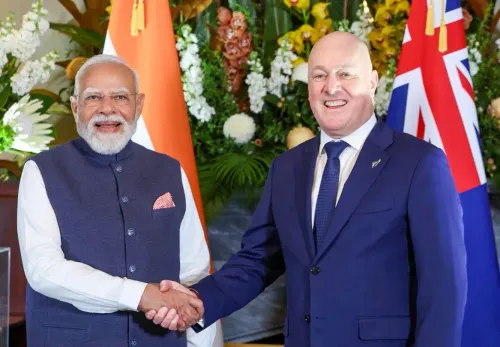
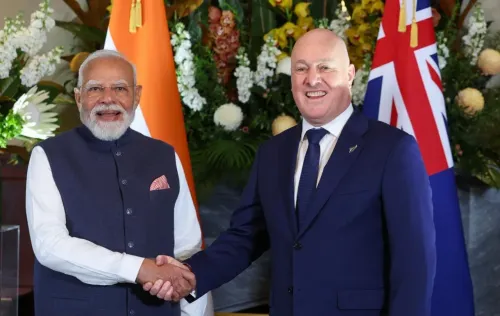
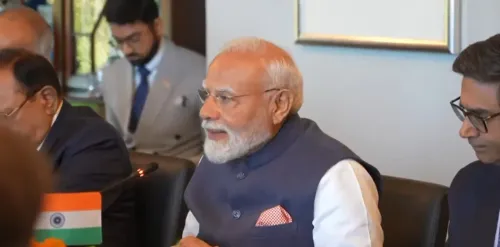
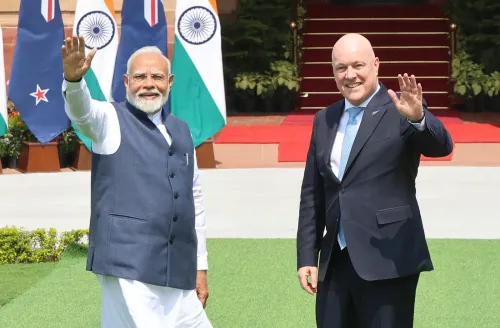
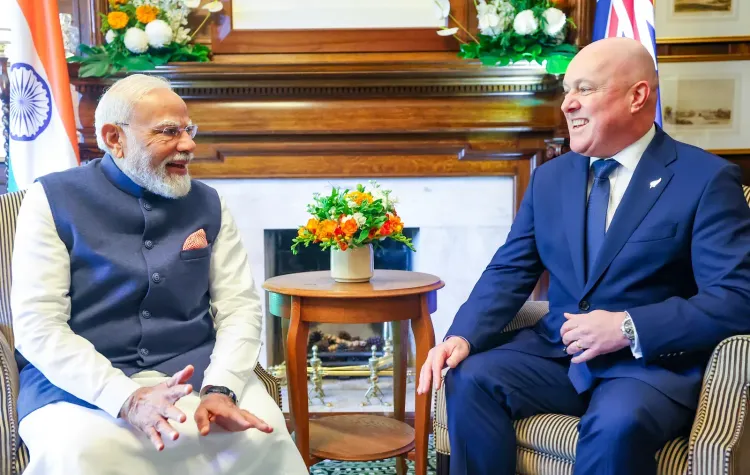
At the multilateral level, India and New Zealand agreed to coordinate on ASEAN-led and other regional forums, uphold a rules-based Indo-Pacific order, and explore cooperation under the maritime security pillar of the Indo-Pacific Oceans Initiative. Modi held detailed discussions with New Zealand Prime Minister Christopher Luxon in Auckland, covering the full spectrum of bilateral relations including sports, education, tourism and cultural exchanges.
Analysts note that the institutional architecture established during the visit positions both countries to unlock significant economic opportunities — and that, anchored in shared democratic values and a common Indo-Pacific vision, the partnership could serve as a model for comprehensive bilateral engagement in the region.
Point of View
But the harder question is whether the institutional scaffolding will outlast the diplomatic momentum of a single visit. India has signed roadmaps and FTAs before — the real test is implementation velocity, particularly on the FTA's entry into force and the NZ$7 billion trade target, which requires sustained political will on both sides. New Zealand's strategic value to India lies less in trade volume and more in its position within Five Eyes and Pacific security architecture — a dimension the roadmap gestures at but does not fully operationalise. Whether the NIA–New Zealand Police counter-terrorism channel and the Maritime Security Dialogue translate into genuine operational depth, or remain periodic talking shops, will define whether this partnership is truly institutionalised or merely branded.
NationPress
22 Oct 2026
Frequently Asked Questions
What was agreed during PM Modi's visit to New Zealand in July 2025?
During his two-day visit to Auckland on 10–11 July, PM Modi and New Zealand Prime Minister Christopher Luxon elevated bilateral ties to a Strategic Partnership, concluded a Free Trade Agreement, signed 10 bilateral agreements and announced 8 additional initiatives across education, defence, agriculture and culture. A 'Roadmap to 2030' covering six pillars of cooperation was also adopted.
What is the India–New Zealand Strategic Partnership Roadmap to 2030?
It is a framework adopted during PM Modi's Auckland visit that outlines six pillars of cooperation: political and diplomatic engagement, defence and security, trade and economic partnership, people-to-people links, education and innovation, and regional and multilateral cooperation. It commits both governments to regular high-level engagements, including Prime Ministerial and Cabinet-level meetings.
What is the bilateral trade target set by India and New Zealand?
India and New Zealand have set an aspirational target of doubling bilateral trade in goods and services to NZ$7 billion — approximately ₹35,000 crore — by 2030. The two sides also agreed on next steps for the concluded FTA to ensure its early entry into force.
How significant is Modi's New Zealand visit historically?
PM Modi's visit on 10–11 July was the first by an Indian Prime Minister to New Zealand in 40 years, making it a landmark moment in the history of bilateral ties. It resulted in the most comprehensive institutional upgrade the relationship has seen, including a concluded FTA and a formal Strategic Partnership.
What defence and security agreements were reached between India and New Zealand?
Both countries agreed to deepen defence cooperation through joint military exercises, maritime and air unit visits, personnel exchanges and an annual Maritime Security Dialogue. They also committed to operationalising a Joint Working Group on Counter-Terrorism, enhancing cybersecurity cooperation and implementing the 2025 India–New Zealand MoU on Defence Cooperation.