Indian Railways runs first double-stack long-haul container train on Western DFC
Synopsis
For the first time, Indian Railways coupled two double-stack rakes into a single long-haul formation and ran them 422 km from JNPT to Vadodara — moving 360 TEUs in one electric train movement. It is a concrete proof-of-concept for the Western DFC's ability to shift port-to-hinterland container logistics at scale, with direct implications for terminal congestion, truck traffic, and emissions.
Key Takeaways
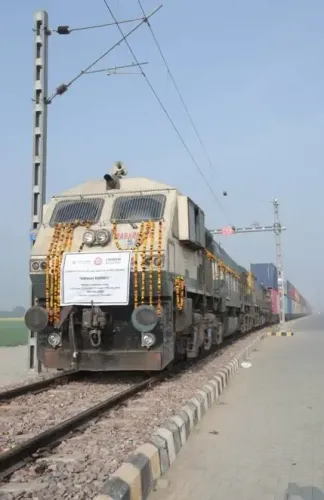
Indian Railways operated its first double-stack long-haul container train on 21 August , departing JNPT at 7 pm .
The train covered approximately 422 km to CONCOR's GCT terminal at Varnama , Vadodara, on the Western Dedicated Freight Corridor .
Two coupled double-stack rakes carried a combined 360 TEUs — 180 TEUs per rake — with a total tonnage exceeding 3,900 tonnes .
The electrically hauled movement reduces reliance on diesel trucks, cutting road congestion and vehicular emissions.
The run is the first of its kind on Indian rail and signals a shift toward higher-throughput container operations on the DFC network.
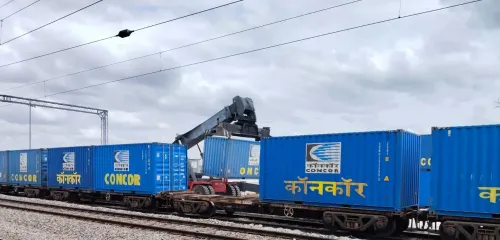
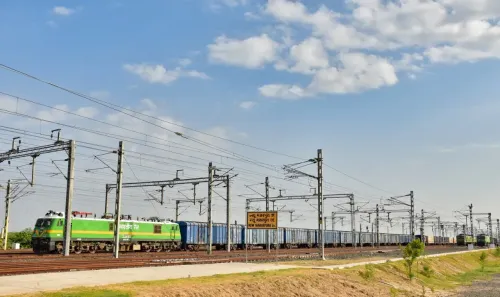
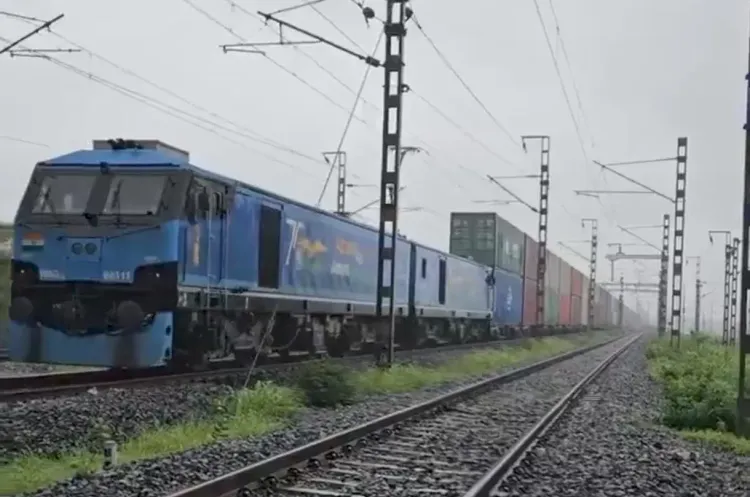
Indian Railways has successfully operated its first double-stack long-haul container train from Jawaharlal Nehru Port (JNPT) near Mumbai to CONCOR's GCT terminal at Varnama in the Vadodara division, transporting 360 TEUs across approximately 422 km. The train departed JNPT at 7 pm on 21 August, running on the Western Dedicated Freight Corridor (DFC) in a milestone for rail-based container logistics in India.
How the Formation Was Structured
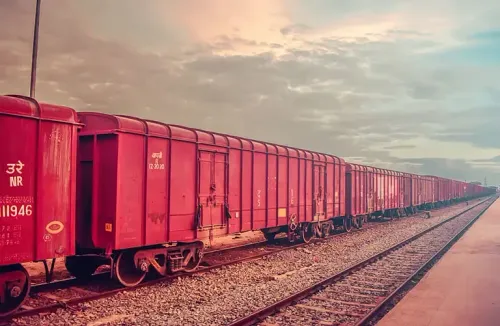
The long-haul consist comprised two double-stack rakes coupled together. The leading rake — operating on the JNPT–Vadodara route with a load formation of 45+1 — was hauled by locomotive 60311 at a tonnage of 1,817 tonnes. The trailing rake, also configured at 45+1, was handled by locomotive 24690 and weighed 2,105 tonnes. Each rake carried 180 TEUs, bringing the combined haul to 360 TEUs in a single rail movement.
Why This Run Matters for Port Logistics
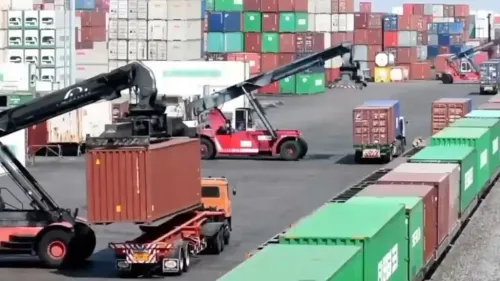
The primary objective of this operation is to improve container evacuation from JNPT and other freight terminals by consolidating larger volumes into fewer train movements. Terminal congestion — a persistent bottleneck at India's busiest container port — is directly linked to the pace at which boxes can be moved inland. By doubling stack height and coupling rakes, Railways can shift significantly more cargo per departure, reducing the dwell time containers spend awaiting rail slots.
The higher carrying capacity also lowers the rolling stock required per equivalent freight volume, freeing up route capacity on the corridor for additional services. This comes as freight operations on India's dedicated freight corridors increasingly focus on throughput efficiency over individual trip economics.
Environmental and Road-Traffic Impact
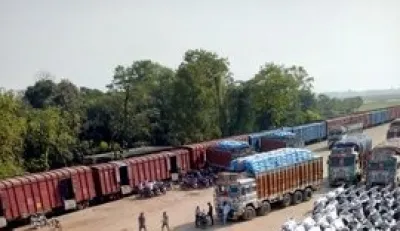
Because the train is electrically hauled, the movement directly reduces dependence on diesel-powered road transport. Transporting 360 TEUs in a single electric train run displaces a significant number of trucks that would otherwise be needed for an equivalent freight movement — cutting diesel consumption, road congestion, and vehicular emissions in the process. The modal shift argument for DFC-based double-stack operations is, therefore, both economic and environmental.
What This Signals for India's Freight Corridors
The successful JNPT–Varnama run demonstrates that double-stack and long-haul formations can be operationally combined on the Western DFC, strengthening port-to-hinterland connectivity. Notably, this is the first time such a configuration has been executed over this distance on Indian rail infrastructure, marking a measurable step-up from earlier single-rake double-stack trials. As DFC capacity continues to be commissioned, similar long-haul formations are expected to become a standard feature of high-volume container corridors.
Point of View
But the real question is pace of scale-up. India's dedicated freight corridors have been years in the making, and individual milestone runs — however impressive — need to translate into scheduled, high-frequency double-stack services before the congestion and emissions benefits materialise at a system level. JNPT regularly faces severe container dwell-time pressure; a single proof-of-concept train does not move that needle. The metric to watch is not the first run but the hundredth — how quickly Railways and CONCOR can standardise this formation and build it into regular timetables on the Western and Eastern DFCs alike.
NationPress
7 Oct 2026
Frequently Asked Questions
What is the double-stack long-haul container train run by Indian Railways?
It is the first instance of Indian Railways coupling two double-stack rakes into a single long-haul formation to move containers from Jawaharlal Nehru Port (JNPT) near Mumbai to CONCOR's GCT terminal at Varnama in Vadodara, covering approximately 422 km on the Western Dedicated Freight Corridor. The combined train carried 360 TEUs in one movement on 21 August.
What route did the train operate on?
The train ran from JNPT near Mumbai to the CONCOR GCT terminal at Varnama in the Vadodara division, a distance of around 422 km, entirely on the Western Dedicated Freight Corridor.
How much cargo did the train carry?
The two coupled rakes transported a combined 360 TEUs — 180 TEUs per rake — with the leading rake weighing 1,817 tonnes and the trailing rake weighing 2,105 tonnes.
Why does this operation matter for port congestion?
By consolidating 360 TEUs into a single train movement, the operation reduces the number of departures needed to evacuate containers from JNPT, directly cutting terminal dwell times and congestion. Fewer train movements for the same cargo volume also frees up route capacity on the corridor.
What are the environmental benefits of this train movement?
Because the train is electrically hauled, it displaces a significant number of diesel-powered trucks that would otherwise be required to move an equivalent volume of freight, reducing diesel consumption, road congestion, and vehicular emissions.