Vaishnaw Announces Unified Pan-India Container Train Licence
Synopsis
Union Minister Ashwini Vaishnaw announced a unified Pan-India licence for container train operations on 14 July 2026, replacing India's fragmented multi-category regime. The reform promises faster approvals and greater ease of doing business for private freight operators, advancing the government's long-term goal of reducing logistics costs and expanding rail's share of freight traffic.
Key Takeaways
Union Minister Ashwini Vaishnaw announced Railway Reform in 2026 focused on simplifying container train operations across India.
A single unified Pan-India licence will replace the existing multi-category licensing framework introduced in 2006 .
The reform targets faster approvals and greater ease of doing business for private container train operators.
The move aligns with the government's goal of cutting logistics costs from 14 per cent to 8 per cent of GDP .
PM Gati Shakti National Master Plan and the Dedicated Freight Corridors provide the policy and infrastructure backbone for this reform.
A formal gazette notification and transition timeline for the new licence regime are expected ahead of the 2026 rollout.
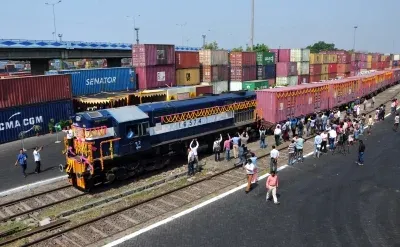
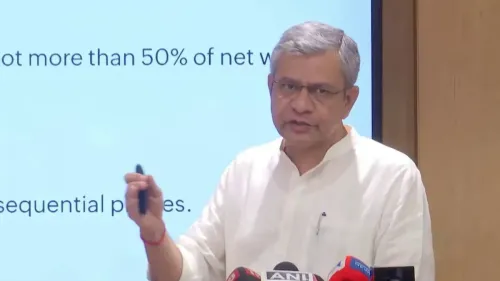
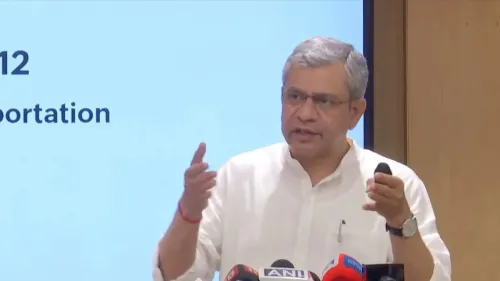
Union Minister Ashwini Vaishnaw announced on Tuesday, 14 July 2026 a significant reform to container train operations across India, unveiling a single unified Pan-India licence that will replace the existing multi-category licensing regime for private freight operators. The move, framed as part of Railway Reform in 2026, is aimed at easing business approvals and reducing logistical friction for container train operators nationwide.
Context
In a post on X, Vaishnaw outlined three pillars of the reform: 'One unified Pan-India license,' 'Easier business and faster approvals,' and 'Greater ease of doing business.' The announcement signals a structural overhaul of how private operators obtain permission to run container trains on the national rail network, consolidating what has historically been a fragmented, category-wise licensing architecture.
The current framework traces its origins to 2006, when the Ministry of Railways first opened container train operations to private players, ending the near-total dominance of Container Corporation of India (CONCOR), a public-sector subsidiary established in 1988. Over the intervening two decades, private operators have been required to obtain separate licences across different categories, a process widely cited by logistics firms as cumbersome and slow.
Policy Backdrop
The reform sits within a broader, multi-year policy push to raise the share of railways in India's overall freight traffic and to bring logistics costs down from approximately 14 per cent of GDP to 8 per cent — a target reiterated in Budget 2022-23 and subsequent policy circulars from the Ministry of Railways. The PM Gati Shakti National Master Plan, launched in October 2021, integrated rail infrastructure planning with multimodal logistics parks and unified digital approvals, providing the institutional scaffolding for exactly this kind of single-window reform.
The Dedicated Freight Corridors (DFCs) — the eastern and western freight-only rail lines sanctioned in 2006 and progressively commissioned from 2020 onward — have materially changed the operating environment. With higher average freight speeds now possible on dedicated lines, the bottleneck has increasingly shifted from infrastructure to regulatory process, making licence simplification a logical next step.
Stakeholders and Impact
The beneficiaries of a unified Pan-India licence are expected to span the full logistics chain: private container train operators currently holding multiple category-specific licences, exporters and importers who depend on rail-linked container movement for cost-effective supply chains, and logistics firms looking to scale operations without navigating multiple approval windows. Smaller private operators, who have historically struggled with the compliance burden of the multi-category regime, stand to gain disproportionately from faster approvals.
CONCOR, while still the dominant player in containerised rail freight, has operated in a gradually opening market since 2006. A simpler licensing environment is likely to intensify competition, which could exert downward pressure on freight rates over time — a stated government objective. The formal gazette notification of the unified licence and any subsequent bidding rounds for new operators are expected to follow ahead of the 2026 rollout.
What's Next
The announcement sets expectations for a formal regulatory notification that will detail the fee structure, eligibility criteria, and transition timeline for operators currently holding legacy licences. Industry bodies representing private freight operators and major exporters are likely to engage closely with the Ministry of Railways as the implementation framework is finalised. The reform, if executed as described, would represent the most significant structural change to India's container train licensing regime since the sector was opened to private competition two decades ago.
Point of View
And the PM Gati Shakti framework supplied the digital approval architecture; the missing piece was always the licence simplification that makes private capital willing to deploy at scale. By collapsing a multi-category regime into a single instrument, the Ministry of Railways is signalling that the market-opening begun in 2006 is entering a more competitive phase. The timing — mid-2026, with freight corridor utilisation rising — suggests the government is confident enough in network capacity to invite a new wave of private operators without risking congestion. Whether the reform meaningfully shifts freight from road to rail will depend entirely on the fee structure and transition terms in the gazette notification that follows.
NationPress
13 Oct 2026
Frequently Asked Questions
What is the unified Pan-India container train licence announced by Ashwini Vaishnaw?
It is a single licence that will allow private operators to run container trains anywhere in India, replacing the earlier system of separate category-wise licences that operators had to obtain individually. The reform is intended to reduce approval time and compliance costs for freight businesses.
How does this railway reform affect private container train operators in India?
Private operators currently holding multiple category-specific licences are expected to transition to a single unified licence, simplifying their regulatory burden. Faster approvals under the new framework could also make it easier for new entrants to join the container freight market.
What is CONCOR and how does this reform relate to it?
Container Corporation of India (CONCOR) is a public-sector subsidiary of Indian Railways established in 1988 that has been the dominant player in containerised rail freight. The 2006 policy opened the sector to private competition, and the 2026 licence reform deepens that opening by making it easier for private operators to compete.
What is the PM Gati Shakti connection to this railway reform?
The PM Gati Shakti National Master Plan , launched in October 2021 , created a framework for integrating rail infrastructure with multimodal logistics and unified digital approvals. The container train licence simplification is consistent with that broader goal of reducing logistics costs and improving freight efficiency.
When will the new unified container train licence come into effect?
Minister Vaishnaw's announcement frames the reform as part of Railway Reform in 2026 , but the exact operational details, fee structures, and transition timeline are subject to a formal gazette notification that is expected ahead of the rollout. No specific date has been confirmed in the post.