Rajasthan limits Diwali firecracker bursting to 3 hours in 6 NCR districts; QR codes mandatory
Synopsis
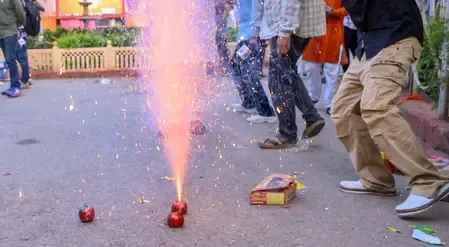
Rajasthan has drawn a tight ring around Diwali firecracker use in its six NCR districts — just two days, three hours total, only CSIR-NEERI certified green crackers, all with mandatory QR codes for traceability. It is one of the most granular state-level cracker frameworks issued ahead of the festival, arriving as north India's annual smog season peaks.
Key Takeaways
The Rajasthan government issued Diwali firecracker restrictions on 4 November 2026 for six NCR districts .
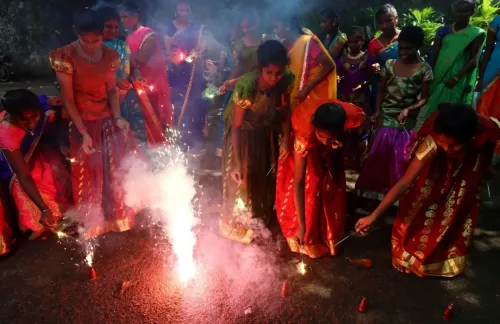
Bursting permitted only on 7 and 8 November , within windows of 6–7 am and 8–10 pm — a total of three hours .
Only CSIR-NEERI-certified green crackers are allowed; all other varieties are banned.
Every packet must carry a QR code for verification of manufacturer, certification, and licence; online sales are banned.
Bursting prohibited within a 300-metre radius of hospitals, healthcare centres, and educational institutions.
Violations invite seizure and action under the Environment (Protection) Act ; the Rajasthan State Pollution Control Board will monitor air quality daily.
The Rajasthan government on Wednesday, 4 November 2026, issued fresh directives restricting the sale and use of firecrackers across six districts falling under the National Capital Region (NCR), as authorities move to curb air pollution ahead of Diwali. Under the new rules, firecrackers may be burst for a maximum of three hours on only two permitted days, and every packet of green crackers must carry a mandatory QR code for consumer verification.
Key Restrictions at a Glance
Firecracker bursting in the six Rajasthan NCR districts will be permitted exclusively on 7 November and 8 November, within two narrow windows: 6 am to 7 am and 8 pm to 10 pm. Only CSIR-NEERI-certified green crackers will be allowed for sale and use; all other varieties remain prohibited. The state has further banned firecracker bursting within a 300-metre radius of hospitals, healthcare centres, and educational institutions.
QR Code Mandate and Sales Rules
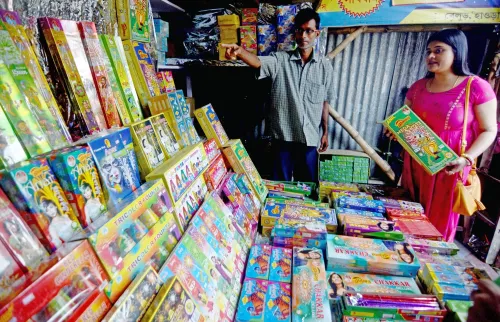
Every packet of certified green firecrackers must carry a QR code that consumers can scan to verify the manufacturer's name, certification, and licence. Sales are permitted only through authorised outlets; online sales stand banned. Firecrackers without QR codes cannot be sold. The Rajasthan Department of Information and Public Relations (DIPR) has shared these comprehensive guidelines with district administrations to ensure wide dissemination.
Enforcement and Monitoring Measures
District Collectors and police officials have been directed to prevent the illegal sale, storage, and supply of firecrackers. Special inspection teams will be constituted to check shops and warehouses. Vehicles entering Rajasthan from the Delhi-NCR region will be screened as well. Any violation will invite seizure of the contraband firecrackers and legal action under the Environment (Protection) Act. Illegal manufacturing, storage, and sale of firecrackers will attract strict penalties.
Pollution Monitoring Over Diwali
The Rajasthan State Pollution Control Board along with district-level authorities will monitor air quality daily during and after Diwali. Authorities will compile reports on pollution levels, and individuals, traders, and manufacturers found violating the guidelines will face action. This comes amid mounting concern over seasonal air quality deterioration across north India's NCR belt, where post-Diwali smog regularly breaches safe limits set by the Central Pollution Control Board.
What Happens Next
With Diwali falling in early November, district administrations are expected to begin ground-level enforcement almost immediately. The effectiveness of the QR code traceability system will be a key test, given past reports of counterfeit or uncertified crackers circulating in markets ahead of the festival. All eyes will be on compliance rates in the six NCR-adjacent districts as the festival approaches.
Point of View
A QR traceability mandate, and perimeter restrictions around sensitive sites all in one package. The real gap, as in previous years, will be enforcement: counterfeit green-cracker packets and unlicensed traders have routinely bypassed similar bans elsewhere in the NCR belt. The QR code mechanism is a genuinely new accountability layer, but its effectiveness depends entirely on whether inspection teams are deployed in sufficient numbers and empowered to act before the festival, not after. The annual cycle of restrictions followed by poor compliance and then record smog levels demands that this year's directives be measured by outcomes, not announcements.
NationPress
4 Nov 2026
Frequently Asked Questions
Which districts in Rajasthan fall under the NCR firecracker restrictions?
The restrictions apply to the six Rajasthan districts that fall within the National Capital Region (NCR). The state government has issued the directives through the Rajasthan Department of Information and Public Relations, though the specific district names were not individually listed in the official release.
When can firecrackers be burst in Rajasthan's NCR districts during Diwali 2026?
Firecrackers can be burst only on 7 November and 8 November 2026, within two daily windows: 6 am to 7 am and 8 pm to 10 pm — totalling three hours across both days. Bursting at any other time is prohibited.
What are CSIR-NEERI certified green crackers and why are they mandatory?
CSIR-NEERI certified green crackers are firecrackers approved by the Council of Scientific and Industrial Research – National Environmental Engineering Research Institute, designed to emit lower levels of pollutants than conventional crackers. Rajasthan has mandated their exclusive use in NCR districts to limit air quality deterioration during the festive season.
What does the QR code on firecracker packets verify?
Scanning the QR code on a certified green cracker packet allows consumers to verify the manufacturer's name, certification details, and licence number. The measure is intended to curb the sale of counterfeit or uncertified crackers by making product traceability possible at the point of purchase.
What action will authorities take against violations of the Diwali firecracker guidelines?
Violators face seizure of firecrackers and legal action under the Environment (Protection) Act. District Collectors and police have been directed to deploy special inspection teams for shops and warehouses, and vehicles entering Rajasthan from Delhi-NCR will also be checked for illegal crackers.