RBI policy measures could draw $50 billion inflows; bond index push may add more

Synopsis
The RBI's June 2025 policy package could pull in nearly $50 billion in foreign capital, according to ICICI Bank Global Markets — and that figure could climb further if India's bond index integration deepens. With the repo rate held at 5.25% and the Fully Accessible Route widened, the central bank is making a calculated bet that capital attraction can ease liquidity pressures without stoking inflation.
Key Takeaways
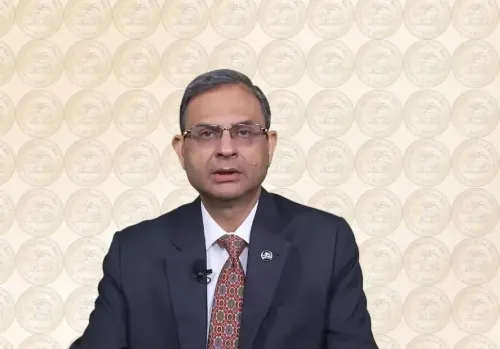
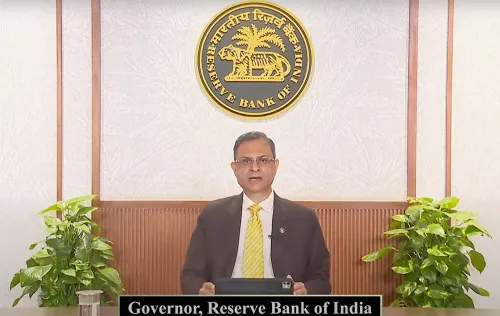
The RBI held the repo rate at 5.25% with a neutral stance at its June 2025 MPC meeting, chaired by Governor Sanjay Malhotra .
ICICI Bank Global Markets estimates the central bank's new measures could attract nearly $50 billion in foreign inflows.
Measures include support for foreign currency deposits , concessional FX swap facilities , and broader overseas investor access.
The Fully Accessible Route (FAR) was expanded, widening foreign access to Indian government securities .
Deeper bond index inclusion could generate inflows beyond the $50 billion estimate, analysts say.
Risks include elevated crude oil prices and geopolitical uncertainty, which the RBI cited in retaining its neutral stance.
The Reserve Bank of India (RBI)'s latest policy package, unveiled at the June 2025 Monetary Policy Committee (MPC) meeting, could attract nearly $50 billion in foreign capital inflows, according to an analysis by ICICI Bank Global Markets. Additional gains may follow if India deepens its integration with global bond indices.
Key Measures Announced
The MPC, chaired by RBI Governor Sanjay Malhotra, held the repo rate steady at 5.25% and retained a neutral stance, citing geopolitical tensions, elevated energy prices, and persistent uncertainties over global growth and inflation. Alongside the rate decision, the central bank announced a suite of capital-attraction measures, including support for foreign currency deposits, concessional foreign exchange swap facilities for select external borrowings, and broader market access for overseas investors.
What the $50 Billion Estimate Covers
Analysts at ICICI Bank Global Markets estimate that the combined effect of these measures could channel approximately $50 billion in foreign inflows into Indian financial markets. The bank's assessment points to improved liquidity conditions and reduced funding pressure within the domestic banking system as likely downstream benefits. Stronger capital inflows are also expected to provide support for the Indian rupee, which has faced pressure amid global risk-off sentiment.
Bond Index Inclusion: The Additional Upside
A separate but significant policy move was the expansion of the Fully Accessible Route (FAR), which widens foreign investor access to Indian government securities. Combined with recently introduced tax incentives on bond investments, analysts believe the FAR expansion improves India's prospects for deeper participation in global debt benchmarks. Should broader bond index inclusion materialise, it could generate inflows beyond the $50 billion baseline estimate, according to the report.
Market Reaction and Risks
Financial markets responded positively to the announcements. The rupee recovered from recent lows, while bond markets adjusted to expectations of increased foreign participation. However, analysts cautioned that elevated crude oil prices and ongoing geopolitical uncertainties remain significant inflation risks that could complicate the economic outlook. The RBI's neutral stance reflects this balance — supportive of growth without committing to near-term rate cuts.
Broader Context
This comes amid a broader global trend of emerging markets competing aggressively for foreign portfolio flows as developed-market central banks signal a slower easing cycle. India's move to expand FAR access and sweeten bond investment terms is consistent with its multi-year effort to raise its weight in indices such as JPMorgan's Government Bond Index-Emerging Markets (GBI-EM). Notably, India was included in the JPMorgan index in 2024, and deeper participation could unlock further passive inflows from global funds tracking those benchmarks. The RBI's latest measures suggest a deliberate strategy to capitalise on that momentum while managing domestic inflation risks.
Point of View
But the more consequential move is the FAR expansion. India's bond index journey — from JPMorgan inclusion in 2024 to potential deeper integration — is a structural shift that could dwarf one-off inflow estimates if passive global funds increase their India weight. The RBI's decision to hold rates at 5.25% while simultaneously rolling out capital-attraction measures reflects a tight balancing act: it needs foreign flows to support the rupee and ease banking liquidity, but it cannot cut rates aggressively without risking inflation. What mainstream coverage underplays is the conditionality — these inflows are not guaranteed; they depend on global risk appetite, index committee decisions, and India's ability to maintain macroeconomic credibility. The neutral stance is pragmatic, but it also signals that the RBI sees limited room to manoeuvre if global conditions deteriorate further.
NationPress
21 Oct 2026
Frequently Asked Questions
What RBI measures could bring $50 billion in foreign inflows?
According to ICICI Bank Global Markets, measures announced at the June 2025 MPC meeting — including support for foreign currency deposits, concessional foreign exchange swap facilities for select external borrowings, and broader market access for overseas investors — could collectively attract nearly $50 billion in foreign inflows. The estimate reflects expected improvements in rupee stability and domestic banking liquidity.
What is the Fully Accessible Route (FAR) and why does its expansion matter?
The Fully Accessible Route (FAR) is an RBI framework that allows foreign investors unrestricted access to specified Indian government securities. Its expansion, announced alongside the June 2025 policy measures, broadens the pool of bonds overseas investors can hold, potentially accelerating India's integration with global bond indices and generating additional capital inflows.
Why did the RBI keep the repo rate unchanged at 5.25%?
The Monetary Policy Committee retained the repo rate at 5.25% and maintained a neutral stance, citing geopolitical tensions, elevated energy prices, and uncertainties surrounding global growth and inflation. The decision reflects the RBI's caution about easing policy prematurely in an uncertain global environment.
How could bond index inclusion generate additional inflows beyond $50 billion?
India's inclusion in JPMorgan's Government Bond Index-Emerging Markets in 2024 has already begun attracting passive fund flows. Analysts believe that deeper participation — driven by the FAR expansion and new tax incentives on bond investments — could unlock further inflows from global index-tracking funds, adding to the $50 billion baseline estimate from the RBI's direct policy measures.
What risks could limit the impact of these RBI measures?
Analysts have flagged elevated crude oil prices and ongoing geopolitical uncertainties as significant inflation risks that could undermine the positive outlook. If global risk appetite deteriorates or inflation rises sharply, the expected foreign inflows may not fully materialise, limiting the rupee and liquidity benefits the RBI is counting on.