Rohini Acharya fires back at Manjhi over Jamui encounter remarks in Bihar
Synopsis
A police encounter in the Jamui molestation case — in which main accused Nandan Yadav was shot in the leg — has ignited a full-blown political clash in Bihar. Union Minister Jitan Ram Manjhi's X post linking Tejashwi Yadav to the accused drew a blistering response from Rohini Acharya, who accused him of deploying divisive caste rhetoric. The exchange lays bare how quickly crime cases in Bihar are converted into caste-coded political warfare.
Key Takeaways
Rohini Acharya publicly rebuked Union Minister Jitan Ram Manjhi on X on 22 September over his remarks on the Jamui molestation case .
Main accused Nandan Yadav sustained a gunshot injury to his leg during a police encounter on Tuesday ; a second accused, Hare Ram Yadav , was also reportedly injured.
Manjhi's post linked Tejashwi Yadav's past remarks about Yadavs being his 'brothers' to the accused, prompting the backlash.
Acharya accused Manjhi of attempting to collectively blame the Yadav community for the alleged actions of one individual.
The original incident on 19 September involved two Class 10 students in Jamui; three arrests have been made, with others still at large.
The case has become a political flashpoint, with opposition and ruling alliance leaders trading accusations over law and order in Bihar .
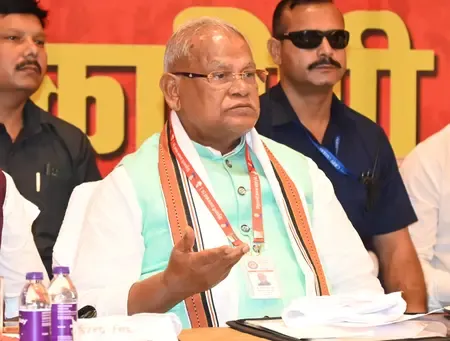
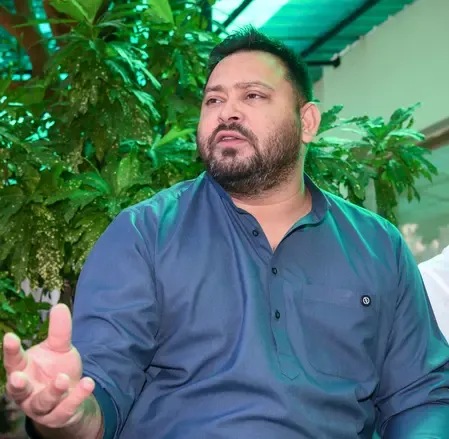
Rohini Acharya, elder sister of Rashtriya Janata Dal (RJD) leader Tejashwi Yadav, on Tuesday, 22 September sharply rebuked Union Minister and Hindustani Awam Morcha (HAM) patron Jitan Ram Manjhi over his remarks connecting Tejashwi to the Jamui molestation case. The exchange has further inflamed political tensions in Bihar over the state government's handling of the case.
The Encounter and What Triggered the Row
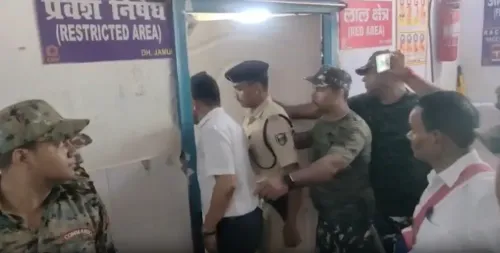
The controversy centres on police action against Nandan Yadav, identified as the main accused in the Jamui case involving a teenage girl. He sustained a gunshot injury to his leg during a police encounter on Tuesday, according to reports. A second accused, Hare Ram Yadav, was also reportedly injured during the same operation.
The underlying incident dates to 19 September, when two Class 10 students — including a girl — were allegedly targeted in Jamui. Police registered a case after a video of the alleged incident surfaced online and identified several suspects. Three people were initially arrested, while others remain at large. The investigation is continuing.
What Manjhi Said on X
Manjhi, in a post on X, invoked Tejashwi's past remarks about Yadavs being his 'brothers' and sardonically suggested that Tejashwi might now claim Chief Minister Samrat Choudhary had had his 'brother' shot. He added that the state government would not spare those involved in such incidents — a line the ruling alliance has framed as a defence of the police response.
Rohini Acharya's Rebuttal
Responding directly on X, Acharya accused Manjhi of deploying 'cheap and crude rhetoric' over a sensitive criminal matter. She said his remarks reflected a deterioration in his 'mental balance and political judgment', and questioned why a Union Minister would resort to divisive language instead of demanding strict action against the accused.
Acharya argued that criminals should not be identified by religion or caste, and accused Manjhi of attempting to tar the broader Yadav community with the actions of an individual. 'Justice means punishing criminals, not defaming or targeting an entire caste,' she said.
She also noted that members of the Yadav community are associated with multiple parties across Bihar and the country — including the Bharatiya Janata Party (BJP), Janata Dal (United) (JD-U), HAM, and others — and asked whether an entire caste, its leaders, or a political party could be held responsible for the alleged conduct of one person.
The Broader Political Flashpoint
The Jamui incident has rapidly become a political battleground in Bihar. Opposition leaders have questioned the state government's handling of the case, while ruling alliance leaders have cited the police encounter as evidence of swift action. This comes amid heightened scrutiny of law and order in the state ahead of future electoral cycles, with caste dynamics playing a central role in how competing narratives are being constructed.
Notably, the Manjhi–Acharya exchange illustrates a recurring Bihar pattern: a criminal case escalating into a caste-coded political war of words, with social media posts becoming the primary arena. The investigation into the Jamui case is ongoing, and further political reactions are likely as the probe advances.
Frequently Asked Questions
What is the Jamui molestation case that triggered this political row?
The Jamui molestation case involves an alleged incident on 19 September in which two Class 10 students, including a girl, were targeted in Jamui, Bihar. Police registered a case after a video of the alleged incident surfaced, and three people were initially arrested while others remain at large.
What did Jitan Ram Manjhi say that drew Rohini Acharya's response?
Manjhi posted on X invoking Tejashwi Yadav's past remarks calling Yadavs his 'brothers', sardonically suggesting Tejashwi might claim Chief Minister Samrat Choudhary had had his 'brother' shot — a reference to the police encounter with accused Nandan Yadav. He added that the state government would not spare those involved in such incidents.
What was the police encounter in the Jamui case?
Main accused Nandan Yadav sustained a gunshot injury to his leg during a police encounter on Tuesday, 22 September, according to reports. A second accused, Hare Ram Yadav, was also reportedly injured during the same operation.
What was Rohini Acharya's central argument in her rebuttal?
Acharya argued that criminals must not be identified by caste or religion, and that a Union Minister resorting to divisive rhetoric instead of demanding justice was itself a failure of political responsibility. She stated that members of the Yadav community span multiple parties and that an entire caste cannot be held accountable for the alleged actions of one individual.
How has the Jamui case become a political flashpoint in Bihar?
The case has divided Bihar's political landscape, with opposition leaders questioning the state government's handling of the matter and ruling alliance leaders defending the police encounter as prompt action. The Manjhi–Acharya social media exchange reflects how caste-coded narratives are being constructed around a criminal case in the lead-up to future state elections.