RSS march at JNU sparks political row; Sangh calls it 'good beginning'

Synopsis
The RSS marching in Ganvesh through JNU’s campus for Vijayadashami is not just a ceremonial event — it is a deliberate incursion into one of India’s most politically contested university spaces. With Congress and AAP raising law-and-order alarms and the Sangh framing it as democratic normalcy, the episode crystallises a broader battle over who gets to claim the idea of the Indian university.
Key Takeaways
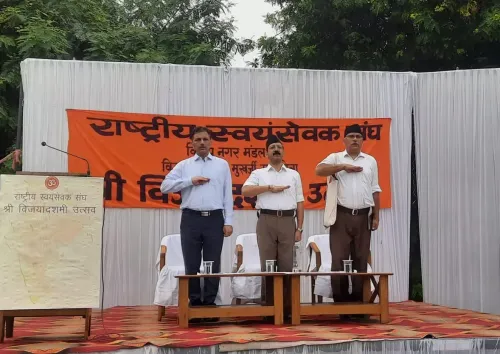
The RSS held a Path Sanchalan at JNU in New Delhi on Saturday as part of its Vijayadashami Utsav .
RSS National Executive Member Indresh Kumar called the march a ‘good beginning,’ framing it as an exercise in democratic participation.
Hanumantha Rao warned of a ‘dangerous situation’ and predicted law and order problems on campus.
AAP MP Sanjay Singh alleged that the march was made possible by government protection extended to the RSS.
The JNU administration had not issued any official statement on the event at the time of reporting.
A sharp political controversy broke out on Sunday, 19 October 2025, a day after the Rashtriya Swayamsevak Sangh (RSS) held a Path Sanchalan (march-past) at Jawaharlal Nehru University (JNU) in New Delhi as part of its Vijayadashami Utsav. The RSS described the event as a “good beginning,” while opposition leaders from the Indian National Congress and the Aam Aadmi Party (AAP) warned of a “dangerous situation” for the campus’s academic environment.
What Happened at JNU
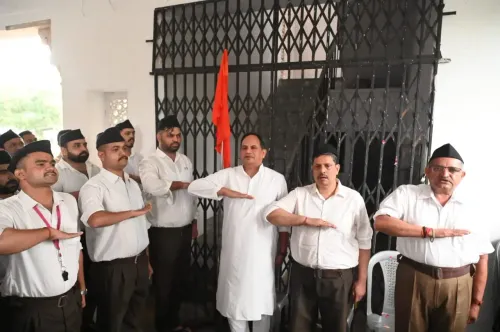
RSS volunteers, known as karyakartas, marched across the JNU campus on Saturday in their full uniform, called Ganvesh, as part of the organisation’s annual Vijayadashami celebrations. The procession was presented as an affirmation of the Sangh’s commitment to discipline, service, and social harmony. Participants reportedly displayed coordinated drill and organisational unity throughout the event.
Notably, JNU has historically been regarded as a stronghold of Left and liberal student politics, making the RSS’s public march on its campus a symbolically charged development that drew immediate national attention.
What the RSS Said
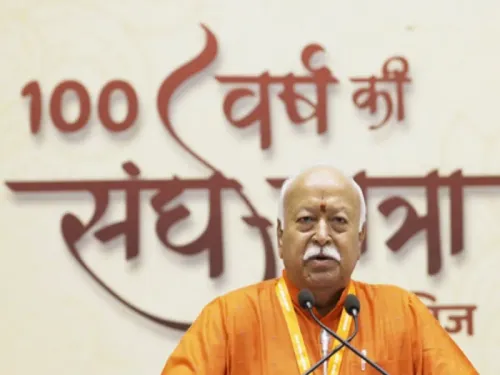
RSS National Executive Member Indresh Kumar defended the march, arguing that it should be seen as a sign of democratic normalcy rather than provocation. “India is a democratic country. If people abandon anarchy and follow democracy, it should not be surprising to see the Rashtriya Swayamsevak Sangh’s Path Sanchalan inside JNU. Anarchist elements should follow the path of democracy, not the path that leads to the destruction of the Constitution. Therefore, this is a good beginning,” Kumar said, speaking to reporters.
The RSS framed the Vijayadashami Utsav at JNU as an occasion for volunteers to reaffirm their broader social objectives, including what the organisation describes as a positive contribution to national life.
Opposition Raises Alarm
Congress leader V. Hanumantha Rao alleged that the RSS’s presence at JNU could create communal tensions and disrupt the institution’s functioning. Rao claimed the march was part of a broader shift in campus politics, referencing the Akhil Bharatiya Vidyarthi Parishad (ABVP)’s existing presence. “This is a really very dangerous situation; a law and order problem will be there. RSS means fundamentalist. They want only Hindu; they don’t want Muslim, they don’t want Christian, they don’t want other communities. So, in JNU, it will start. Automatically, education will spoil, and all students, anytime, chaos will be there,” Rao said.
AAP MP Sanjay Singh linked the event to what he described as government backing for the Sangh. “Now, look, when the government provides protection, all kinds of programmes take place. So, they are also doing their own programme. They have the protection of the police and the government everywhere,” Singh said. Neither the university administration nor the government had issued an official response at the time of reporting.
Broader Context
JNU has been a flashpoint in Indian campus politics for decades, with periodic clashes between student groups of differing ideological persuasions. The RSS’s Vijayadashami marches are held annually across the country to mark the organisation’s founding anniversary, but holding one within JNU’s gates is unprecedented in recent memory, according to reports. This comes amid a period of heightened political competition over university spaces, with several central universities seeing increased activity by both Sangh-affiliated and opposition-linked student bodies.
What Comes Next
The JNU administration has not yet commented on whether the event was officially sanctioned or how it was facilitated. Opposition parties are likely to raise the issue in upcoming legislative sessions. Campus political observers will be watching whether the march triggers any student protests or counter-demonstrations in the coming days.
Point of View
Not a spontaneous celebration. For an organisation that has long sought cultural legitimacy in elite institutions, JNU’s symbolic value is obvious. What the opposition’s reaction misses, however, is that alarm-raising without a specific legal or administrative challenge plays directly into the Sangh’s framing: that those who object are the ‘anarchists.’ The real question — whether university administration sanctioned the event and under what conditions — is the one neither side has yet answered publicly.
NationPress
18 Oct 2026
Frequently Asked Questions
What is the RSS Path Sanchalan at JNU?
It is a march-past conducted by RSS volunteers in their official uniform (Ganvesh) on the JNU campus in New Delhi, held as part of the organisation’s annual Vijayadashami Utsav celebrations. The event drew national attention because JNU has historically been associated with Left and liberal student politics, making the RSS’s public procession there symbolically significant.
Why is the RSS march at JNU controversial?
Opposition leaders argue that an RSS march on the JNU campus could inflame communal tensions, disrupt the academic environment, and represent a politicisation of a central university. Congress and AAP leaders have separately warned of law and order consequences and alleged government backing for the event.
What did the RSS say about the march?
RSS National Executive Member Indresh Kumar defended the march as a demonstration of democratic participation, saying it should not surprise anyone in a democratic country. He framed critics of the event as ‘anarchist elements’ who should embrace constitutional norms.
Who criticised the RSS march at JNU?
Congress leader V. Hanumantha Rao and AAP MP Sanjay Singh both publicly criticised the march. Rao warned of law and order problems and alleged the march would damage the campus atmosphere, while Singh claimed the event was facilitated by police and government protection extended to the RSS.
Has the JNU administration responded to the RSS march?
As of the time of reporting, the JNU administration had not issued any official statement on the march, its sanctioning, or the conditions under which it was held. The absence of an official response is likely to keep the controversy alive in the coming days.