South Korea defence minister calls for self-reliant military alongside stronger US alliance

Synopsis
At the Shangri-La Dialogue in Singapore, South Korean Defence Minister Ahn Gyu-back laid out a dual-track security doctrine: build self-reliant capabilities while deepening the US alliance. With North Korea gaining live combat experience in Ukraine and advancing its nuclear programme, Seoul is no longer content to be a passive ally — it wants a leading role in Indo-Pacific security.
Key Takeaways
South Korean Defence Minister Ahn Gyu-back spoke at the Shangri-La Dialogue in Singapore on 30 May 2025 .
Ahn called for self-reliant defence capabilities alongside a strengthened US alliance , citing evolving North Korean threats.
North Korea’s alignment with Russia and combat experience in Ukraine were flagged as new regional security risks.
Seoul’s three-axis deterrence system — comprising KAMD , Kill Chain , and KMPR — is being advanced alongside AI-driven and drone capabilities.
Ahn reaffirmed South Korea’s openness to dialogue with Pyongyang and its intent to contribute to security in the Strait of Hormuz .
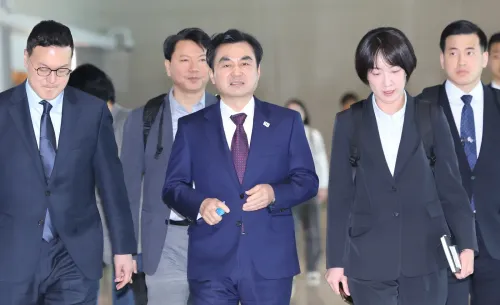
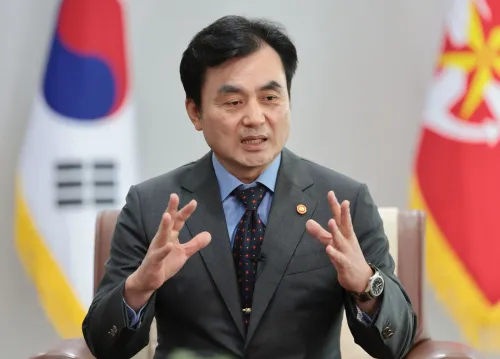
South Korean Defence Minister Ahn Gyu-back on Saturday, 30 May called for a dual-track security strategy — building Seoul's own defence capabilities while deepening its alliance with the United States — as North Korea's growing alignment with Russia and battlefield experience in Ukraine reshape threat calculations across the Indo-Pacific.
Key Remarks at Shangri-La Dialogue
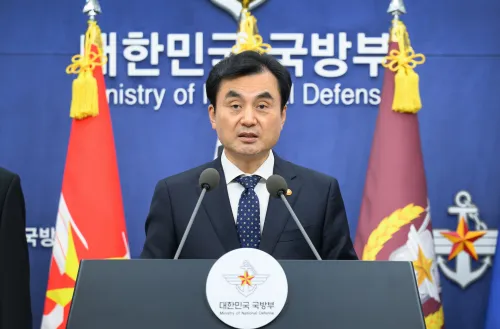
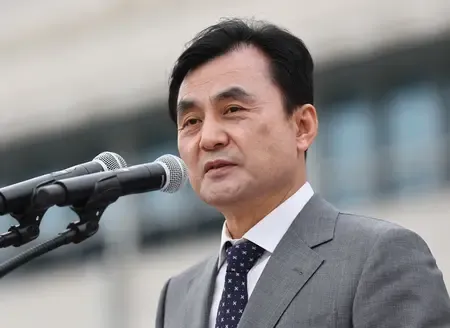
Speaking at the Asian Security Summit, also known as the Shangri-La Dialogue, held in Singapore, Ahn warned that Pyongyang's military buildup is no longer a peninsula-level concern. “The North’s military buildup and its advancement of nuclear and missile capabilities are adding to instability across the entire Indo-Pacific region ... The developments on the Korean Peninsula clearly act as a key variable in global security,” he said.
Ahn also affirmed that South Korea, officially the Republic of Korea, would pursue both tracks simultaneously: “The Republic of Korea will continue its efforts to strengthen self-reliant defense capabilities in tandem with enhancing the alliance (with the United States).”
The Three-Axis Deterrence System
Central to Seoul’s self-reliant posture is its three-axis deterrence system, which comprises three interlocking components. The Korea Air and Missile Defence (KAMD) provides a multilayered missile shield. The Kill Chain platform enables preemptive strike capability against imminent threats. The Korea Massive Punishment and Retaliation (KMPR) system is designed to deliver a devastating counter-strike. Ahn said South Korea is also reinforcing US extended deterrence — Washington’s commitment to deploying its full military arsenal, including nuclear weapons, in defence of its allies.
Building a 'Smart Military'
Ahn outlined plans to modernise the South Korean military in line with evolving warfare, describing efforts to build a ‘smart military’ powered by artificial intelligence-based systems and advanced drone and anti-drone defence platforms. “Through these efforts, we will play a more leading role in the defense of the Korean Peninsula,” he said.
Dialogue with Pyongyang and Hormuz Commitment
Despite the firm deterrence posture, Ahn reaffirmed Seoul’s openness to engagement with North Korea. “The most reliable security comes with peace that does not need war,” he said, adding that South Korea would “pursue our peaceful coexistence policy through dialogue between the two Koreas.”
Ahn also signalled Seoul’s intent to contribute to security in the Strait of Hormuz, which remains under strain amid the ongoing US-Iran conflict. He said the government is “actively reviewing practical measures” to support freedom of navigation in key sea lanes, in line with international law and domestic legal requirements.
Why It Matters
North Korea’s reported deployment of troops to support Russia in Ukraine has given Pyongyang real-world combat exposure that analysts say could accelerate its military modernisation. Combined with advances in its nuclear and missile programmes, this has prompted South Korea — and its Indo-Pacific partners — to recalibrate security frameworks. Ahn’s address at one of Asia’s most prominent defence forums signals that Seoul is positioning itself as a more proactive security actor, not merely a dependent ally. The coming months will test whether Seoul’s expanded deterrence posture translates into concrete capability upgrades and regional partnerships.
Point of View
Not just reassurance. The emphasis on a ‘smart military’ and the three-axis system suggests Seoul is hedging against the possibility that US extended deterrence could become less automatic in a shifting geopolitical climate. North Korea’s Ukraine deployment is a genuine inflection point — Pyongyang now has combat-tested troops and real-time feedback on modern warfare, which changes the peninsula’s threat calculus in ways that South Korea’s existing deterrence architecture was not fully designed for. The Hormuz commitment, however tentative, also marks a quiet but significant expansion of Seoul’s security ambitions beyond its immediate neighbourhood.
NationPress
14 Oct 2026
Frequently Asked Questions
What did South Korea’s Defence Minister say at the Shangri-La Dialogue?
Defence Minister Ahn Gyu-back called for South Korea to build self-reliant defence capabilities while simultaneously strengthening its alliance with the United States. He cited North Korea’s military buildup, nuclear advances, and battlefield experience in Ukraine as key threats to Indo-Pacific stability.
What is South Korea’s three-axis deterrence system?
It is a three-part defence framework comprising the KAMD multilayered missile shield, the Kill Chain preemptive strike platform, and the Korea Massive Punishment and Retaliation (KMPR) system. Together, they are designed to detect, intercept, and retaliate against North Korean threats.
Why is North Korea’s involvement in Ukraine a concern for South Korea?
North Korea’s reported troop deployment alongside Russia in Ukraine has given Pyongyang direct combat experience in modern warfare. South Korean officials argue this accelerates the North’s military modernisation and adds a new dimension of instability to the Korean Peninsula and the broader Indo-Pacific.
Is South Korea open to talks with North Korea?
Yes. Despite the strong deterrence posture, Minister Ahn reaffirmed Seoul’s commitment to dialogue and a ‘peaceful coexistence policy,’ stating that ‘the most reliable security comes with peace that does not need war.’
What is South Korea’s position on the Strait of Hormuz?
Ahn said South Korea places great importance on freedom of navigation in key sea lanes and is actively reviewing practical measures to contribute to security in the Strait of Hormuz, in line with international law and its domestic legal requirements.