South Korea reviewing Hormuz contribution but rules out war involvement
Synopsis
South Korean President Lee Jae Myung has drawn a firm red line — no war, no conflict — while simultaneously confirming Seoul is actively reviewing how to expand its Hormuz presence. It is a delicate balancing act: keeping Washington satisfied and oil lanes secure without crossing a domestic political tripwire against overseas military entanglement.
Key Takeaways
President Lee Jae Myung on 18 September 2026 ruled out any troop dispatch that could lead to South Korea's involvement in overseas conflict.
Seoul is actively reviewing ways to 'strengthen measures' for freedom of navigation through the Strait of Hormuz under pressure from US President Donald Trump .
A South Korean investigation team recently returned from the UAE to assess the Middle East security situation, indicating preparations for a possible limited deployment.
The Cheonghae naval unit has already expanded the scope of its regional mission.
Lee confirmed he is acting as a 'preliminary mediator' to facilitate potential North Korea-US dialogue , describing resumed talks as an important step toward Korean Peninsula stability.
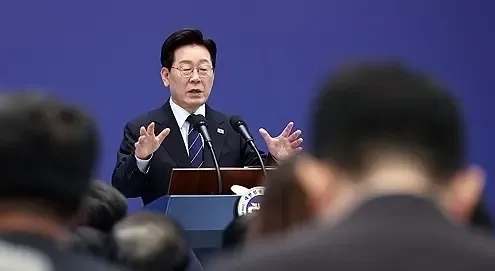
South Korean President Lee Jae Myung on Friday, 18 September 2026, firmly ruled out any troop dispatch that could draw South Korea into an overseas conflict, even as Seoul continues to deliberate over potential 'contributions' to ensuring freedom of navigation through the Strait of Hormuz. The remarks came during a nationally televised press conference amid mounting pressure from US President Donald Trump for allied nations to bolster security along the critical oil transit route.
The President's Core Position
'Let it be clear. There will be no dispatch of troops that will lead to involvement in a conflict. There will be no engagement or involvement in war,' Lee said at the press conference. He added that 'the principle of no engagement or involvement in war has been observed so far and will continue to be observed in the future.'
At the same time, Lee acknowledged that South Korea must conduct 'at least the minimum level of activities' to protect its citizens, ships, and crude oil supply lines — mirroring what other nations are already doing in the region.
What Seoul Is Actually Reviewing
A South Korean on-site investigation team returned home last week after completing a mission to the United Arab Emirates to assess the overall safety situation across the Middle East — an apparent sign of preparations for a possible, limited military deployment. South Korea's Cheonghae naval unit, which already operates in the region with an anti-piracy mandate, has expanded the scope of its mission. Lee confirmed the government is 'reviewing and thinking about ways to strengthen measures' in the area, though he drew a sharp distinction between expanded naval presence and combat engagement.
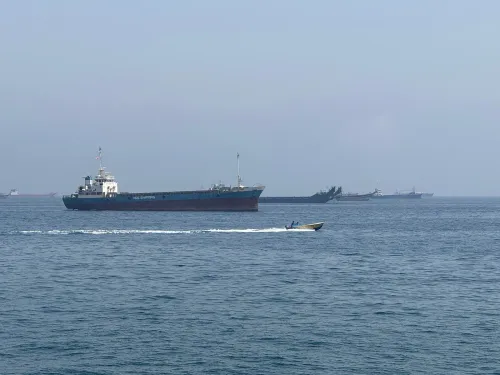
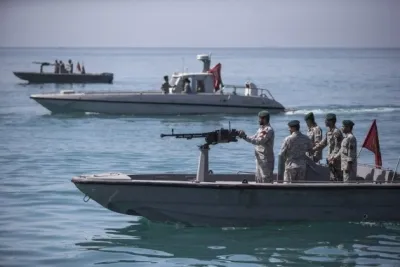
This comes amid broader international debate over who bears the security burden for one of the world's most critical chokepoints. Roughly 20% of global oil trade transits the Strait of Hormuz, and South Korea — a major crude importer — has a direct economic stake in keeping it open.
North Korea-US Dialogue: A Preliminary Role
Lee was also asked about the prospects of renewed dialogue between North Korean leader Kim Jong-un and Trump. The president said the possibility 'cannot be ruled out although it would be admittedly difficult,' while stressing that Seoul must do its utmost to make it happen. 'The resumption of North Korea-US dialogue would be far easier than resuming inter-Korean dialogue and help resume dialogue between the two Koreas,' he noted.
Lee described himself as 'continuing to play the role of a preliminary mediator' to facilitate any such engagement, signalling that Seoul sees a Kim-Trump meeting as a potential gateway for stabilising the Korean Peninsula.
What Happens Next
Seoul has yet to announce a formal decision on the nature or scale of any additional Hormuz contribution. With the Cheonghae unit's expanded mandate already in place, the government's review is expected to focus on whether to formalise or publicly announce a broader operational scope. Analysts expect a decision to be framed carefully to satisfy Washington's expectations without triggering domestic opposition to overseas military entanglement.
Point of View
Threading the needle between allied obligation and political optics. Meanwhile, Lee's self-described role as 'preliminary mediator' on North Korea-US dialogue is quietly significant — Seoul inserting itself into a bilateral channel it has historically struggled to influence. Whether Washington and Pyongyang see value in that role is the real open question.
NationPress
18 Sept 2026
Frequently Asked Questions
What did South Korea's President say about the Strait of Hormuz?
President Lee Jae Myung said South Korea is reviewing ways to strengthen its presence in the Strait of Hormuz to protect citizens, ships, and crude oil supply lines, but firmly ruled out any troop deployment that could draw the country into armed conflict.
Why is South Korea being asked to contribute to Hormuz security?
US President Donald Trump has been pressing allied nations to support freedom of navigation along the Strait of Hormuz, through which a significant share of global oil trade — including South Korea's crude imports — passes. Seoul has been deliberating over the form and scale of any contribution.
What is the Cheonghae unit and what is its current role?
The Cheonghae unit is a South Korean naval deployment originally tasked with anti-piracy operations. It has since expanded the scope of its mission to carry out relevant activities in the Middle East region amid the current security review.
What did Lee Jae Myung say about North Korea-US dialogue?
Lee said the possibility of resumed talks between North Korean leader Kim Jong-un and US President Trump 'cannot be ruled out,' though he acknowledged it would be difficult. He described himself as a 'preliminary mediator' working to make such dialogue possible.
Has South Korea made a final decision on its Hormuz contribution?
No formal decision has been announced. A South Korean investigation team recently returned from the UAE to assess the regional security situation, and the government says it is still reviewing options to strengthen its presence without committing troops to any conflict.