Seoul clarifies Lee's 'no war' remark is not a rejection of Trump's Hormuz request
Synopsis
South Korea's presidential office is walking a diplomatic tightrope: President Lee Jae Myung's blunt 'no war intervention' declaration on live television is not, Seoul insists, a rebuff of Trump's Hormuz troop request — it's a principle, not a refusal. The real question is whether Washington will accept a non-combat naval contribution as a substitute for the military cooperation it is pressing for.
Key Takeaways
South Korea's presidential office on 19 September 2026 clarified that President Lee Jae Myung's 'no war intervention' remarks were not a rejection of President Trump's request for Seoul to send forces to the Strait of Hormuz .
A presidential official said Seoul 'has been reviewing practical ways to contribute' in coordination with the US and the broader international community.
President Lee stated on Friday that 'there will be no dispatch of troops that engages or intervenes in a war' , while referencing the existing deployment of the Cheonghae Unit for counter-piracy duties in the region.
Seoul is examining whether an expanded role for the Cheonghae Unit can constitute a meaningful contribution without crossing into combat involvement.
The row follows a New York Times report that characterised Lee's press conference remarks as a direct rejection of Trump's appeal for South Korean military cooperation in the Middle East.
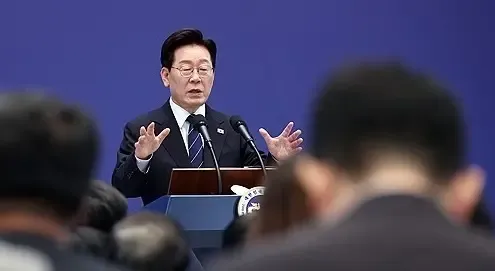
South Korean President Lee Jae Myung's office on Saturday, 19 September 2026, clarified that his remarks ruling out troop deployments that could embroil the country in armed conflict were not a refusal of US President Donald Trump's request for Seoul to contribute forces to the strategic Strait of Hormuz. The clarification followed a New York Times report suggesting Lee's comments at a nationally televised press conference on Friday amounted to a rejection of Washington's appeal for South Korean military cooperation in the Middle East.
What the Presidential Office Said
A presidential official, speaking to reporters on condition of anonymity, pushed back firmly against the characterisation. "Lee did not turn down Trump's request for South Korea's cooperation on Middle East-related issues during yesterday's press conference," the official said. The official added that "the government has been reviewing practical ways to contribute in close communication with the international community, including the United States, in order to protect our citizens and safeguard national interests."
Seoul, the official stressed, would continue examining concrete options while adhering to its stated principle of non-involvement in war or combat operations.
What Lee Jae Myung Actually Said
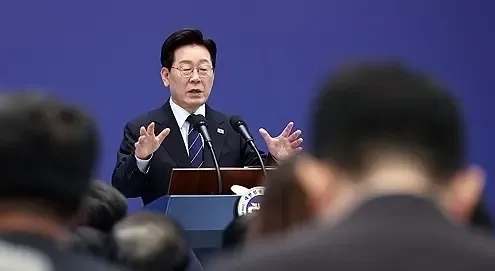
During Friday's press conference, President Lee drew a firm red line on the question of military engagement. "There will be no dispatch of troops that engages or intervenes in a war," he said, while simultaneously noting that the Cheonghae Unit — South Korea's existing anti-piracy naval contingent — is already deployed in the region and that Seoul is actively reviewing ways to expand its role there.
Lee underscored the point: "Let it be clear. There will be no dispatch of troops that will lead to involvement in a conflict. There will be no engagement or involvement in war." He further asserted that this principle "has been observed so far and will continue to be observed in the future."
The Diplomatic Backdrop
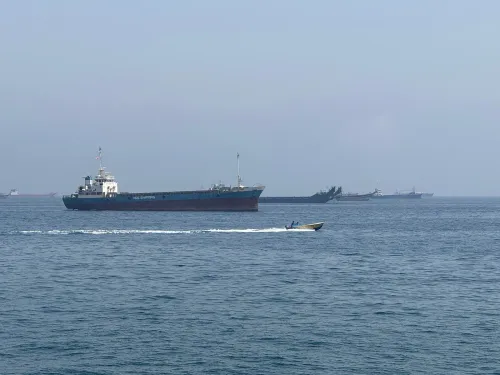
The remarks come at a sensitive juncture. Seoul has been deliberating over what it terms 'contributions' to freedom of navigation in the Strait of Hormuz — one of the world's most critical oil transit corridors — amid sustained pressure from Washington. The Trump administration has reportedly sought allied burden-sharing in the region as US military posture in the Middle East faces renewed scrutiny.
Notably, the gap between Lee's public framing and Washington's expectation is not merely semantic. South Korea's constitution and public opinion place significant constraints on overseas troop deployments for combat purposes, making any expansion of the Cheonghae Unit's mandate — which is currently restricted to counter-piracy operations — politically fraught domestically.
What Happens Next
Seoul has signalled it will continue to engage the United States through diplomatic channels to identify non-combat forms of contribution. Whether an expanded naval or logistical role for the Cheonghae Unit can satisfy Trump's expectations without crossing Lee's self-imposed red lines remains the central question. Analysts expect further back-channel consultations between Seoul and Washington in the days ahead.
Point of View
And a purely semantic clarification is unlikely to close the gap between what Washington wants and what Lee can politically deliver at home. South Korea's constitutional and public-opinion constraints on overseas combat deployments are real, but so is its dependence on the US security umbrella — making this a stress test of the alliance's flexibility. The Cheonghae Unit workaround is the most plausible off-ramp, but only if Washington accepts it as substantive rather than symbolic.
NationPress
19 Sept 2026
Frequently Asked Questions
What did South Korea's presidential office say about Lee Jae Myung's Strait of Hormuz remarks?
Seoul's presidential office said on 19 September 2026 that President Lee Jae Myung's comments ruling out troop dispatches involving the country in war were not a rejection of US President Donald Trump's request for South Korean forces at the Strait of Hormuz. An official stated that Seoul is reviewing practical ways to contribute in close coordination with the United States and the international community.
What did President Lee Jae Myung say about sending troops to the Strait of Hormuz?
At a nationally televised press conference on Friday, Lee said 'there will be no dispatch of troops that engages or intervenes in a war.' He stressed this principle has been observed consistently and will continue to apply. He also noted that the Cheonghae Unit is already deployed in the region for counter-piracy operations and that Seoul is reviewing ways to strengthen that role.
Why did the New York Times report cause a diplomatic stir?
The New York Times reported that Lee's remarks amounted to a rejection of Trump's appeal for South Korean military cooperation in the Middle East. Seoul's presidential office pushed back, saying Lee's words reflected a standing principle rather than a direct refusal of Washington's specific request.
What is the Cheonghae Unit and what role could it play?
The Cheonghae Unit is South Korea's existing naval deployment tasked with counter-piracy operations in the region. Seoul is reportedly considering expanding its mandate as a way to contribute to freedom of navigation in the Strait of Hormuz without crossing into combat involvement, which Lee's stated principle prohibits.
What happens next in US-South Korea talks over the Strait of Hormuz?
Seoul has signalled it will continue diplomatic consultations with Washington to identify non-combat contributions. Analysts expect further back-channel discussions, with the viability of an expanded Cheonghae Unit role as the central negotiating question between the two allies.