French President Macron Deems Military Action for Strait of Hormuz Liberation 'Unrealistic'
Synopsis
In a recent address, French President Emmanuel Macron labeled military efforts to reclaim the Strait of Hormuz as 'unrealistic,' urging for renewed dialogue to resolve the West Asia conflict. He criticized US President Trump's contradictory stance on NATO and global alliances, emphasizing the necessity for serious negotiations with Iran.
Key Takeaways
Macron condemns military intervention as unrealistic for liberating the Strait of Hormuz.
Importance of negotiations with Iran emphasized by Macron.
Critique of Trump's contradictory statements regarding NATO and global alliances.
Strait of Hormuz holds significant strategic value for oil transport.
Concerns about regional stability in West Asia persist amidst ongoing conflicts.
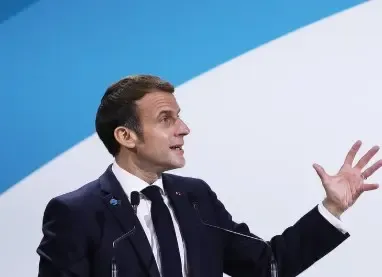
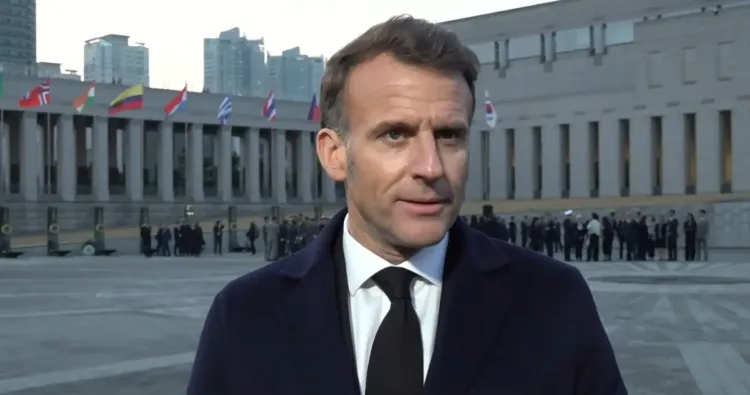
Seoul, April 2 (NationPress) Advocating for the revival of discussions to address the ongoing turmoil in West Asia, French President Emmanuel Macron asserted on Thursday that it is "unrealistic" to initiate a military operation aimed at freeing the Strait of Hormuz.
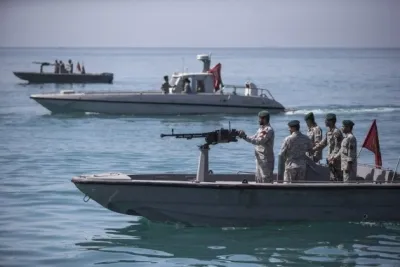
"Certain individuals propose that the Strait of Hormuz can be liberated through military force, a stance occasionally voiced by the United States. This notion is impractical, as it would require an excessive amount of time and would place anyone traversing the strait at risk from coastal threats posed by the (Iranian) Revolutionary Guards, who have substantial resources, along with ballistic missiles, among other dangers," Macron stated during his State Visit to South Korea, as reported by Euro News.
"This situation can only be resolved in collaboration with Iran. Therefore, a ceasefire must be prioritized, coupled with a revival of negotiations," he continued.
The persistent conflict in West Asia has heightened worries regarding regional stability and the global energy market, particularly given the strategic significance of the Strait of Hormuz, a vital oil transport corridor.
Macron accused US President Donald Trump of generating confusion through his contradictory statements concerning the West Asian conflict.
"You must maintain seriousness. When you wish to be taken seriously, you do not make statements that contradict what you said the previous day. It may be best to limit your comments," Macron remarked.
He also charged Trump with undermining the North Atlantic Treaty Organization (NATO) by sowing "daily doubt" about the US's commitment to the alliance, as reported by Euro News.
"Creating daily uncertainty regarding your commitment only serves to weaken it," Macron stated, adding that there is "too much chatter... going in multiple directions."
Trump has continuously criticized NATO, questioning its relevance in contemporary conflicts and suggesting that the alliance might not support the United States in a significant war.
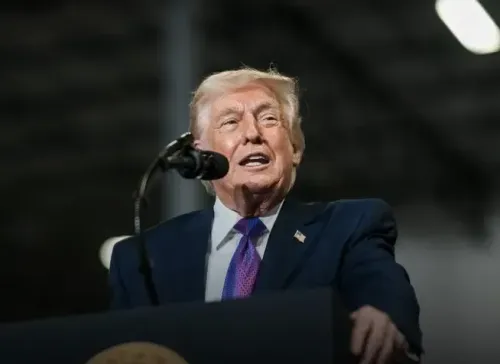
During a White House Easter luncheon on Wednesday, Trump remarked that recent military engagements revealed deep flaws within the transatlantic alliance. "We have had some very poor allies in NATO," he declared, noting that the bloc had failed to respond when called upon.
He characterized NATO as ineffective in actual conflict scenarios. "They are merely a paper tiger," Trump asserted, claiming that the US did not require the alliance's assistance during current operations.
Trump mentioned that he had reached out to several NATO members for support but received little commitment. "Many of them said they would assist after the war concludes," he criticized, describing their response as delayed and largely symbolic.
The US President expressed that this response amplified his worries about NATO's reliability. "NATO will not be there if we face a major conflict," he warned, suggesting that the alliance might falter in a significant global confrontation.
Trump also highlighted what he perceived as an imbalance in the sharing of responsibilities. "The US has invested trillions into NATO," he noted, while receiving minimal support when it was needed.
In his statements, as shown in a video uploaded by the White House on its YouTube channel, Trump singled out key allies, including France and the UK, implying that they were either unwilling or slow to offer assistance. The White House later reportedly removed the video from YouTube.
Point of View
The unfolding situation reflects the complexities of international diplomacy. Macron's call for dialogue rather than military intervention highlights a pragmatic approach to resolving conflicts. The emphasis on NATO's role and the need for cohesive strategies among allies underscores the importance of stability in global political dynamics.
NationPress
7 Oct 2026
Frequently Asked Questions
What did President Macron say about military action in the Strait of Hormuz?
President Macron stated that it is 'unrealistic' to consider military action to liberate the Strait of Hormuz and emphasized the need for diplomatic negotiations instead.
How did Macron criticize President Trump?
Macron accused President Trump of creating confusion with contradictory statements regarding the West Asia conflict, particularly concerning NATO's effectiveness.
What is the significance of the Strait of Hormuz?
The Strait of Hormuz is a strategic oil transit route that plays a crucial role in global energy markets, making its stability vital for international trade.
What did Trump say about NATO?
Trump criticized NATO, claiming it has been ineffective and that the US does not require its support during military operations.
What is the current situation in West Asia?
The ongoing conflict in West Asia has raised concerns about regional stability and global energy supply, particularly due to the strategic importance of the Strait of Hormuz.