France ready to back US-Iran deal; Macron proposes Hormuz escort mission
Synopsis
Macron has moved France from observer to active stakeholder in the US-Iran standoff — pledging a Franco-British maritime escort mission for the Strait of Hormuz the moment a deal is signed, while simultaneously working the phones across Riyadh, Abu Dhabi, Muscat, and Cairo. Paris is betting that this diplomatic sprint produces a framework before the window closes.
Key Takeaways
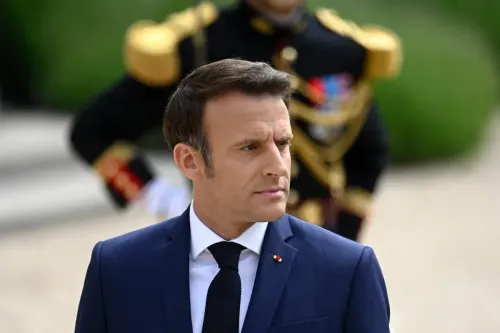
French President Emmanuel Macron declared on 1 June that France is ready to fully support a US-Iran agreement.
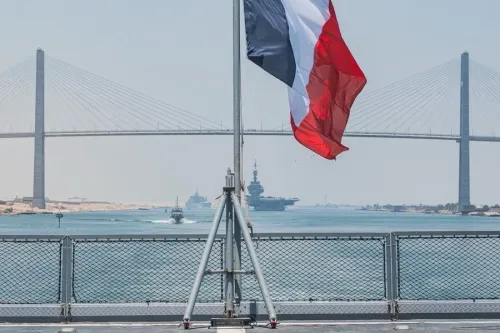
A France-Britain co-led multinational maritime escort mission is on standby for deployment in the Strait of Hormuz once a deal is reached.
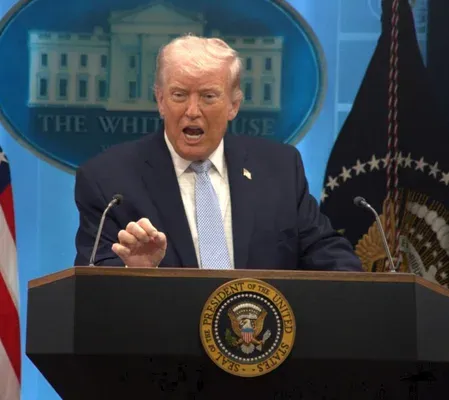
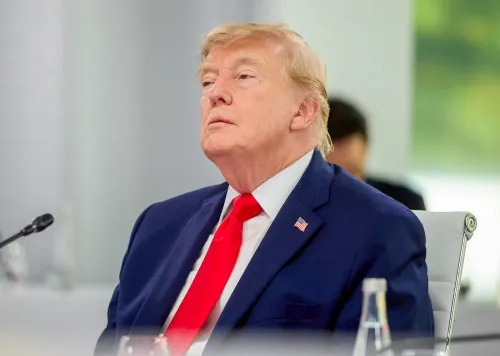
Macron posted his remarks on X after a phone call with US President Donald Trump on Sunday.
France is prepared to contribute expertise on the nuclear component of any broader agreement with Iran.
Macron held calls with leaders of Saudi Arabia , Oman , the UAE , and Egypt , urging a swift US-Iran deal.
The priority, per Macron, is an unconditional ceasefire and reopening of the Strait of Hormuz, followed by comprehensive talks on Iran's nuclear and ballistic missile programmes.
French President Emmanuel Macron on Monday, 1 June declared that France is prepared to fully support efforts to secure an agreement between the United States and Iran, calling the current diplomatic moment a 'unique opportunity' to build a lasting security framework in the Middle East. The announcement followed a phone call between Macron and US President Donald Trump on Sunday.
The Hormuz Escort Mission
A multinational maritime escort mission, co-led by France and Britain, is on standby and will be deployed 'as soon as an agreement is reached,' Macron said. The mission is designed to help secure commercial shipping through the Strait of Hormuz, a critical global chokepoint through which roughly 20% of the world's oil supply passes. Macron stressed that reopening the strait without conditions and in line with international law is the immediate priority.
What Macron Said After the Trump Call
Posting on X after his conversation with Trump, Macron welcomed the US president's 'determined efforts' to reach a swift agreement with Tehran. 'I indicated that we are ready to fully support these efforts and play our full part in their implementation. This is the purpose of the international mission we have established with the British and our partners,' he wrote. France also signalled readiness to contribute technical expertise to broader negotiations, particularly on the nuclear dimension of any prospective deal.
Regional Diplomacy: Calls Across the Gulf
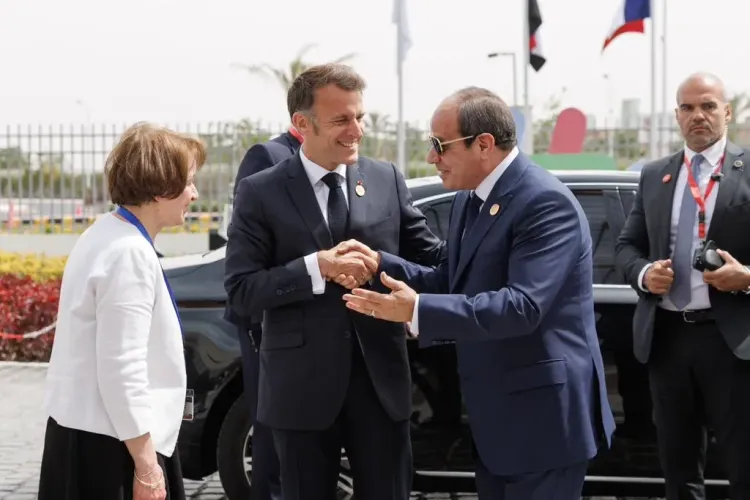
Earlier on Monday, Macron held separate calls with Saudi Arabia's Crown Prince and Prime Minister Mohammed bin Salman, Oman's Sultan Haitham bin Tariq, UAE President Sheikh Mohamed bin Zayed Al Nahyan, and Egyptian President Abdel-Fattah al-Sisi. According to Macron, he delivered a consistent message to all four leaders: it is essential for Washington and Tehran to reach an agreement quickly. The outreach underscores Paris's effort to position itself as a diplomatic bridge between Western powers and Gulf states ahead of any formal talks.
Lebanon and the Broader Security Framework
Macron also raised Lebanon during his regional calls, emphasising 'the importance of a robust ceasefire and collective support for the Lebanese authorities.' He welcomed what he described as the US 'commitment' to Lebanon's sovereignty and territorial integrity. Any comprehensive framework, Macron indicated, would need to address not only Iran's nuclear programme but also its ballistic missile capabilities and its role in regional stability — issues that have historically complicated multilateral negotiations with Tehran.
What Comes Next
Macron's framing suggests a two-stage approach: first, secure a ceasefire and unconditional reopening of the Strait of Hormuz; then pursue a broader, 'comprehensive and robust' agreement covering nuclear and ballistic missile issues. Whether Washington and Tehran can bridge their differences fast enough to activate the Franco-British maritime mission remains to be seen, but Paris has now publicly staked its diplomatic credibility on facilitating that outcome.
Point of View
Paris gives Washington a tangible deliverable to show Tehran — and gives itself a seat at the table it has struggled to hold since the collapse of the JCPOA. The back-to-back Gulf calls are notable; Macron is not waiting for a US-Iran bilateral to crystallise before locking in Arab buy-in. The risk is that France is front-running a deal that may not materialise, leaving the escort mission as a stranded asset and Macron's credibility exposed. The nuclear and ballistic missile dossiers remain the hardest to crack, and Paris's 'expertise' offer, while genuine, has not historically moved Tehran.
NationPress
16 Sept 2026
Frequently Asked Questions
What did Emmanuel Macron announce about the US-Iran agreement?
Macron announced on 1 June that France is ready to fully support efforts to reach a US-Iran agreement, describing the moment as a 'unique opportunity.' He also confirmed that a Franco-British multinational maritime escort mission is on standby for the Strait of Hormuz, to be activated as soon as a deal is reached.
What is the France-Britain maritime escort mission for the Strait of Hormuz?
It is a multinational mission co-led by France and Britain designed to secure commercial shipping through the Strait of Hormuz once a US-Iran agreement is in place. Macron said the mission is ready for immediate deployment and will operate in accordance with international law.
Why is the Strait of Hormuz significant in US-Iran talks?
The Strait of Hormuz is a critical maritime chokepoint through which a significant share of global oil supplies passes. Securing it without conditions is Macron's stated first priority, as tensions between the US and Iran have raised concerns about freedom of navigation in the waterway.
Which regional leaders did Macron contact ahead of this announcement?
Macron spoke with Saudi Arabia's Crown Prince Mohammed bin Salman, Oman's Sultan Haitham bin Tariq, UAE President Sheikh Mohamed bin Zayed Al Nahyan, and Egyptian President Abdel-Fattah al-Sisi, delivering the same message to each: a swift US-Iran deal is essential.
What is France's role on the nuclear component of any Iran deal?
France has indicated it stands ready to contribute technical and diplomatic expertise specifically on the nuclear dimension of any broader agreement with Iran. This would cover Iran's nuclear programme and, according to Macron, its ballistic missile capabilities and regional stability role.