France and UK to Lead Discussions on Navigational Freedom in the Strait of Hormuz
Synopsis
France and the UK are gearing up for critical talks aimed at restoring navigation freedom in the vital Strait of Hormuz, a crucial oil transit route. With tensions rising, leaders like Macron and Starmer emphasize the importance of diplomatic solutions.
Key Takeaways
France and the UK are co-hosting talks on restoring navigation in the Strait of Hormuz.
Macron emphasizes the urgency of diplomatic solutions to the Middle East conflict.
The Strait of Hormuz is a critical route for global oil shipments.
UK Prime Minister Starmer highlights the economic impact of the strait's closure.
The US has announced a naval blockade in response to threats from Iran.
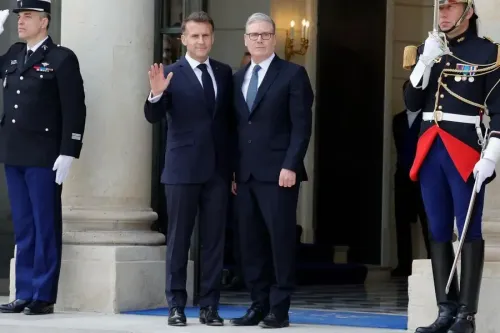
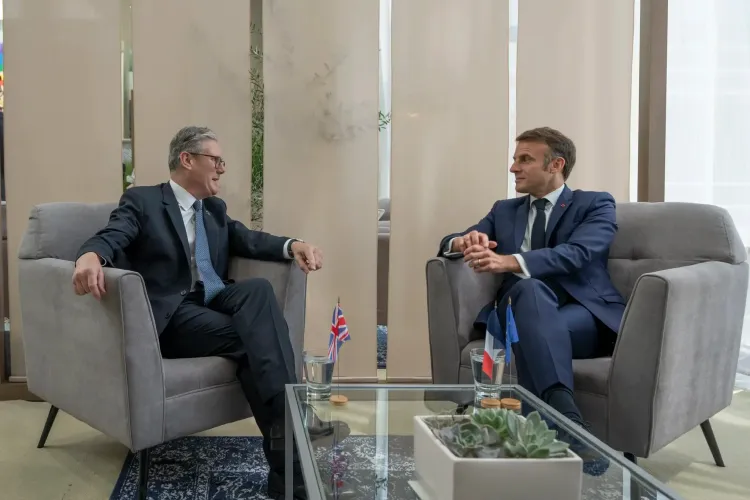
Paris, April 13 (NationPress) The governments of France and the United Kingdom are preparing to jointly host discussions this week aimed at reinstating freedom of navigation in the Strait of Hormuz.
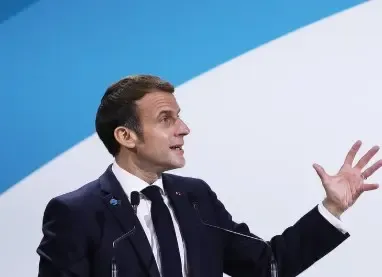
In a recent announcement on X, French President Emmanuel Macron emphasized the urgency of restoring unhindered navigation through the Strait of Hormuz and reaffirmed the importance of helping Lebanon find peace while upholding its sovereignty and territorial integrity. He advocated for a diplomatic resolution to the ongoing conflict in the Middle East and affirmed France's willingness to contribute.
"We must exert every effort to achieve, through diplomatic avenues, a strong and enduring resolution to the Middle East conflict. This resolution should establish a solid framework for all to coexist in peace and security. Therefore, it is essential to address all fundamental issues, including Iran’s nuclear and ballistic endeavors, its destabilizing actions in the region, the swift restoration of free navigation in the Strait of Hormuz, and the need for Lebanon to return to a peaceful path in full respect of its sovereignty and territorial integrity," Macron stated.
"France is prepared to fully engage, as it has consistently aimed to do since the outset of the conflict. Regarding the Strait of Hormuz, we will be organizing a conference in the coming days with the United Kingdom and those nations willing to collaborate with us on a peaceful multinational mission focused on restoring freedom of navigation. This strictly defensive mission, independent from the warring parties, is set to be deployed as conditions permit," he added.
The Strait of Hormuz, which connects the Persian Gulf to the Gulf of Oman and the Arabian Sea, serves as one of the globe's most vital oil transport routes, accounting for nearly a fifth of worldwide oil shipments.
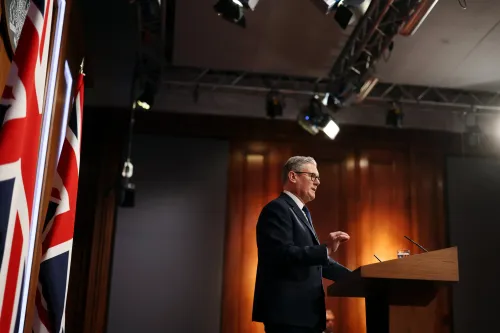
UK Prime Minister Keir Starmer characterized the closure of the Strait of Hormuz as "deeply damaging," stressing that the movement of global shipping is critical for alleviating cost of living challenges.
"The ongoing closure of the Strait of Hormuz is profoundly damaging. Resuming global shipping is crucial for mitigating cost of living pressures. The UK has brought together over 40 nations that share our objective of restoring navigation freedom. This week, the UK and France will co-host a summit to propel efforts on a coordinated, independent, multinational strategy to safeguard international shipping post-conflict," Starmer noted on X.
The decision by Macron and Starmer to convene talks follows a statement from US President Donald Trump, who announced a sweeping naval blockade of the Strait of Hormuz, accusing Iran of persistently pursuing its nuclear ambitions even after extensive talks in Pakistan.
In a series of detailed posts on Truth Social, Trump remarked that negotiations "went well" and "most points were agreed upon," but claimed that Tehran remained "unyielding on the single most critical issue," stating: "IRAN IS UNWILLING TO GIVE UP ITS NUCLEAR AMBITIONS!"
He accused Iran of failing to uphold promises to keep the Strait of Hormuz open, asserting that the situation has led to "anxiety, dislocation, and pain for many people and countries around the globe."
"They claim to have placed mines in the water," Trump wrote, emphasizing that uncertainties surrounding maritime safety have effectively discouraged shipping.
"What ship owner would take that risk?"
Labeling the situation as "WORLD EXTORTION," Trump indicated that the US would respond with immediate and forceful actions.
"Effective immediately, the United States Navy will start the process of BLOCKADING any and all vessels attempting to enter or exit the Strait of Hormuz," he declared.
He mentioned that US forces would aim to interdict every vessel in international waters that has paid a toll to Iran, warning that "no one who pays an illegal toll will enjoy safe passage on the high seas."
Trump further stated that US naval units would begin demolishing mines allegedly planted by Iran in the strategic waterway, issuing a stark warning: "Any Iranian who fires at us, or at peaceful vessels, will be BLOWN TO HELL!"
The US President asserted that the blockade would persist until free navigation is reinstated, condemning the current situation as a breach of international standards governing maritime trade routes.
Point of View
The joint efforts of France and the UK to convene talks highlight a proactive approach towards ensuring maritime security and regional peace. These discussions underscore the importance of international cooperation in addressing complex geopolitical challenges.
NationPress
26 Sept 2026
Frequently Asked Questions
Why is the Strait of Hormuz important?
The Strait of Hormuz is a critical oil transit route, carrying nearly a fifth of global oil shipments, making it vital for the world economy.
What prompted the talks between France and the UK?
The talks were prompted by ongoing tensions and the need to restore freedom of navigation in the Strait of Hormuz following a naval blockade announced by the US.
What role is France playing in the Middle East conflict?
France is advocating for a diplomatic resolution to the Middle East conflict and is prepared to contribute to efforts aimed at restoring peace and security.
What actions has the US taken regarding the Strait of Hormuz?
The US has announced a naval blockade of the Strait of Hormuz in response to perceived threats from Iran, aiming to ensure the safety of international shipping.
How can the international community assist in this situation?
The international community can collaborate through diplomatic channels and contribute to a multinational mission aimed at safeguarding navigation in the Strait of Hormuz.