Will the Vijayan Government Change Its Stance on Sabarimala?
Synopsis
As the Supreme Court readies to hear the Sabarimala women's entry verdict review, the Kerala government is adopting a cautious stance. With influential community organizations pressuring for a shift in position, the outcome could have significant legal and electoral impacts. Explore the complexities surrounding this pivotal issue.
Key Takeaways
The Kerala government is approaching the Sabarimala case with caution.
Community organizations are advocating for changes in the government's stance.
The Supreme Court's hearings will begin on April 7, with arguments concluding by April 22.
The intersection of faith and social reform is a central theme in this discussion.
The outcomes could have significant legal and electoral ramifications.
Thiruvananthapuram, Feb 16 (NationPress) As the Supreme Court prepares to continue its hearings regarding the review of the verdict on women's entry into Sabarimala, the Kerala government has adopted a cautious approach, indicating that it will make a thorough decision after considering all elements of the situation.
State Law Minister P. Rajeev emphasized that the matter cannot simply be answered with a "yes or no".
He characterized it as involving intricate constitutional issues, asserting that the government would determine its position following comprehensive discussions.
Rajeev highlighted that the previous stance was aligned with the apex court's ruling from 2018.
He stated that faith and social reform must coexist, a principle echoed in the government's affidavit submitted to the court.
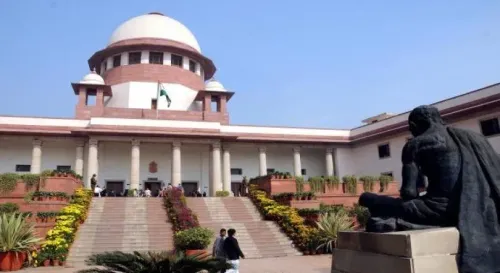
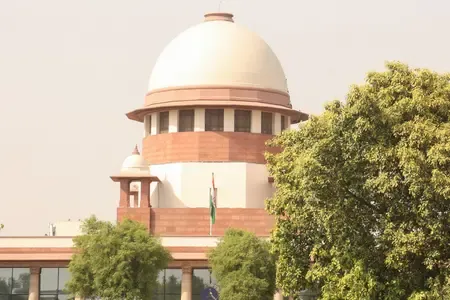
Earlier today, a nine-judge Constitution Bench of the Supreme Court announced it will begin hearing the topics related to the Sabarimala review starting April 7.
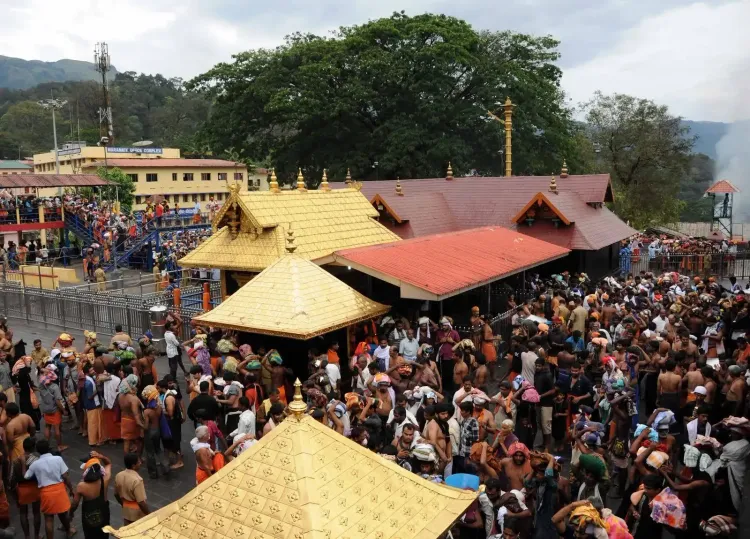
The Bench, led by Chief Justice of India (CJI) Surya Kant, is addressing a group of review petitions against the September 2018 decision that allowed women of all ages to enter the Lord Ayyappa temple in Sabarimala, and has set a timetable for concluding arguments by April 22.
It instructed all parties to submit their written statements by March 14.
As the case returns to judicial examination, community organizations in Kerala have increased their pressure on the state to reconsider its position.
The Nair Service Society (NSS) has insisted that the government take a stand against unrestricted women’s entry.
NSS General Secretary G. Sukumaran Nair stated that both the state and the Devaswom Board need to rectify their previous support for young women’s access.
He emphasized that the issue should remain separate from electoral politics, asserting that the NSS is committed to safeguarding faith and hopes to preserve the traditional practices currently upheld at Sabarimala.
Nair also called for the withdrawal of cases related to the namajapa protest marches.
A similar viewpoint was expressed by the Sree Narayana Dharma Paripalana Yogam (SNDP Yogam).
Its General Secretary Vellappally Natesan urged the government to "correct what needs to be corrected" and oppose women's entry.
He reminded that the SNDP had previously declared the verdict disappointing, arguing that efforts to enforce it are inappropriate and affirming that Sabarimala’s customs should remain unchanged.
Natesan encouraged the government to make a decision after consulting all stakeholders.
With powerful community organizations reiterating their opposition and political parties sharpening their positions, the eventual stance of the state government before the Supreme Court is likely to carry significant legal and electoral consequences.
Point of View
It is vital to maintain a balanced perspective. While community sentiments are strong, the legal implications and constitutional questions cannot be overlooked. The Nation's stance is to promote dialogue and understanding, ensuring that all voices are heard in this sensitive matter.
NationPress
13 Oct 2026
Frequently Asked Questions
What is the current status of the Sabarimala case?
The Supreme Court will resume hearings on the women's entry verdict review starting April 7.
What has the Kerala government said regarding the case?
The Kerala government has indicated a cautious approach, stating it will take a comprehensive decision after considering all aspects.
What do community organizations like NSS and SNDP want?
They are pressing the government to oppose unrestricted entry of women into Sabarimala, emphasizing the protection of faith.