Is the Sabarimala Theft Case More Extensive Than Initially Thought?

Synopsis
The Sabarimala gold theft incident has evolved into a shocking revelation of an extensive and organized crime. With the Special Investigation Team uncovering systematic removal of gold from multiple sacred structures, the case highlights significant lapses and raises questions about trust and security at religious sites.
Key Takeaways
The Sabarimala theft case is more extensive than initially believed.
Gold was removed from several sacred structures within the temple.
The operation involved multiple actors and required technical expertise.
Recoveries of stolen gold are still ongoing.
Institutional lapses may have contributed to the theft.
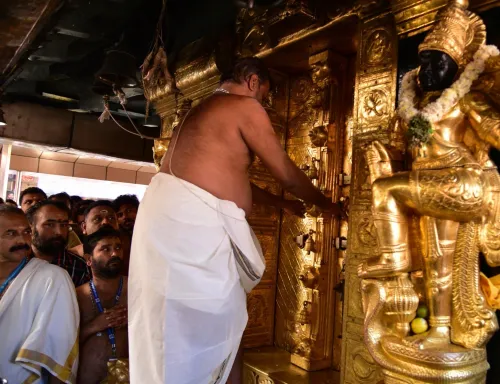
Thiruvananthapuram, Jan 1 (NationPress) The Sabarimala gold theft incident has proven to be much more elaborate and carefully orchestrated than was first assumed. The Special Investigation Team (SIT) has uncovered that gold was deliberately extracted from various sacred structures within the hill shrine, indicating a long-term, organized operation.
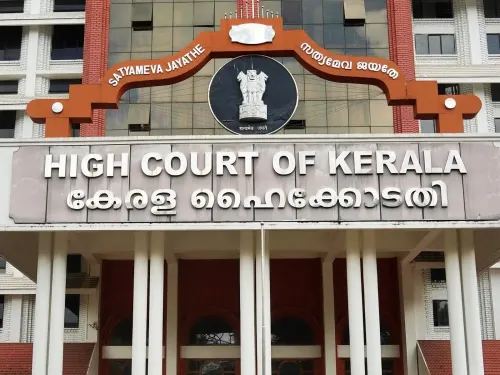
A significant report presented by the SIT to the Kerala High Court recently confirmed that the theft was not confined to a single location within the temple.
Investigators discovered that gold was removed from as many as seven distinct layers of structures linked to the sanctum.
The findings indicate that gold plating affixed to the Shiva idol and the 'vyali' (mythical creature) figures placed above the kattila layers was also meticulously taken, highlighting the precision with which this operation was executed.
The investigation has shown that the stolen gold was covertly transported out of Kerala to Chennai, where it was delivered to Smart Creations for separation and processing.
The SIT report emphasizes that this process necessitated technical know-how and logistical planning, reinforcing the idea that the heist involved a network of individuals rather than a single act of theft.
Investigators have informed the High Court that the amount of gold recovered thus far is merely a fraction of the total quantity stolen.
The SIT has asserted that additional recoveries are forthcoming and that the investigation is ongoing to trace the remaining gold and identify all participants in the supply chain.
In a noteworthy turn of events, Pankaj Bhandari, CEO of Smart Creations and a suspect in the case, has surrendered 109.243 grams of gold to the SIT, which he allegedly received as payment for his workmanship.
The expanded scope of the investigation has also highlighted institutional failures that may have allowed the theft to occur over time.
With custodial interrogations yielding new leads and further questioning planned, the SIT is expected to deliver additional findings to the High Court in the near future.
As more information comes to light, the Sabarimala gold heist is increasingly seen as a significant violation of trust that extends far beyond initial perceptions.
To date, 10 individuals have been arrested, including three CPI(M) leaders who held prominent positions as president, commissioner, and member of the Travancore Devasom Board. Meanwhile, the SIT is anticipated to make a few more arrests soon.
Point of View
It is our responsibility to present an unbiased perspective on this alarming situation. The Sabarimala theft case not only raises concerns about security at sacred sites but also highlights the systemic failures that may have allowed such a breach of trust to occur. Our commitment is to keep the public informed as this critical investigation progresses.
NationPress
29 Sept 2026
Frequently Asked Questions
What is the Sabarimala gold theft case?
The Sabarimala gold theft case involves the organized removal of gold from various sacred structures within the Sabarimala temple complex in Kerala, revealing a much larger operation than initially thought.
Who is involved in the investigation?
The Special Investigation Team (SIT) is leading the investigation, which has resulted in the arrest of several individuals, including prominent CPI(M) leaders.
What has been recovered so far?
So far, only a portion of the stolen gold has been recovered, with the SIT expecting further discoveries as the investigation continues.
How was the stolen gold transported?
The investigation revealed that the stolen gold was covertly transported out of Kerala to Chennai for processing.
What are the implications of this case?
The case raises significant concerns about trust and security at religious sites, as well as potential institutional failures that may have facilitated the theft.