Did Op Sindoor Showcase the Strength of DRDO's Weapon Systems?
Synopsis
On DRDO's 68th Foundation Day, Defence Minister Rajnath Singh lauded the pivotal role of its weapon systems in Operation Sindoor. He emphasized the importance of indigenous technology and collaboration with the private sector to enhance India's Defence capabilities.
Key Takeaways
Rajnath Singh commended DRDO for its role in Operation Sindoor .
DRDO is pivotal for India's defense capabilities.
Indigenous technologies enhance national security.
Collaboration with the private sector is essential.
Continuous innovation is necessary for future readiness.
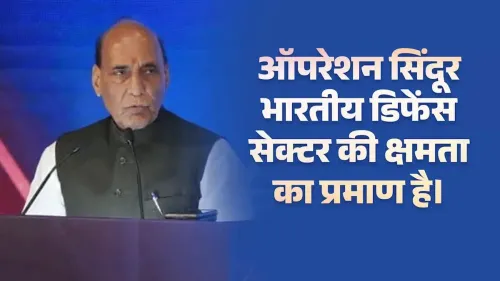
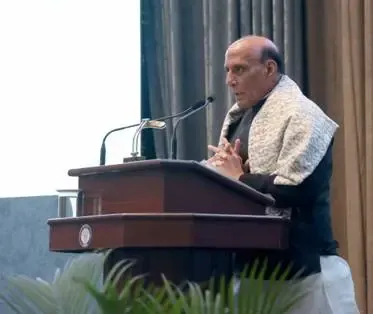
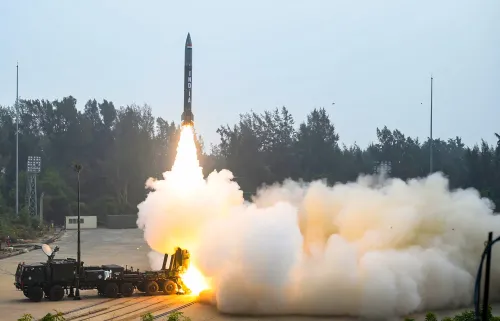
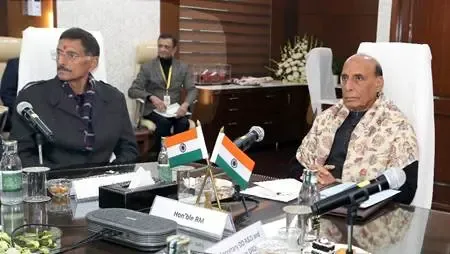
New Delhi, Jan 1 (NationPress) Defence Minister Rajnath Singh commended the Defence Research and Development Organisation (DRDO) for the pivotal part its weapon systems played during Operation Sindoor. On the occasion of DRDO's 68th Foundation Day, he stated, "The systems crafted by DRDO were crucial in Operation Sindoor, highlighting the dedication and professionalism of the organization in protecting our national interests."
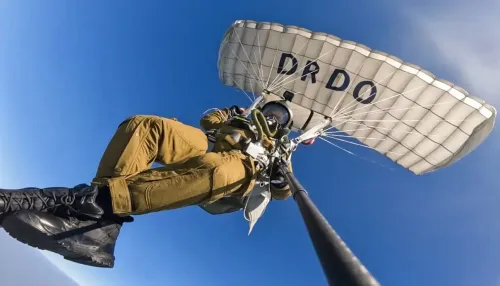
In a message on social media, Singh shared, "Visited the @DRDO_India Headquarters in New Delhi on their 68th Foundation Day. Applauded Team DRDO for enhancing India's indigenous capabilities by providing the Armed Forces with cutting-edge technologies and platforms."
During the ceremony at the DRDO headquarters, he recognized the commitment of the scientists and staff, praising their steadfast dedication, scientific prowess, and strong sense of national responsibility.
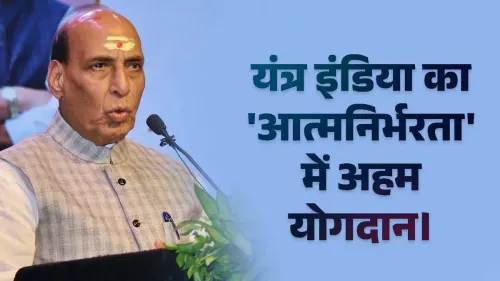
In another post on X, the Defence Minister expressed, "On DRDO Day, I convey my warm wishes to all DRDO scientists, staff, and their families. Their unwavering dedication, scientific brilliance, and sense of duty are essential for fortifying India's Defence readiness and advancing Atmanirbhar Bharat in Defence."
"Through the development of indigenous, forward-looking technologies, DRDO is strengthening our strategic independence and the confidence of our armed forces. I wish the entire DRDO community a year filled with significant advancements and continued dedication to the nation," Singh added.
The Defence Minister expressed optimism that DRDO will be instrumental in creating the Sudarshan Chakra, as announced by Prime Minister Modi during his address from the ramparts of the Red Fort on Independence Day 2025.
“As part of this initiative, DRDO will be tasked with providing our critical facilities with an air defence system to guarantee complete aerial security over the coming decade. The significance of air defence in modern warfare was highlighted during Operation Sindoor. I am confident that DRDO will diligently pursue this objective,” he stated.
Singh acknowledged DRDO's role as not just a technology creator but also as a trust builder, making the public look toward it with hope and assurance.
Highlighting DRDO's partnership with the private sector, he pointed out that the enhanced collaboration with industry, academia, and start-ups has led to the development of a synergistic Defence ecosystem. “DRDO has continually refined its systems, processes, and operational methods. From procurement to project management, and from industry collaboration to partnerships with start-ups and MSMEs, there is a clear effort to streamline operations, making them more efficient and dependable,” he remarked.
He urged DRDO to keep advancing in alignment with the rapidly changing technological landscape and to continue producing relevant products.
The Defence Minister called for ongoing innovation and the identification of additional areas to enhance private sector involvement.
Praising the strides DRDO is making in deep tech and next-generation technologies, he noted that progress in this area will not only boost the nation's capabilities but will also strengthen the Defence ecosystem.
Singh emphasized that today's era is characterized not just by science but by continuous evolution and learning. He stated that technology assessment, capability evaluation, and future preparedness are no longer mere concepts in our fast-paced world.
“The world is transforming daily. Technology, innovation, and new warfare domains are advancing swiftly, rendering past knowledge obsolete. We must never assume that the learning journey has concluded. Continuous learning and self-challenge are essential to pave the way for future generations,” he remarked.
The DRDO was established in 1958 through the merger of the Technical Development Establishment and the Directorate of Technical Development and Production of the Indian Ordnance Factories with the Defence Science Organisation, under the leadership of then Prime Minister Jawaharlal Nehru.
The organization comprises around 5,000 scientists from the DRDS and approximately 25,000 other supporting scientific, technical, and administrative personnel who collectively contribute to enhancing the country's Defence capabilities and technological self-sufficiency.
Point of View
It is essential to recognize the contributions of the Defence Research and Development Organisation in bolstering our national security. The government's commitment to enhancing indigenous capabilities through DRDO is crucial for India's defense strategy. With advancements in technology and increased collaboration with the private sector, DRDO is on a path to create a robust defense ecosystem that aligns with national interests.
NationPress
11 Oct 2026
Frequently Asked Questions
What is the significance of Operation Sindoor?
Operation Sindoor showcased the effectiveness of indigenous weapon systems developed by DRDO, emphasizing the importance of self-reliance in defense technology.
What role does DRDO play in India's defense?
DRDO is responsible for research and development of defense technologies, ensuring that the Armed Forces are equipped with modern and effective systems.
How does DRDO collaborate with the private sector?
DRDO collaborates with private industries, academia, and start-ups to foster innovation and create a synergistic defense ecosystem.
Why is innovation important for DRDO?
Innovation is crucial for DRDO to keep pace with rapidly evolving technological landscapes and to meet the changing demands of modern warfare.
What is Atmanirbhar Bharat?
Atmanirbhar Bharat is an initiative aimed at making India self-reliant in various sectors, including defense, by promoting indigenous manufacturing and technological advancements.