Rajnath Singh urges DRDO to develop futuristic weapons for strategic edge
Synopsis
Rajnath Singh's address at DRDL Hyderabad was more than a ribbon-cutting — it was a direct order to DRDO to stop playing catch-up and start building ahead. With Operation Sindoor having validated Akash and BrahMos in live combat, the Defence Minister is now pushing for hypersonic weapons, AI platforms, and mass-production speed as the next frontier of India's strategic self-reliance.
Key Takeaways
Defence Minister Rajnath Singh inaugurated the Advanced Weapon System Complex at DRDL, Hyderabad on 12 June .
He directed DRDO to develop futuristic technologies — including hypersonic weapons , AI platforms , and electronic warfare systems — to secure India's strategic edge.
Akash and BrahMos systems were cited as having proven their capabilities during Operation Sindoor .
Singh stressed that large-scale, rapid mass production is as critical as technological superiority in modern warfare.
He called on the Missile and Strategic Systems (MSS) Cluster to remain India's core centre of defence innovation and self-reliance.
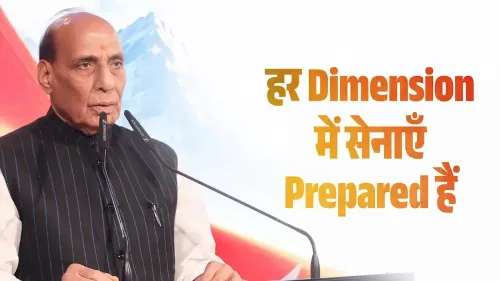
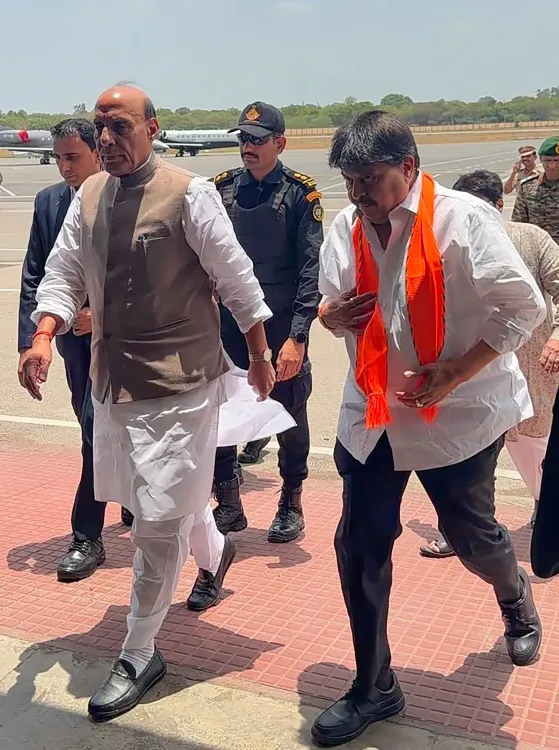
Defence Minister Rajnath Singh on Friday, 12 June called on the Defence Research and Development Organisation (DRDO) to accelerate work on futuristic technologies to secure India's strategic advantage in an increasingly volatile global order. He was speaking at the inaugural ceremony of the Advanced Weapon System Complex at the Defence Research and Development Laboratory (DRDL) in Hyderabad.
The Strategic Imperative
Singh painted a stark picture of the current global security environment. 'The world today is passing through the era of turmoil and uncertainty. There is conflict in some places, instability in others, and in a few regions, the situation is approaching outright war. The international order is undergoing a period of tension and change. Old assumptions are breaking down, and new alliances and new challenges are taking shape,' he said.
He stressed that DRDO's mandate must go beyond adapting to existing technological shifts. 'We must also work on futuristic technologies while forecasting future needs to gain a strategic advantage. We must not only address the challenges of the present, but also carry out our work keeping in mind the requirements of future warfare today itself,' Singh said.
Operation Sindoor Validates DRDO Systems
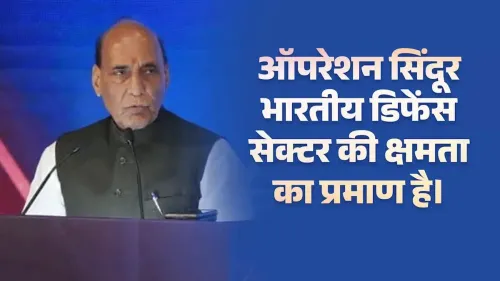
Singh highlighted that systems developed by DRDO — including the Akash surface-to-air missile and the BrahMos supersonic cruise missile — had demonstrated 'excellent capabilities in real-time situations' during Operation Sindoor. He said the operational success of these platforms proved that India can now compete credibly within the global defence technology ecosystem.
This is a significant endorsement coming from the Defence Minister at a flagship DRDO facility, underlining the political and strategic importance the government places on indigenous weapons development.
Redefining Modern Warfare
Singh identified the key technologies reshaping contemporary conflict: precision-strike capabilities, Integrated Air Defence Systems, hypersonic weapons, autonomous platforms, artificial intelligence, electronic warfare, and advanced sensor technologies. He said these domains are collectively redefining the character of modern warfare and that India must be a front-runner, not a follower.
Notably, the emphasis on hypersonic weapons and AI-driven platforms reflects a broader global arms race, with China, the United States, and Russia all accelerating programmes in these areas. India's focus on these technologies signals a deliberate effort to close capability gaps.
Production Speed as Critical as Technology
Singh underscored that technological superiority alone does not guarantee success in warfare — large-scale production capability is equally vital. He urged DRDO leadership to treat production as an integral part of the development process itself, calling for shorter development-to-production timelines and simplified manufacturing processes.
'Indigenous content will have to be increased, and we will have to develop such systems that can be rapidly mass-produced for the Armed Forces if needed,' he said. This push aligns with the Centre's broader Aatmanirbhar Bharat (self-reliance) agenda in defence, which has seen a growing list of items reserved for domestic procurement.
Confidence in the MSS Cluster
Singh expressed strong confidence in the Missile and Strategic Systems (MSS) Cluster, calling its role 'extremely crucial' in achieving India's goal of full defence self-reliance. He described the cluster as a future 'centre of innovation, excellence, and strategic strength' and said the government has 'unprecedented confidence' in DRDO to reduce India's technological dependence on foreign suppliers while enhancing the operational effectiveness of the armed forces.
With the Advanced Weapon System Complex now inaugurated, DRDO's next steps in hypersonic and AI-enabled defence platforms will be closely watched by both domestic defence planners and international observers.
Point of View
Not just what it celebrates. Praising Akash and BrahMos for Operation Sindoor is the easy part — the harder ask is compressing development-to-production timelines in an organisation historically more comfortable with prototypes than serial manufacturing. The call for indigenous mass-production capability is the right diagnosis, but DRDO's track record on delivery schedules means the proof will be in execution, not inauguration. The explicit mention of hypersonic weapons and autonomous platforms also signals that India is quietly accelerating a programme it has rarely publicised — worth watching closely.
NationPress
26 Oct 2026
Frequently Asked Questions
What did Rajnath Singh say to DRDO at Hyderabad?
Defence Minister Rajnath Singh urged DRDO to develop futuristic technologies — including hypersonic weapons, AI-driven platforms, and electronic warfare systems — to give India a strategic advantage in future conflicts. He was speaking at the inauguration of the Advanced Weapon System Complex at DRDL, Hyderabad on 12 June.
How did DRDO systems perform in Operation Sindoor?
According to Singh, DRDO-developed systems including the Akash surface-to-air missile and the BrahMos supersonic cruise missile demonstrated 'excellent capabilities in real-time situations' during Operation Sindoor. He said their success proved India can compete in the global defence technology ecosystem.
What technologies did Singh identify as critical for future warfare?
Singh listed precision-strike capabilities, Integrated Air Defence Systems, hypersonic weapons, autonomous platforms, artificial intelligence, electronic warfare, and advanced sensor technologies as the domains redefining modern warfare and where India must build capability.
Why did Singh stress mass production alongside technology development?
Singh argued that success in war is not ensured by technological superiority alone — large-scale production capability is equally important. He called on DRDO to treat production as integral to development, reduce timelines, and build systems capable of rapid mass manufacture for the armed forces.
What is the MSS Cluster and why is it significant?
The Missile and Strategic Systems (MSS) Cluster is a DRDO grouping focused on missile and strategic weapons development. Singh described it as 'extremely crucial' to India's defence self-reliance goal and expressed confidence it will remain a centre of innovation and strategic strength.