How Has Tech-Based SWAGAT Changed Grievance Redressal?
Synopsis
Discover how the SWAGAT program has transformed grievance redressal in Gujarat over the past two decades, enhancing citizen trust in governance through technology. Learn about its significant milestones, recent advancements, and the impact it has had on resolving long-standing issues.
Key Takeaways
SWAGAT has resolved over 99 percent of grievances in two decades.
The program enhances citizen-government communication.
SWAGAT 2.0 introduces an auto escalation system for timely resolutions.
Multiple monitoring dashboards ensure efficient grievance handling.
Real-life impacts include infrastructure development for farmers.
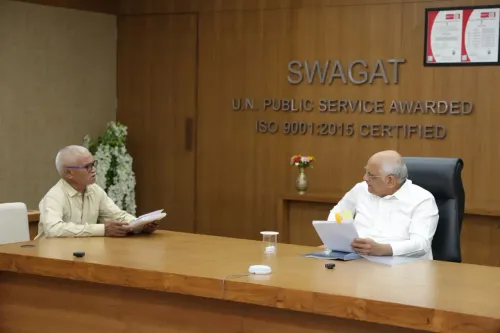
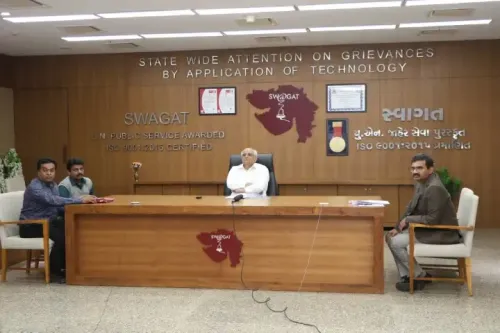
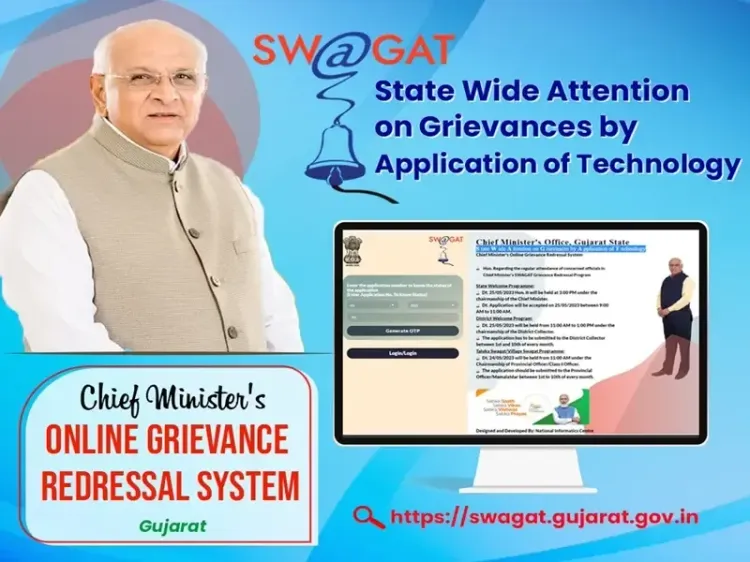
Gandhinagar, Jan 1 (NationPress) The SWAGAT (State-wide Attention on Grievances by Application of Technology) initiative, introduced 20 years ago in Gujarat, has been instrumental in enhancing public confidence in governance, achieving numerous significant milestones throughout its journey.
As per official reports, over 99 percent of applications, including citizens' complaints and grievances, have been successfully addressed via the SWAGAT platform in the last two decades, signifying a remarkable accomplishment for this pioneering initiative.
With SWAGAT 2.0, citizens’ grievances are handled within a defined timeframe, supplemented by regular performance evaluations of officials.
The innovative scheme was first initiated by former Chief Minister Narendra Modi in April 2003, aimed at closing the gap between citizens and the government through extensive technological integration.
The program's objective was direct yet impactful - to allow citizens to voice their grievances before the top government officials without fear, delays, or bureaucratic obstacles.
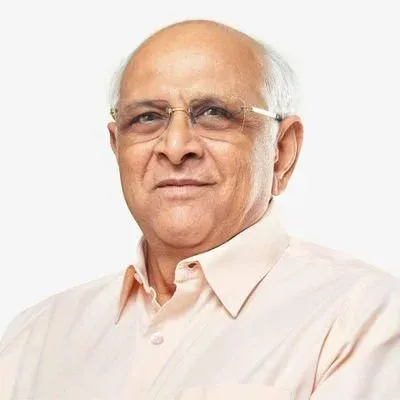
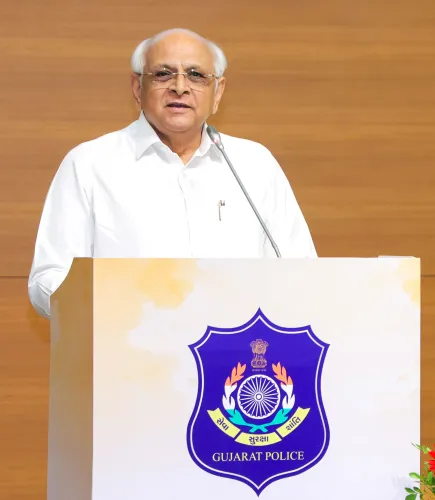
Over the years, the SWAGAT initiative has broadened its reach to include districts, talukas, and villages, currently overseen by Gujarat Chief Minister Bhupendra Patel.
Since its launch in 2003, the SWAGAT platform has persistently fortified public faith in the state government. Official statistics reveal that 99.10 percent of applications submitted in the last 22 years have been favorably resolved.
SWAGAT 2.0 and the Auto Escalation Matrix System
Designed as a dynamic and citizen-focused platform, SWAGAT has progressed alongside technological advancements.
Under Chief Minister Bhupendra Patel's leadership, the SWAGAT 2.0 Auto Escalation Matrix System was launched across all districts and state departments on December 25, 2024, coinciding with the introduction of the SWAGAT online mobile application.
The system had its initial rollout as a pilot project on December 25, 2023, during Good Governance Day, focusing on the Revenue and Panchayat Departments in the Patan and Kheda districts.
Post the pilot launch, of the 21,540 applications received, nearly 90 percent were qualitatively resolved within the prescribed timeframe. Motivated by this success, SWAGAT 2.0 was implemented statewide on Good Governance Day, December 25, 2024.
The contemporary SWAGAT framework incorporates an automatic escalation mechanism to prevent grievances from remaining unresolved at any stage. Defined time limits ensure qualitative issue resolution, with applications routed online to the relevant officials.
If a grievance remains unresolved beyond the designated period, it escalates automatically to a higher authority. Applicants receive SMS notifications at each stage, from registration to final resolution, while unresolved cases are closely monitored by the Chief Minister’s Office.
Monitoring dashboards and policy impact
To guarantee the prompt resolution of grievances, various monitoring dashboards have been developed. A performance dashboard is utilized to assess officials' responsiveness and efficiency.
These dashboards provide insights into the most commonly reported grievances across districts, aiding in identifying necessary policy-level interventions at the state level.
Numerous policy decisions have been influenced by the SWAGAT platform, particularly regarding farmers, land acquisition, education, encroachment on gauchar (pasture) land, re-survey challenges, and policing.
Resolution of a long-standing farmers' issue
In a significant case, a long-standing problem faced by farmers in Moddar village of Kutiyana taluka in Porbandar district was addressed through the SWAGAT mechanism.
For nearly 40 years, farmers had to travel an additional 15 km due to the lack of a bridge over the Sukhbhadar River connecting Moddar and Pasavari.
A local resident, Lakhmanbhai Navghanbhai Modedara, raised the issue at the taluka and district levels before it was finally addressed under the State SWAGAT platform.
The grievance underscored the challenges faced by 118 farmers farming on approximately 3,600 bighas of land. Following the representation, the Chief Minister directed the Roads and Buildings Department and the Porbandar Collector to expedite construction.
An all-weather road, alongside a minor bridge, culverts, and a 3-km stretch connecting Moddar and Pasavari, is now set to be developed at an estimated cost of Rs 9 crore.
Point of View
The evolution of the SWAGAT program highlights the significant strides made in governance through technology in India. The initiative not only resolves grievances efficiently but also builds a stronger relationship between the government and its citizens, setting a benchmark for similar programs across the nation.
NationPress
30 Sept 2026
Frequently Asked Questions
What is the SWAGAT program?
The SWAGAT program stands for State-wide Attention on Grievances by Application of Technology, launched in Gujarat to address citizens' grievances efficiently using technology.
Who initiated the SWAGAT program?
The SWAGAT program was initiated by former Chief Minister Narendra Modi in April 2003.
What percentage of grievances have been resolved through SWAGAT?
Over 99 percent of applications, including complaints and grievances, have been resolved through the SWAGAT platform in the last two decades.
How does the automatic escalation system work?
If a grievance is not resolved within the stipulated time, it automatically escalates to the next higher authority, ensuring accountability and prompt action.