Saharanpur mosque demolished on court order; Imran Masood to approach SC

Synopsis
A mosque inside Saharanpur's Collectorate complex was razed by bulldozer on Saturday after courts upheld a demolition order — but Congress MP Imran Masood says the Waqf Board was never made a party, land records still name private owners, and 70-80 years of continuous prayers establish Waqf by User. With a Supreme Court challenge imminent and an SP MP placed under house arrest, this is no ordinary demolition dispute.
Key Takeaways
The Uttar Pradesh administration demolished a mosque inside the Saharanpur Collectorate complex on 5 September using a bulldozer.
DIG Abhishek Singh confirmed the structure was declared illegal by the City Magistrate ; the District and Sessions Court rejected the Muslim side's appeal on Friday .
Congress MP Imran Masood announced he will challenge the demolition in the Allahabad High Court and the Supreme Court .
Masood argued the Waqf Board was not made a party to proceedings and that Khasra records still list private owners, not the government.
SP MP Iqra Hasan was reportedly placed under house arrest before she could travel to Saharanpur.
PAC and RRF personnel were deployed across Saharanpur; the administration said law and order is its top priority.
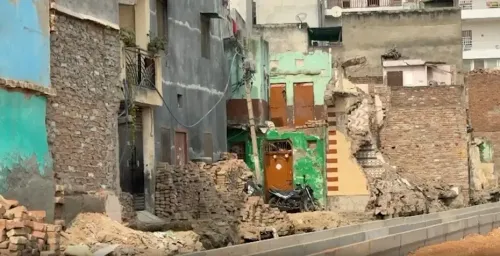
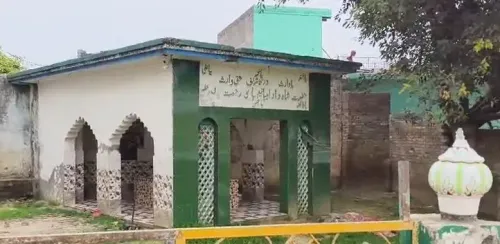
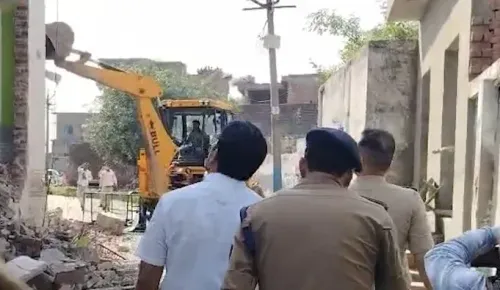
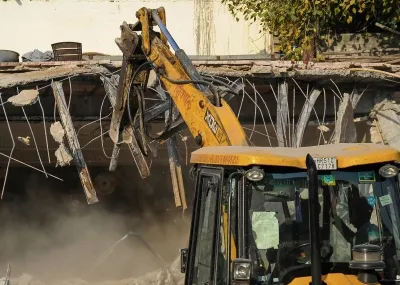
The Uttar Pradesh administration on Saturday, 5 September demolished a mosque inside the Collectorate complex in Saharanpur, after the District and Sessions Court rejected the Muslim side's appeal against a demolition order passed by the City Magistrate. The action, carried out using a bulldozer under heavy police deployment, has triggered sharp political reactions across western Uttar Pradesh.
How the Demolition Unfolded
Deputy Inspector General (DIG) Abhishek Singh confirmed that the structure was found to be an illegal construction on government land within the District Collectorate premises. 'An illegal construction was found on government land located within the District Collectorate premises in District Saharanpur, as per the order of the City Magistrate's court. Against this order, the masjid committee had filed a first appeal. Their appeal has been dismissed, and the order of the City Magistrate has been upheld. In accordance with this order, the demolition of this illegal construction is being carried out,' he said.
The Sub-Divisional Magistrate (SDM) and City Magistrate were present at the site alongside a large police contingent. Following the demolition, the mosque gate was locked, movement within the Collectorate premises was restricted, and personnel from the Provincial Armed Constabulary (PAC) and Rapid Reaction Force (RRF) were deployed to prevent any untoward incident.
Legal Background
The dispute reportedly dates to the previous month, when the City Magistrate declared the mosque illegal and ordered its demolition. The Muslim side challenged the order before the District and Sessions Court, which initially granted a stay. However, on Friday, the court reportedly rejected their plea, paving the way for Saturday's action.
Congress MP Imran Masood, who has said he will move the Supreme Court and the Allahabad High Court, contested the legal basis of the demolition. He argued that Khasra records still list the land in the names of Waheed Khan and Yakub Khan, within whose zamindari the mosque was built, and that the Waqf Board — under whose registry the mosque falls — was not made a party to the proceedings. 'The mosque is registered with the Waqf Board, but you did not make the Waqf Board a party,' Masood said. He also invoked the principle of Waqf by User, citing continuous prayers and documentary evidence spanning 70 to 80 years.
Masood further alleged that the appeal process was rushed: 'You had passed an order, and then the District Court passed its order within just one month. The appeal was heard and rejected. You neither listened to us nor gave us time.'
Political Fallout
Samajwadi Party MP Iqra Hasan, who represents the Kairana Lok Sabha constituency, was reportedly placed under house arrest on Saturday morning before she could travel to Saharanpur to assess the situation and meet those affected. A large police contingent was deployed outside her residence. Other opposition leaders were also reportedly being closely monitored by authorities.
The demolition has intensified political debate in western Uttar Pradesh, with the Congress and Samajwadi Party both raising constitutional and procedural objections to the action.
Security Situation
The Collectorate complex was placed under heavy security, with police deployed on all roads leading to the district headquarters. Senior officials including the Additional District Force (ADF) and City Superintendent of Police were present at the site. The administration stated that maintaining peace and law and order remain its top priorities, with security tightened across Saharanpur and adjoining areas.
What Comes Next
Masood has announced plans to challenge the demolition before the Allahabad High Court and the Supreme Court. The legal battle over land ownership, Waqf Board standing, and procedural compliance is expected to intensify in the coming days, with the case likely to draw national attention given its constitutional dimensions.
Point of View
A swift bulldozer, and an opposition locked out, sometimes literally. What distinguishes this case is the Waqf dimension: if the mosque was indeed registered with the Waqf Board and the Board was not impleaded, the demolition may face serious procedural scrutiny at a higher court. The speed of the appellate process — a first appeal disposed of within weeks — will itself become a flashpoint. Whether the Supreme Court intervenes, and on what grounds, will determine whether this is a one-off administrative action or a precedent with far wider implications for Waqf properties across the state.
NationPress
20 Oct 2026
Frequently Asked Questions
Why was the Saharanpur mosque demolished?
The mosque inside the Saharanpur Collectorate complex was demolished on 5 September after the City Magistrate declared it an illegal construction on government land and the District and Sessions Court rejected the Muslim side's appeal against that order. The administration proceeded with the demolition using a bulldozer once the stay was lifted.
What legal action is Imran Masood planning?
Congress MP Imran Masood has announced he will challenge the demolition before both the Allahabad High Court and the Supreme Court. He argues the Waqf Board was not made a party to the proceedings and that land records still show private ownership, not government ownership.
What is the Waqf by User argument raised by Imran Masood?
Waqf by User is a legal principle under which a property is recognised as a Waqf (Islamic endowment) based on continuous religious use over time, even without a formal deed. Masood contends that decades of uninterrupted prayers, utility bills, and other documentation establish the mosque's Waqf status, making the demolition legally contestable.
Why was SP MP Iqra Hasan placed under house arrest?
Samajwadi Party MP Iqra Hasan was reportedly placed under house arrest on Saturday morning to prevent her from travelling to Saharanpur following the demolition. She had planned to visit the site, assess the situation, and meet people affected by the action.
What is the security situation in Saharanpur after the demolition?
Heavy security has been deployed across Saharanpur, with PAC and Rapid Reaction Force personnel stationed at the Collectorate complex and on surrounding roads. The administration has restricted entry to the mosque premises and said maintaining peace and law and order is its top priority.