Sanyal reviews GRSE capacity expansion, 32-vessel roadmap
Synopsis
EAC-PM member Sanjeev Sanyal reviewed GRSE's Kolkata yards as the Navratna shipbuilder lifts concurrent capacity from 28 to 32 vessels, executes 13 export orders including four German hybrid-propulsion ships, and plans a western-seaboard greenfield yard aligned with Maritime India Vision 2030.
Key Takeaways
Sanjeev Sanyal , member of the EAC-PM , visited GRSE in Kolkata on Wednesday .
GRSE's concurrent build capacity is set to rise from 28 to 32 vessels after brownfield expansion.
The yard is executing 13 export orders , including four hybrid-propulsion vessels for a German client.
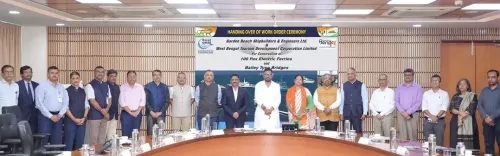
GRSE will build 15 hybrid ferries for the West Bengal government and has already delivered a zero-emission electric ferry.
Expansion sites include Timber Pond , Damodar Yard and Raichak , plus a proposed western-seaboard greenfield yard.
The review aligns with Maritime India Vision 2030 and Maritime Amrit Kaal Vision 2047 .
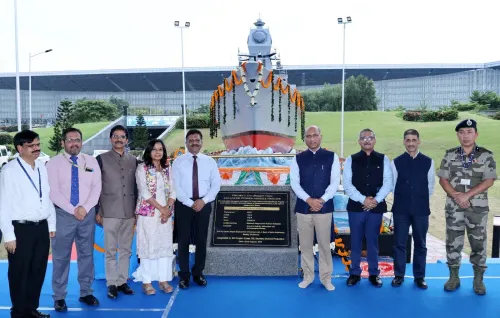
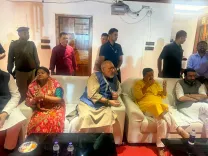
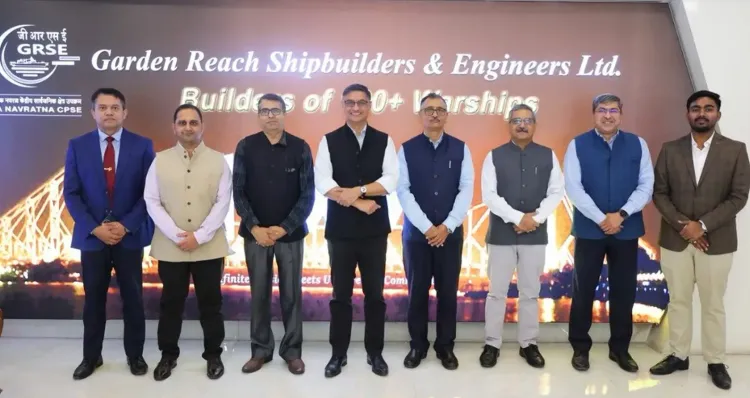
Economic Advisory Council to the Prime Minister (EAC-PM) member Sanjeev Sanyal on Wednesday visited Garden Reach Shipbuilders and Engineers (GRSE) Ltd in Kolkata to review the defence shipyard's long-term growth strategy, export pipeline and capacity expansion roadmap. The Navratna Defence Public Sector Undertaking, which functions under the Ministry of Defence, currently has the capacity to build 28 vessels of various classes at the same time — a figure slated to rise to 32 after its ongoing brownfield expansion.
What the visit covered
During the visit, Sanyal toured the Rabindranath Tagore Shipyard (RTS), the Matangini Hazra Shipyard (MHS) and the Rishi Bankim Shipyard (RBS). Officials walked him through existing shipbuilding infrastructure and ongoing projects, and outlined GRSE's push into specialised research vessels, commercial shipbuilding, green and zero-emission platforms, and autonomous marine systems.
GRSE said in a post on X that the discussions focused on the company's strategic expansion, export opportunities and diversification initiatives, highlighting the importance of indigenous capabilities and infrastructure development in advancing India's maritime ambitions and the national vision of Atmanirbhar Bharat. Sanyal commended the shipyard's long-term strategic vision, infrastructure expansion plans and technological diversification.
Export orders and green platforms
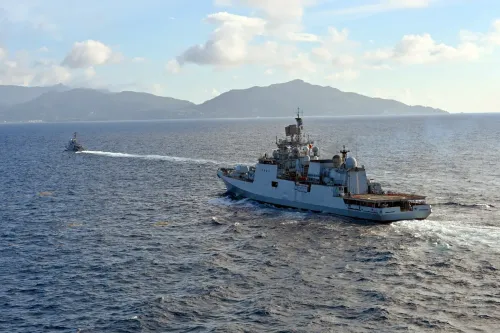
Beyond its core warship construction portfolio, GRSE is executing 13 export orders. These include four vessels equipped with hybrid propulsion systems for a German client, alongside four research vessels. The yard has also secured a contract to build 15 hybrid ferries for the West Bengal government and has already delivered a next-generation, zero-emission electric ferry that is currently operational.
Notably, the German hybrid-propulsion order and the operational electric ferry give GRSE a foothold in the green-shipping segment that Maritime India Vision 2030 and Maritime Amrit Kaal Vision 2047 have flagged as central to making India a globally competitive maritime nation. The diversification also extends to manufacturing 30 mm Naval Surface Guns and to ship repair and refit operations, widening the company's revenue mix beyond new-build warships.
Capacity expansion across West Bengal
To support the next phase of growth, GRSE is executing capacity-augmentation projects at Timber Pond, Damodar Yard and a facility at Raichak in West Bengal — all acquired from the Syama Prasad Mookerjee Port Kolkata (SMPK). The company has additionally proposed a greenfield shipyard on India's western seaboard, which would give the eastern-seaboard specialist a dual-coast footprint.
Together, these infrastructure initiatives are designed to expand GRSE's capability to build a broader spectrum of naval and commercial vessels while fostering an integrated maritime ecosystem spanning shipbuilding, ship repair and green ship recycling. The brownfield lift from 28 to 32 concurrent hulls is incremental; the western-coast proposal is the larger structural bet for scale.
Why the review matters
The briefing sits within the Centre's Maritime India Vision 2030 and Maritime Amrit Kaal Vision 2047, which aim to build a self-reliant, globally competitive maritime sector and position India among the world's leading shipbuilding nations. For a Navratna yard whose traditional strength has been warships, the combination of export hybrids, state-government ferries and a proposed west-coast yard signals a shift from a single-coast, single-product model toward a multi-domain maritime industrial play.
What happens next will turn on execution at the SMPK-acquired sites and whether the western seaboard greenfield proposal moves from plan to land and capital. Sanyal's review, coming from the Prime Minister's economic advisory ecosystem, underlines official interest in treating defence shipyards as industrial platforms for both security and export, not only as order-book executors for the Navy.
Point of View
Green ferries, guns and recycling, not only Navy hulls. The jump from 28 to 32 concurrent vessels is modest; the real test is whether Timber Pond, Damodar, Raichak and a western-seaboard greenfield actually come on stream. India's maritime visions for 2030 and 2047 have been long on targets and short on yard-level capacity. GRSE's German hybrid order and an operational zero-emission ferry are the credibility markers — but a single Navratna's pipeline will not by itself make India a top shipbuilding nation.
NationPress
25 Nov 2026
Frequently Asked Questions
Why did Sanjeev Sanyal visit GRSE in Kolkata?
EAC-PM member Sanjeev Sanyal visited GRSE in Kolkata on Wednesday to review the Navratna defence shipyard's long-term growth strategy, export pipeline and capacity expansion roadmap. He toured three yards and was briefed on indigenous capabilities aligned with Atmanirbhar Bharat.
What is GRSE's current and planned shipbuilding capacity?
GRSE currently has the capacity to concurrently construct 28 vessels of various classes, a figure set to rise to 32 after its ongoing brownfield expansion. Further growth is planned through sites at Timber Pond, Damodar Yard and Raichak, plus a proposed western-seaboard greenfield yard.
How many export orders is GRSE executing?
GRSE is currently executing 13 export orders, including four hybrid-propulsion vessels for a German client and four research vessels. The yard has also won a contract for 15 hybrid ferries for the West Bengal government.
What green and diversification projects is GRSE pursuing?
GRSE has delivered a next-generation zero-emission electric ferry that is already operational and is building hybrid ferries and hybrid-propulsion export vessels. It has also diversified into 30 mm Naval Surface Guns, ship repair and refit, and green ship recycling.
How does the GRSE review link to Maritime India Vision 2030?
The review aligns with the Centre's Maritime India Vision 2030 and Maritime Amrit Kaal Vision 2047, which aim to build a self-reliant, globally competitive maritime sector. Officials framed GRSE's expansion and indigenous capability push as part of positioning India among the world's leading shipbuilding nations.