Is Poet Satchidanandan's Controversial Statement on 'Power Alternation' Causing Unrest?
Synopsis
The ongoing debate sparked by poet K. Satchidanandan's remarks on political power alternation continues to capture attention. As he chooses to step back from the discussion, the implications of his stance on democratic theory and Marxist thought resonate in Kerala's politically charged atmosphere, especially with elections on the horizon.
Key Takeaways
Satchidanandan's remarks highlight the importance of political power alternation.
The backlash emphasizes the heightened sensitivity around political discourse.
References to Marxist thought provide a theoretical framework for understanding democracy.
Electoral implications suggest that these discussions will shape future political landscapes.
Public intellectuals play a crucial role in political and ideological debates.
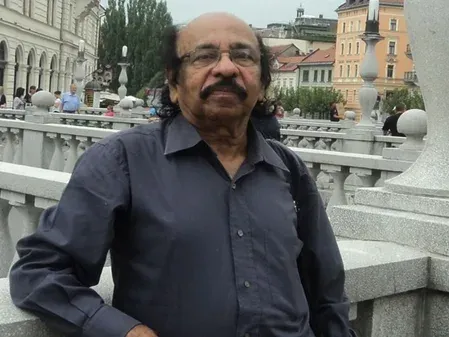
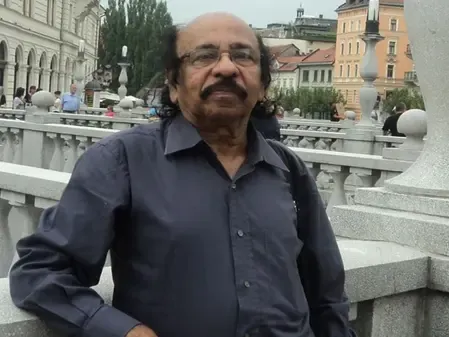
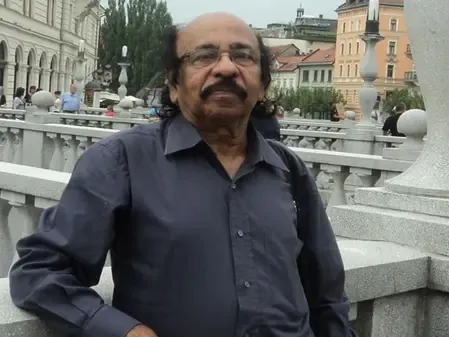
Thiruvananthapuram, Feb 12 (NationPress) The ongoing controversy regarding the distinguished poet, critic, and Kerala Sahitya Akademi President K. Satchidanandan's comments on the necessity of political power alternation shows no signs of resolution, despite the author’s declaration to refrain from further commentary on the matter.
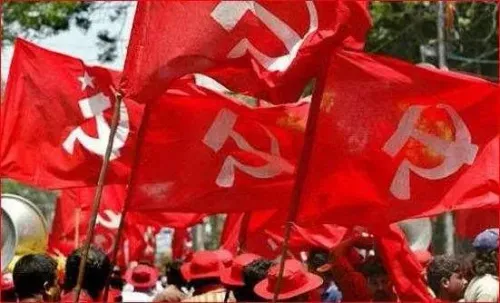
Following his initial remarks, which provoked strong reactions, especially from factions associated with the CPI-M, Satchidanandan took to social media to articulate his stance within the framework of Marxist ideology and democratic principles.
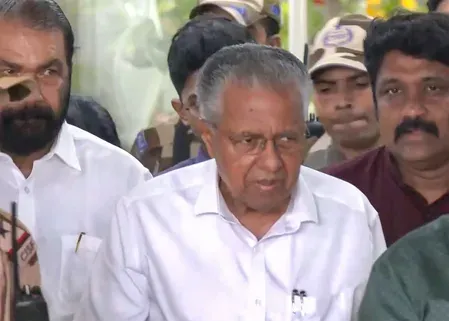
His original statement was interpreted as a challenge to the Pinarayi Vijayan-led Left Democratic Front’s claim of deserving a rare third consecutive term in power.
The discussion quickly transcended party lines, evolving into a wider discourse on ideological fidelity, internal dissent, and the role of public intellectuals in politically charged environments.
In a follow-up statement earlier this week, Satchidanandan referenced contemporary Marxist thinker Jacques Ranciere and the concept of "subaltern democracy" as a protective measure against fascist and totalitarian regimes.
He emphasized that democracy should make the invisible visible and provide a platform for marginalized voices.
According to him, Marxism's relevance hinges on the empowerment of workers, farmers, the impoverished, and minorities, rather than adopting development models that favor the upper middle class while exacerbating inequality.
He also referred to texts such as "Hatred of Democracy" and "How Democracies Die", warning about the perils of power monopolies and the decline of viable democratic choices.
In response to his critics, he highlighted his political history, which includes participation in labor and tribal movements, as well as his detention during the Emergency, and his resignation from the Sahitya Akademi after the assassination of scholar M.M. Kalburgi, asserting that he has never pursued patronage or favors.
On Thursday, however, the poet indicated his intention to move on from the issue.
Reaffirming that he critiques the Left from within and believes that any ruling party must engage in self-criticism to avoid a sense of infallibility, Satchidanandan stated he does not wish to invest more time addressing what he perceives as misinterpretations and "idle chatter".
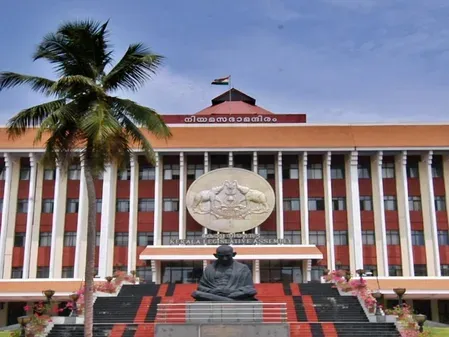
With Kerala approaching another crucial election cycle, this incident reflects a state where ideological debates seldom remain purely theoretical.
Point of View
I observe that Satchidanandan's remarks reflect a significant discourse on political accountability and democratic principles, which are crucial in a vibrant democracy like India. The ongoing debate illustrates the challenges faced by intellectuals in navigating political landscapes, particularly in a state like Kerala with its rich ideological history.
NationPress
30 Sept 2026
Frequently Asked Questions
What triggered the controversy surrounding Satchidanandan?
The controversy began with poet K. Satchidanandan's remarks advocating for the need for governments to alternate in power, which drew sharp reactions from various political factions.
How did Satchidanandan respond to the backlash?
In response to the backlash, Satchidanandan detailed his position on social media and indicated that he would not comment further on the matter, expressing his intention to move on.
What philosophical references did Satchidanandan make?
Satchidanandan referenced contemporary Marxist philosopher Jacques Ranciere and the concept of 'subaltern democracy' to highlight the importance of making marginalized voices heard.
What are the implications of his remarks for Kerala's political scene?
Satchidanandan's remarks spark a broader discussion on ideological loyalty and the role of public intellectuals, especially as Kerala approaches another high-stakes election cycle.
What does Satchidanandan believe about Marxism's relevance?
He believes that Marxism can only remain relevant by empowering marginalized groups rather than adopting development paradigms that favor the upper middle class.