Supreme Court raises Rajasthan daily wager's compensation to ₹7.5 lakh after 28-year legal fight

Synopsis
Nearly three decades after his termination, contractual daily wager Kallu Khan got partial justice from the Supreme Court — not reinstatement, but ₹7.5 lakh instead of ₹5 lakh, with the court explicitly saying the enhancement was warranted by 28 years of litigation and three lost working years. It also made clear the ruling sets no precedent.
Key Takeaways
The Supreme Court enhanced compensation for Kallu Khan , a Rajasthan contractual daily wager, from ₹5 lakh to ₹7.5 lakh on 9 October 2026 .
Khan had been pursuing legal remedies since 10 September 1998 — a span of nearly 28 years .
The Rajasthan High Court's Division Bench had earlier replaced his reinstatement with a ₹5 lakh lump-sum award on 4 August 2025 .
The Bench of Justice Ujjal Bhuyan and Justice Atul S.
Chandurkar directed payment within one month .
The court explicitly stated the order should not be treated as a precedent .
The respondent District Education Officer was set ex parte on 24 September 2026 after failing to contest the appeal.
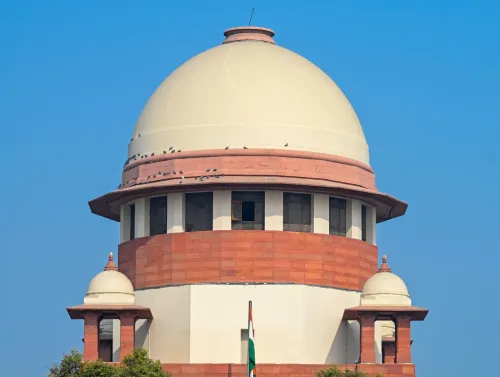
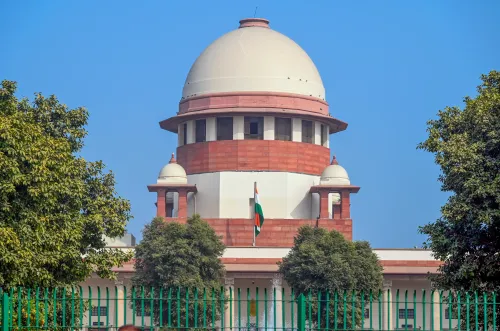
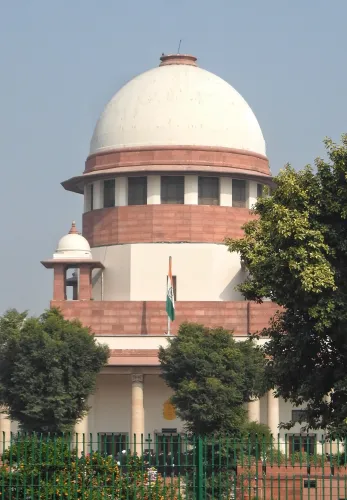
The Supreme Court of India has enhanced the compensation payable to Kallu Khan, a contractual daily wager from Rajasthan, from ₹5 lakh to ₹7.5 lakh, citing the exceptional duration of his legal battle that stretched nearly 28 years since 10 September 1998. The order was passed on 9 October 2026 by a Bench comprising Justice Ujjal Bhuyan and Justice Atul S. Chandurkar while disposing of Khan's appeal against the Rajasthan High Court's refusal to review its earlier ruling.
Background of the Case
Kallu Khan had worked as a contractual daily wager from 19 November 1990 to 1 September 1998, after which his services were terminated. He challenged the termination under Section 2A(2) of the Industrial Disputes Act, 1947. The Labour Court, in an award dated 18 February 2020, directed his reinstatement with full backwages and continuity of service.
The Rajasthan High Court's Single Judge Bench, acting on a writ petition filed by the District Education Officer, partly modified the award on 5 March 2021, maintaining reinstatement but reducing backwages from 100% to 50%. The Division Bench subsequently went further on 4 August 2025, replacing reinstatement altogether with a lump-sum compensation of ₹5 lakh.
Khan's Repeated Challenges and the Apex Court's Stance
Khan filed a Special Leave Petition (SLP) before the Supreme Court, which on 12 December 2025 declined to interfere with the High Court's order under Article 136 of the Constitution, though it granted him liberty to pursue other available remedies. He then sought a review of the High Court's order, which the Division Bench rejected on 11 February 2026, prompting him to return to the apex court.
In the present proceedings, the Supreme Court made clear that the correctness of the 4 August 2025 order substituting reinstatement with monetary compensation could not be re-examined. 'It would, therefore, not be permissible for this Court to again re-examine the correctness of the order dated 04.08.2025,' the Justice Bhuyan-led Bench said. It also found that the High Court's rejection of the review petition did not warrant interference.
Why the Court Enhanced the Compensation
Despite declining to revisit the reinstatement question, the Bench found merit in enhancing the monetary award. It noted that Khan had been pursuing legal remedies since 10 September 1998, that proceedings culminated in the order of 4 August 2025, and that had he been reinstated, he would have served for an additional three years. The court concluded that an award of ₹7,50,000 'would serve the ends of justice.'
The Supreme Court directed the enhanced amount to be paid to Khan within one month. Notably, the respondent District Education Officer did not contest the appeal and was set ex parte on 24 September 2026.
Court's Non-Precedent Caveat
The apex court was emphatic that its decision was confined to the specific facts of this case. 'We reiterate that this order is passed in the peculiar facts of the present case and same shall not be treated as a precedent,' the Bench stated. The clarification signals that while equitable relief was warranted here, the ruling cannot be invoked by similarly situated workers to seek automatic enhancement of lump-sum compensation orders.
The case underscores the prolonged timelines that contractual workers in India often face when contesting service terminations — Khan's legal journey spanned nearly three decades across the Labour Court, the Rajasthan High Court, and the Supreme Court.
Point of View
But the non-precedent caveat means it offers no systemic relief to the thousands of contractual workers stuck in similar limbo across state-run institutions. The real gap is structural: Labour Court awards in India routinely get litigated into irrelevance by employer departments that treat writ petitions as delay tools, knowing that by the time a final order comes, the worker may have aged out of reinstatement anyway. That is precisely what happened to Kallu Khan.
NationPress
9 Oct 2026
Frequently Asked Questions
What did the Supreme Court order for Kallu Khan?
The Supreme Court directed that Kallu Khan's compensation be enhanced from ₹5 lakh to ₹7.5 lakh, payable within one month. The court cited his 28-year legal battle and the three additional years he would have served had he been reinstated.
Why was Kallu Khan not reinstated despite a Labour Court order in his favour?
The Labour Court had ordered reinstatement in February 2020, but the Rajasthan High Court's Division Bench replaced that relief with a lump-sum compensation of ₹5 lakh in its order of 4 August 2025. The Supreme Court declined to revisit the correctness of that substitution in the current proceedings.
How long did Kallu Khan's legal battle last?
Khan began pursuing legal remedies on 10 September 1998, making his battle nearly 28 years long by the time the Supreme Court passed its order on 9 October 2026. He had worked as a contractual daily wager from November 1990 to September 1998.
Does this Supreme Court ruling set a precedent for other daily wagers?
No. The Supreme Court explicitly stated that the order was passed in the 'peculiar facts' of this case and should not be treated as a precedent. Other workers cannot rely on this ruling to claim automatic enhancement of lump-sum compensation orders.
Under what law was Kallu Khan's termination challenged?
Khan challenged the termination of his services under Section 2A(2) of the Industrial Disputes Act, 1947, which allows individual workmen to raise disputes relating to discharge, dismissal, retrenchment, or termination.