Pakistan poverty rate rises 6.4% in six years amid floods, COVID, crisis
Synopsis
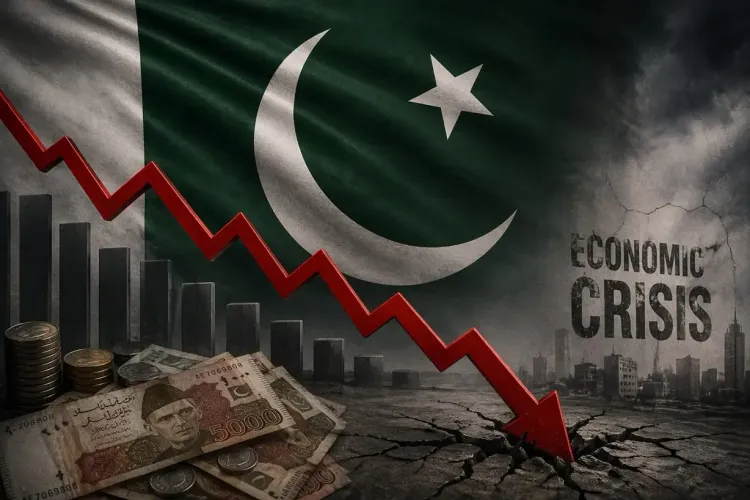
Pakistan accounts for nearly half of all extremely poor people in the MENAAP region — and that share is growing. A new report shows poverty at the $3-a-day line jumped 6.4 percentage points in just six years, making Pakistan the epicentre of the world's only region where poverty is still rising above pre-pandemic levels.
Key Takeaways
Pakistan's poverty rate rose by 6.4 percentage points to the $3-per-day line between 2018-19 and 2024-25 .
Pakistan accounts for approximately 48 per cent of the MENAAP region's extremely poor population.
MENAAP is the only global region where poverty remains above pre-pandemic levels and continues to climb.
In 2024 , 14.3 per cent of MENAAP's population lived on under $3 a day , versus 10.4 per cent globally.
Pakistan's GDP growth is projected to rise from 3.2 per cent in FY25 to 3.8 per cent by FY27 — still too slow for rapid poverty reduction.
A stronger-than-usual El Niño in late 2026 could further worsen food insecurity and hit the poor hardest.
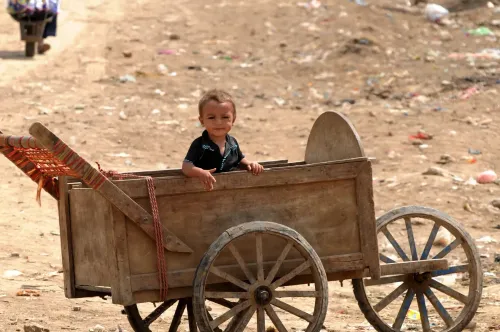
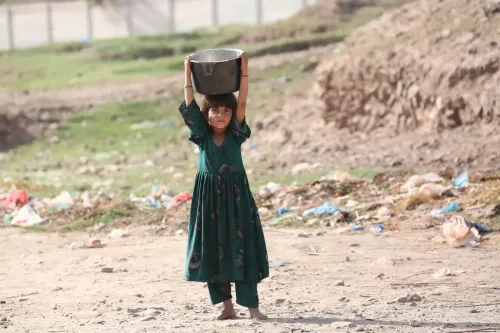
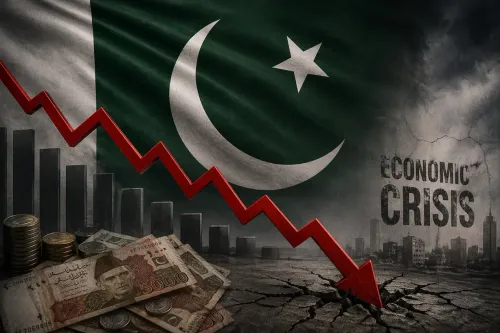
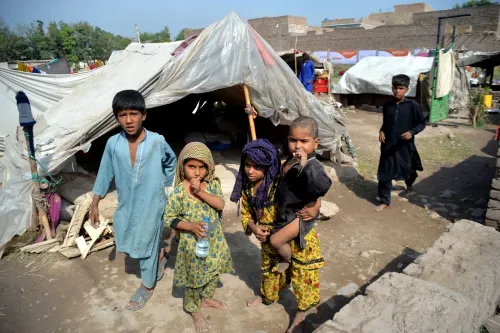
Pakistan's poverty rate climbed by 6.4 percentage points to the $3-per-day threshold between 2018-19 and 2024-25, driven by a cascade of shocks — including the COVID-19 pandemic, the 2022 catastrophic floods, and a prolonged macroeconomic crisis — according to a report cited by Dawn. The findings position Pakistan as one of the most acute poverty hotspots in an already-stressed regional bloc.
Pakistan's Outsized Share of Regional Poverty
The report reveals that Pakistan accounts for approximately 48 per cent of the population living below the $3-per-day poverty line across the Middle East, North Africa, Afghanistan and Pakistan (MENAAP) region. Afghanistan, Syria and Yemen together make up another 47 per cent of the region's extreme poor.
Critically, MENAAP is described as the only region in the world where poverty levels have not only failed to return to pre-pandemic baselines but continue to rise. In 2024, 14.3 per cent of MENAAP's population lived on less than $3 a day, compared with 10.4 per cent globally, while 26.9 per cent survived on less than $4.20 a day, against a worldwide average of 18.9 per cent.
Most Affected Countries
Recent estimates show poverty rates at the $3-per-day line approached or exceeded 20 per cent in Djibouti, Pakistan, Syria, and Yemen. Food insecurity was described as particularly acute in the occupied West Bank and Gaza and Yemen, with significant pressures also documented in Afghanistan, Djibouti, Lebanon, and Pakistan.
Pakistan's Economic Outlook
Despite the grim poverty data, the report projects a modest recovery in Pakistan's GDP growth — from 3.2 per cent in FY2025 to 3.7 per cent in FY2026 and 3.8 per cent in FY2027, led by the services sector. The current account deficit is estimated at 0.1 per cent of GDP in FY2026, while the fiscal deficit is projected at 2.6 per cent in the same year.
Notably, these growth projections remain well below the pace needed to meaningfully reduce poverty at scale, given that population growth continues to outpace economic expansion in several parts of the country.
Climate Risk Compounds Outlook
Looking ahead, the report warns that a stronger-than-usual El Niño weather pattern predicted for late 2026 could amplify food-price pressures and disproportionately hurt the poor. For a country already reeling from the devastating floods of 2022 — which submerged roughly one-third of Pakistan's land area — the climate vulnerability dimension adds another layer of risk to any recovery trajectory.
This comes amid broader concern that international aid and debt-restructuring support may not be sufficient to cushion another climate-linked shock, particularly as global attention remains split across multiple humanitarian crises. With GDP growth expected to remain below 4 per cent through FY2027, a durable reduction in poverty levels is unlikely to materialise in the near term.
Point of View
Not a one-off shock. COVID, floods and macro instability struck sequentially, with each crisis eroding the recovery capacity of the previous one — and the underlying structural weaknesses were never addressed. The projected GDP growth of under 4 per cent through FY2027 is insufficient to absorb a population growing at nearly 2 per cent annually, let alone reduce the poverty headcount. What is striking — and largely absent from mainstream coverage — is that nearly half of one of the world's most stressed regional poverty belts now sits within a single country that is simultaneously managing a nuclear arsenal, an IMF bailout programme, and growing climate exposure. The El Niño warning for late 2026 deserves far more policy urgency than it is currently receiving.
NationPress
9 Oct 2026
Frequently Asked Questions
By how much has Pakistan's poverty rate increased in recent years?
Pakistan's poverty rate rose by 6.4 percentage points to the $3-per-day threshold between 2018-19 and 2024-25, according to a report cited by Dawn. The increase was driven by the COVID-19 pandemic, the 2022 floods, and a prolonged macroeconomic crisis.
Why is Pakistan's poverty situation significant for the wider region?
Pakistan accounts for approximately 48 per cent of all people living below the $3-a-day poverty line across the MENAAP region. The MENAAP bloc is the only region in the world where poverty has not returned to pre-pandemic levels and is still rising.
What is Pakistan's economic growth forecast?
The report projects Pakistan's GDP growth at 3.2 per cent in FY2025, rising to 3.7 per cent in FY2026 and 3.8 per cent in FY2027, driven by the services sector. However, these levels are considered insufficient to drive meaningful poverty reduction given ongoing population pressures.
How does Pakistan's poverty rate compare globally?
In 2024, 14.3 per cent of the MENAAP region's population lived on less than $3 a day, compared with 10.4 per cent globally. Poverty rates at the $3-per-day line approached or exceeded 20 per cent in Pakistan, Djibouti, Syria, and Yemen.
What additional risks could worsen Pakistan's poverty situation?
A stronger-than-usual El Niño weather pattern predicted for late 2026 could amplify food-price pressures and further hurt the poor, the report warned. Food insecurity in Pakistan is already significant, compounded by the country's high vulnerability to climate-linked disasters.