CEC appointment law: Supreme Court split verdict, CJI to weigh Constitution Bench
Synopsis
A two-judge Supreme Court Bench has split right down the middle on whether the controversial 2023 law replacing the CJI with a Cabinet Minister on the Election Commissioner selection panel deserves a Constitution Bench hearing. With CJI Surya Kant now holding the decision, the fate of the Election Commission's independence — and a fundamental question about executive overreach — hangs on what happens next.
Key Takeaways
The Supreme Court delivered a split verdict on 23 September 2026 on referring petitions against the CEC appointment law to a Constitution Bench.
Justice Dipankar Datta opposed reference, holding earlier precedent in Anoop Baranwal had settled the constitutional principles.
Justice Satish Chandra Sharma favoured reference, saying the question of excluding a neutral selector was an unsettled constitutional issue.
The matter is now before CJI Surya Kant to decide on constituting a Constitution Bench of appropriate strength.
The 2023 law replaced the Chief Justice of India with a Union Cabinet Minister nominated by the Prime Minister on the selection panel.
Both judges flagged the prolonged pendency of Constitution Bench references and urged the CJI to consider a permanent five-judge Bench for constitutional questions.
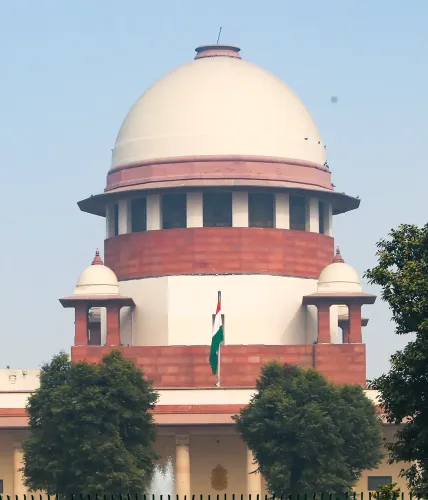
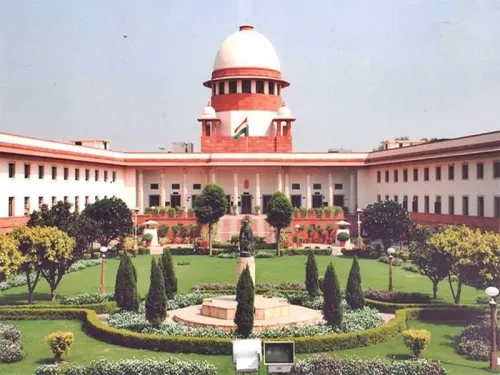
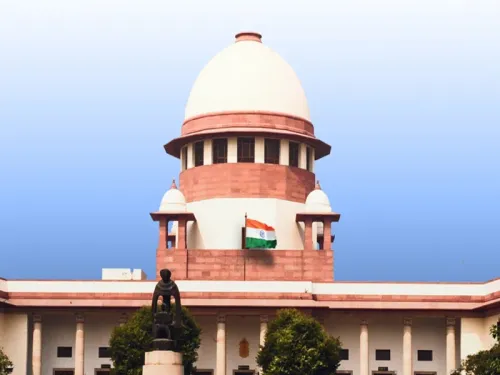
The Supreme Court on Wednesday, 23 September 2026 delivered a split verdict on whether petitions challenging the constitutional validity of the law governing the appointment of the Chief Election Commissioner (CEC) and Election Commissioners (ECs) should be referred to a Constitution Bench. The two-judge panel has now directed that the matter be placed before Chief Justice of India (CJI) Surya Kant to consider constituting a Constitution Bench of appropriate strength.
The Split Opinion
Justice Dipankar Datta rejected the plea for reference to a larger Bench, holding that the earlier Constitution Bench judgment in the Anoop Baranwal case had already settled the constitutional principles concerning free and fair elections and the need to insulate the Election Commission of India (ECI) from exclusive executive control in appointment matters. He reasoned that the Anoop Baranwal judgment made clear that the arrangement including the CJI in the selection committee was 'transient in nature' and was to operate only until Parliament enacted a law.
Justice Datta also observed that the Union Cabinet Minister nominated by the Prime Minister as the third member of the selection committee 'cannot be expected to defy his own nominator and risk his continuation,' adding that the doctrine of collective responsibility would ordinarily preclude such a Minister from opposing the Prime Minister.
Justice Satish Chandra Sharma, however, disagreed. He held that the question of whether Parliament was justified in excluding a neutral selector from the committee was an important constitutional issue arising for the first time before the Supreme Court, and that no precedent had conclusively dealt with it. Justice Sharma further held that Article 145, read with Order 38 of the Supreme Court Rules, did not permit the present two-judge Bench to finally decide such a question.
What the 2023 Law Changed
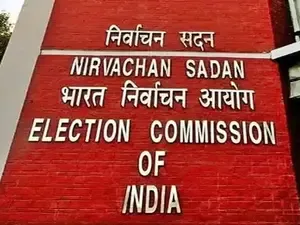
The petitions challenge the Chief Election Commissioner and other Election Commissioners (Appointment, Conditions of Service and Term of Office) Act, 2023, which replaced the Chief Justice of India with a Union Cabinet Minister nominated by the Prime Minister in the selection committee. The current selection panel, as constituted under the statute, comprises the Prime Minister, the Leader of Opposition in the Lok Sabha, and a Union Cabinet Minister nominated by the Prime Minister.
This law replaced an interim framework established in March 2023, when a Constitution Bench in Anoop Baranwal vs. Union of India directed that appointments be made on the recommendation of a three-member committee comprising the Prime Minister, the Leader of Opposition, and the CJI — until Parliament legislated on the subject.
Core Constitutional Challenge
Petitioners have contended that replacing the CJI with a Cabinet Minister effectively gives the executive a 2:1 majority on the selection panel, undermining the independence and transparency of appointments to the ECI. During earlier hearings, the Supreme Court had itself questioned whether the inclusion of the Leader of Opposition held any meaningful weight given that the government side could outvote him. The Court had also underscored that the independence of the ECI is integral to free and fair elections, which form part of the basic structure of the Constitution.
A Note on Institutional Delay
Despite their disagreement, both judges concurred that referring the reference question to a three-judge Bench would serve little purpose and only compound delays. The two-judge Bench flagged the prolonged pendency of references before Constitution Benches, observing that some remain unresolved for years. 'The pendency of reference for far too long… does not reflect well on the institution,' the order noted. The Bench also requested the CJI to explore the necessity of constituting a permanent five-judge Bench to decide constitutional questions on an ongoing basis.
What Happens Next
The papers will now be placed before CJI Surya Kant, who will decide whether to constitute a Constitution Bench — and of how many judges — to determine the constitutional validity of the 2023 appointment law. The outcome will have direct implications for the institutional independence of the Election Commission and for the broader question of how India balances parliamentary sovereignty with constitutional safeguards on autonomous bodies.
Point of View
While another sees an unsettled constitutional frontier — and that gap reflects a wider unresolved tension between parliamentary sovereignty and judicial safeguards on independent institutions. The 2023 law's replacement of the CJI with a Cabinet Minister effectively converts the selection panel into a body where the executive holds a structural majority, a design choice Parliament made knowing the Supreme Court had expressly flagged that concern. What the Constitution Bench, if constituted, will really have to wrestle with is not just whether this law is valid, but whether India has a durable constitutional mechanism to insulate electoral bodies from the very government whose continuation those bodies are meant to adjudicate.
NationPress
23 Sept 2026
Frequently Asked Questions
What did the Supreme Court decide about the CEC appointment law on 23 September 2026?
The Supreme Court delivered a split verdict, with Justice Dipankar Datta rejecting a reference to a Constitution Bench and Justice Satish Chandra Sharma favouring one. Because the two judges disagreed, the matter has been placed before Chief Justice of India Surya Kant to decide whether to constitute a Constitution Bench.
What is the Chief Election Commissioner appointment law that is being challenged?
It is the Chief Election Commissioner and other Election Commissioners (Appointment, Conditions of Service and Term of Office) Act, 2023. The law replaced the Chief Justice of India with a Union Cabinet Minister nominated by the Prime Minister on the selection panel for appointing the CEC and Election Commissioners.
Why did Justice Datta reject a Constitution Bench reference?
Justice Datta held that the earlier Anoop Baranwal Constitution Bench judgment had already settled the constitutional principles on insulating the Election Commission from exclusive executive control. He said the arrangement including the CJI was 'transient in nature' and meant to operate only until Parliament legislated.
Why did Justice Sharma favour referring the matter to a Constitution Bench?
Justice Sharma held that the specific question — whether Parliament was justified in excluding a neutral selector from the committee — was an important constitutional issue arising for the first time before the Supreme Court and had not been conclusively settled by any earlier precedent.
What happens next in the CEC appointment law case?
The papers will be placed before CJI Surya Kant, who will decide whether to constitute a Constitution Bench and determine its appropriate strength to rule on the constitutional validity of the 2023 appointment law. Both judges also urged the CJI to explore creating a permanent five-judge Bench for constitutional questions.