SC tells Sonam Raghuvanshi to consider surrender in honeymoon murder case

Synopsis
The Supreme Court has put Sonam Raghuvanshi on notice: surrender voluntarily or face a ruling that could revoke her bail outright. The bench's scepticism over a clerical arrest-document error being used to secure bail — combined with the Meghalaya government's push to reinstate custody — signals the court may be leaning toward cancellation when the case returns Thursday.
Key Takeaways
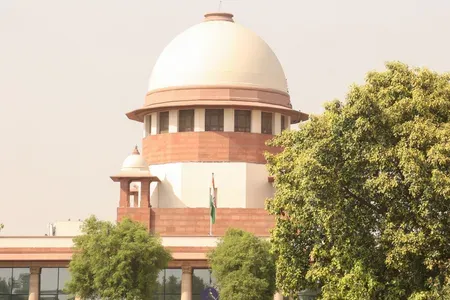
The Supreme Court on 22 July 2025 suggested Sonam Raghuvanshi consider surrendering voluntarily in the Raja Raghuvanshi honeymoon murder case .
The bench of Justices M.M.
Varale warned it could otherwise rule on the merits of the Meghalaya government's bail-challenge plea.
The court questioned whether citing Section 403 instead of Section 103 of the BNS in arrest documents was sufficient grounds for bail.
Solicitor General Tushar Mehta argued the wrong section was a typographical error and did not prejudice the accused.
The next hearing is scheduled for Thursday, 24 July 2025 .
The case relates to the alleged murder of businessman Raja Raghuvanshi in Meghalaya during a honeymoon trip in May 2025 .
The Supreme Court on Tuesday, 22 July 2025, suggested that Sonam Raghuvanshi, the prime accused in the Raja Raghuvanshi honeymoon murder case, consider surrendering voluntarily and face trial while key prosecution witnesses are examined — warning that the court could otherwise rule on the merits of the Meghalaya government's plea challenging her bail. The hearing has been deferred to Thursday, 24 July 2025.
What the Court Said
A bench of Justices M.M. Sundresh and P.B. Varale gave Sonam's counsel time to seek instructions on whether she would agree to surrender temporarily. The bench observed that a voluntary surrender could allow the trial court to record the testimony of public witnesses before the apex court revisits the bail question.
'We don't want to catch you by surprise. Either we will consider and pass an order on merits, or we will pass an order making you surrender. You get instructions and come back to us,' the Justice Sundresh-led bench stated orally.
The court added that, should Sonam opt to surrender, it may direct the trial court to expedite the examination of public witnesses and then reconsider bail. 'I think the second option is better for you. If you want to argue further, we will hear you and then decide one way or the other,' the bench remarked.
The Section 403 vs Section 103 Dispute
The Supreme Court also questioned why the plea concerning non-communication of grounds of arrest had not been raised at the earliest opportunity. It expressed doubt over whether a clerical error in arrest documents — citing Section 403 of the Bharatiya Nyaya Sanhita (BNS) instead of Section 103 relating to murder — was sufficient to justify the bail granted by the lower courts.
The bench asked how citing the wrong section had materially affected the accused's case at this stage, signalling scepticism about the reasoning adopted by the courts below.
What the Government and Defence Argued
Solicitor General Tushar Mehta, appearing for the Meghalaya government, contended that Sonam was fully aware of the reasons for her arrest. He submitted that she had signed the arrest-related documents, her family had been duly informed, and she had never raised the issue of improper communication of grounds before the magistrate or in her earlier bail applications. The wrong section reference, he argued, was a typographical error that could not invalidate the arrest.
Counsel for Sonam countered that the prosecution's case rests on circumstantial evidence and argued that the case had received disproportionate media attention.
Background: The Honeymoon Murder Case
The case centres on the death of Indore-based businessman Raja Raghuvanshi, who travelled to Meghalaya with his wife Sonam for their honeymoon shortly after their marriage in May 2025. According to the prosecution, Sonam allegedly conspired with her purported lover and hired assailants to kill Raja during the trip. Police subsequently filed a chargesheet following the completion of their investigation, and the trial is currently underway.
The Shillong trial court had earlier granted bail after finding that all arrest documents incorrectly cited Section 403(1) of the BNS instead of Section 103(1), concluding that Sonam had not been properly informed she was arrested for murder. The Meghalaya High Court upheld that order. The state government then challenged the High Court's decision before the Supreme Court, which, while declining to stay the bail order since Sonam had already been released, expressed prima facie reservations about the High Court's reasoning and directed the state to place original arrest documents on record.
What Happens Next
Sonam Raghuvanshi's counsel is expected to return with instructions on surrender when the matter is heard again on Thursday, 24 July 2025. The Supreme Court has made clear it will either hear the matter on merits or pass a surrender order — leaving the accused with a narrow window to act voluntarily before the court decides for her.
Point of View
And the bench's pointed questions about the Section 403 error suggest it finds the bail rationale unconvincing. What this case tests is whether procedural technicalities in arrest documents can override the gravity of a murder charge; the court appears reluctant to let them. The broader concern is that if a typographical error in an arrest memo becomes a reliable bail escape route, it creates a perverse incentive to litigate paperwork rather than substance — a loophole the apex court seems determined to close.
NationPress
20 Oct 2026
Frequently Asked Questions
What did the Supreme Court say about Sonam Raghuvanshi's bail?
The Supreme Court suggested Sonam Raghuvanshi consider surrendering voluntarily while key prosecution witnesses are examined, warning that it could otherwise rule on the merits of the Meghalaya government's plea challenging her bail. The matter has been posted for further hearing on Thursday, 24 July 2025.
What is the Raja Raghuvanshi honeymoon murder case?
The case involves the alleged murder of Indore-based businessman Raja Raghuvanshi during a honeymoon trip to Meghalaya in May 2025. The prosecution alleges that his wife, Sonam Raghuvanshi, conspired with her purported lover and hired assailants to kill him. A chargesheet has been filed and the trial is underway.
Why was Sonam Raghuvanshi granted bail in the first place?
The Shillong trial court granted bail after finding that all arrest documents cited Section 403(1) of the BNS instead of the correct Section 103(1) relating to murder, concluding that Sonam had not been properly informed of the charge. The Meghalaya High Court upheld that order, which the state government has now challenged before the Supreme Court.
What is the Section 403 vs Section 103 dispute?
Arrest documents in the case referenced Section 403 of the Bharatiya Nyaya Sanhita (BNS) — a provision unrelated to murder — instead of Section 103, which deals with murder. The trial court treated this as a substantive defect that prejudiced the accused; Solicitor General Tushar Mehta argued before the Supreme Court that it was a typographical error with no material impact.
When is the next Supreme Court hearing in this case?
The Supreme Court has deferred the matter to Thursday, 24 July 2025, to allow Sonam Raghuvanshi's counsel to obtain instructions on whether she is willing to surrender voluntarily.