Maharashtra drought 2026: Shiv Sena (UBT) demands emergency declaration, open treasury
Synopsis
With El Niño wiping out standing crops across Marathwada, Vidarbha, and Western Maharashtra — and a Parbhani farmer receiving just ₹1,017 for four quintals of chilli — Shiv Sena (UBT) has issued its sharpest demand yet: bypass the rulebook, open the state treasury unconditionally, and declare a drought emergency before it is too late.
Key Takeaways
Shiv Sena (UBT) demanded an immediate drought emergency declaration in Maharashtra through its mouthpiece 'Saamana' on 25 September 2026 .
El Niño-driven rainfall failure has left parts of Solapur , Ahilyanagar , Marathwada , and Western Vidarbha without rain for up to two months .
Even irrigated farmers face yield losses of 50%–70% ; dryland farmers have reported total crop failure .
Parbhani farmer Jeevan Kawade received just ₹1,017 for four quintals of chilli — less than his ₹2,000 harvesting cost alone.
The party compared Maharashtra's inaction unfavourably with Karnataka , which declared a drought weeks earlier.
The editorial demanded the state open its treasury unconditionally and crack down on APMC middlemen exploiting distressed farmers.
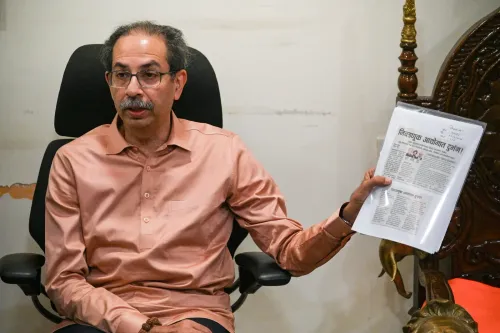
Shiv Sena (Uddhav Balasaheb Thackeray) on Friday, 25 September 2026, demanded that the Maharashtra government immediately declare a drought emergency, open state coffers without preconditions, and bypass bureaucratic norms to protect lakhs of farming families facing total livelihood collapse. The call came through the party's official mouthpiece, 'Saamana', which warned that delay could prove catastrophic for agriculture across Marathwada, Western Maharashtra, and Vidarbha.
Scale of the Agrarian Crisis
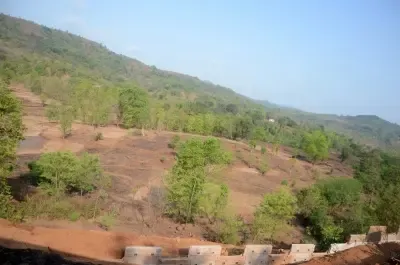
Driven by the severe effects of the El Niño phenomenon, districts including Solapur, Ahilyanagar, and several talukas across Marathwada and Western Vidarbha have reportedly gone weeks — and in some places up to two months — without any rainfall during the peak monsoon season. Standing crops of soybean, cotton, tur, moong, urad, sorghum, and maize have withered across vast stretches.
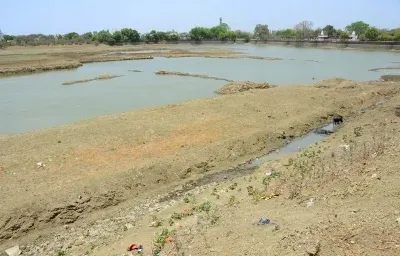
According to the Saamana editorial, even farmers with access to wells or irrigation infrastructure expect yield losses of 50% to 70%, while rain-dependent dryland farmers have suffered total crop failure. Wells, ponds, and borewells are reportedly drying up prematurely — in the middle of the rainy season — leaving farmers with no water reserves for the upcoming Rabi sowing cycle either. The crisis is thus set to compound across both the current Kharif and the next agricultural season.
Exploitation in Farm Markets
Beyond the weather crisis, the editorial highlighted acute market exploitation of distressed farmers. A particularly stark case from Sailu taluka in Parbhani district was cited: farmer Jeevan Kawade, despite drought conditions, managed to cultivate four quintals of chilli, only to be paid a mere ₹1,017 by traders for his entire produce — less than half the ₹2,000 he spent solely on harvesting labour, excluding the costs of seeds, fertilisers, and transport.
The editorial called on state leaders to personally visit Agricultural Produce Market Committees (APMCs) and take decisive action against middlemen exploiting the distress of farmers.
Sharp Criticism of State Government's Pace
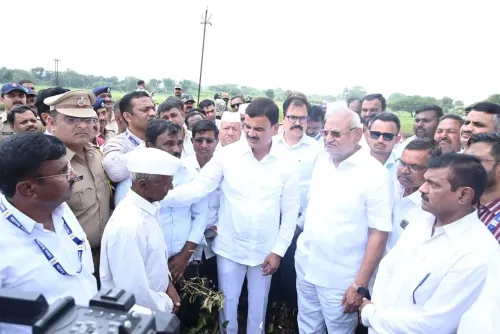
The Thackeray camp drew a pointed comparison with neighbouring Karnataka, which officially declared a drought and initiated relief measures several weeks ago. The editorial criticised the Maharashtra Chief Minister and ministers for waiting for the monsoon to return rather than acting decisively. While acknowledging that officials had recently begun visiting farm boundaries, Saamana argued that formal surveys, spot inspections (panchnamas), and ministerial review meetings must not be used as a pretext to delay immediate relief.
'Though the Chief Minister and government officials have recently begun visiting farm boundaries to assess the ground reality, formal surveys, spot inspections (panchnamas), and ministerial review meetings should not delay immediate relief,' the editorial stated.
Key Demands and Warning
The editorial concluded with a stark ultimatum, stating: 'The government must throw open the state treasury and waive rigid rules and technical criteria to keep Maharashtra's farmers alive. Having witnessed the grief on the ground firsthand, the prompt question remains — will the government act before it is too late?'
This comes amid growing pressure on the ruling coalition in Maharashtra, with the opposition increasingly framing the drought response as a test of governance competence. The Thackeray-led party's demand for unconditional treasury access signals that conventional relief timelines are no longer acceptable to a farming community already at breaking point.
Point of View
017 on four quintals of produce after spending more just on labour, the market mechanism has collapsed entirely. Maharashtra's history of drought declarations is also instructive — formal declarations have often lagged ground reality by weeks, delaying the panchnama process that unlocks compensation. The comparison with Karnataka is pointed: if a Congress-governed state acted faster, the BJP-led Maharashtra government faces a politically awkward optics problem it cannot afford in a farm-heavy electorate.
NationPress
25 Sept 2026
Frequently Asked Questions
What has Shiv Sena (UBT) demanded over the Maharashtra drought?
Shiv Sena (UBT) has demanded that the Maharashtra government immediately declare a drought emergency, open the state treasury unconditionally, and bypass bureaucratic norms to provide relief. The demand was made through its party mouthpiece 'Saamana' on 25 September 2026.
Which regions of Maharashtra are worst affected by the drought?
The worst-affected regions include Marathwada, Western Maharashtra, and Vidarbha — particularly districts such as Solapur, Ahilyanagar, Parbhani, and several talukas in Western Vidarbha. Some areas have reportedly gone up to two months without rainfall during the peak monsoon season.
What crops have been damaged by the drought in Maharashtra?
Standing crops of soybean, cotton, tur, moong, urad, sorghum, and maize have dried up and withered across drought-hit districts. Even irrigated farmers expect yield losses of 50% to 70%, while rain-dependent dryland farmers have suffered total crop failure.
How does Maharashtra's response compare to Karnataka's?
According to the Saamana editorial, Karnataka officially declared a drought and initiated relief measures several weeks before Maharashtra took similar action. The Thackeray camp cited this comparison to criticise the Maharashtra government for delayed decision-making.
What is the significance of the Jeevan Kawade case cited in the editorial?
Farmer Jeevan Kawade of Sailu taluka in Parbhani district received just ₹1,017 from traders for four quintals of chilli — less than the ₹2,000 he spent on harvesting labour alone, excluding seeds, fertilisers, and transport. The Saamana editorial used this case to illustrate how APMC middlemen are exploiting drought-distressed farmers.