₹7.75 lakh crore bank write-offs: Shiv Sena (UBT) slams Centre in Saamana editorial
Synopsis
Official parliamentary data has handed the opposition a potent weapon: public sector banks wrote off ₹7.75 lakh crore owed by just 1,249 large accounts over a decade, recovering barely ₹3.10 lakh crore. Shiv Sena (UBT)'s Saamana has branded the era an 'Amrit Kaal of Default' — and the government's refusal to name the defaulters under RBI confidentiality rules is only sharpening the political edge of that charge.
Key Takeaways
Public sector banks wrote off ₹7.75 lakh crore in bad loans across 1,249 accounts (each owing ₹100 crore or more ) between FY 2014-15 and FY 2025-26 , per data tabled in the Lok Sabha .
Banks have recovered only ₹3.10 lakh crore of the written-off amount, leaving over ₹4.65 lakh crore unrecovered.
Shiv Sena (UBT) termed the period an 'Amrit Kaal of Default' in its Saamana editorial on 23 July .
The Centre cited Section 45E of the RBI Act to justify withholding the names of the large defaulting accounts.
The party alleged an unspoken policy of 'Give donations, get loan write-offs,' targeting the ruling dispensation.
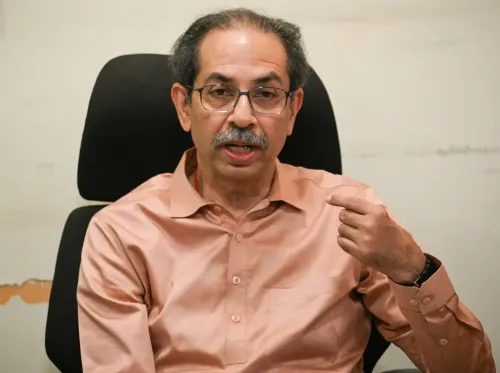
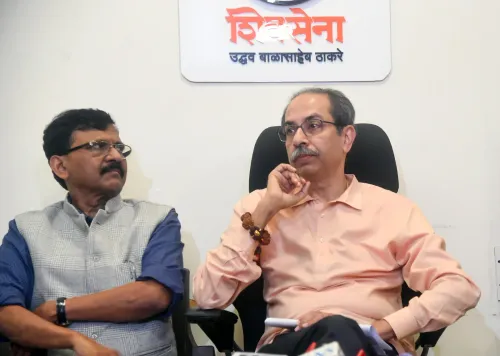
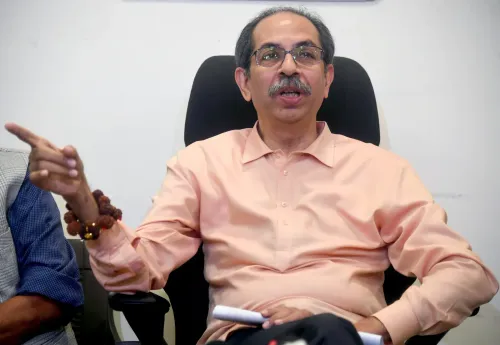
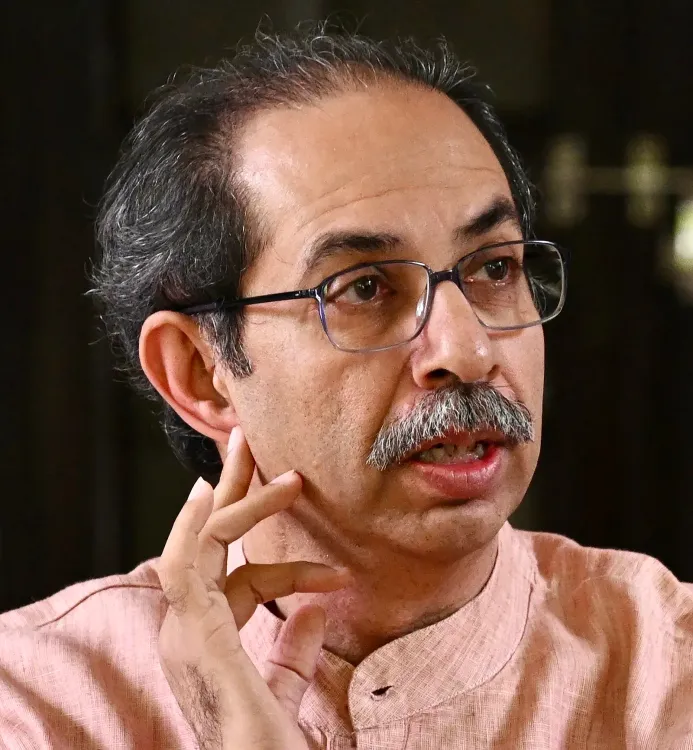
Shiv Sena (Uddhav Balasaheb Thackeray) on Thursday, 23 July launched a sharp attack on the Centre through its mouthpiece Saamana, accusing the Narendra Modi-led government of shielding large corporate loan defaulters while subjecting ordinary citizens to stringent debt-recovery action. The party's editorial follows official data tabled in Parliament confirming that public sector banks wrote off ₹7.75 lakh crore in bad loans across 1,249 accounts — each carrying dues of ₹100 crore or more — between FY 2014-15 and FY 2025-26.
The Parliamentary Data Behind the Attack
The figures were disclosed by Union Minister of State for Finance Pankaj Chaudhary in a written reply to the Lok Sabha. According to that reply, of the ₹7.75 lakh crore written off, banks have so far recovered only ₹3.10 lakh crore, leaving a net unrecovered gap of over ₹4.65 lakh crore. The government's defence — that loan write-offs are a standard technical accounting exercise for non-recoverable debts and do not amount to outright waivers — was rejected outright by the Thackeray camp.
Saamana's Charge: 'Amrit Kaal of Default'
The editorial labelled the present period an 'Amrit Kaal of Default', a pointed inversion of the ruling dispensation's signature phrase for India's development era. 'An Amrit Kaal of Loan Defaulting has commenced in the country, where poor cockroaches must tighten their belts to pay off their loan instalments, while wealthy billionaires get to bankrupt the banks. If the government itself is complicit, who is going to stop these robbers from looting public money?' the editorial asked. It further charged that 'taking massive loans, repaying a tiny fraction, and defaulting on the rest seems to have received official state sanction.'
The Confidentiality Controversy
A central grievance in the editorial is the government's refusal to name the 1,249 large defaulting accounts. Officials cited Section 45E of the Reserve Bank of India (RBI) Act, which mandates confidentiality over credit information, as the legal basis for withholding identities. The Saamana editorial questioned the asymmetry this creates: 'Why are the names of small default borrowers publicly advertised in newspapers, while billionaire defaulters are shielded behind confidentiality clauses? Why are properties, vehicles, and homes of middle-class citizens, small business owners, and farmers seized or sealed over tiny defaults, while big corporate tycoons face no such action?'
Political Allegation: Donations for Write-Offs
The Uddhav Thackeray-led party escalated the political charge by alleging that the defaulting corporates may be significant donors to the ruling party, suggesting an unspoken arrangement of 'Give donations, get loan write-offs.' The editorial described the situation as open collusion between 'fraudsters in industry and big fraudsters in government,' warning that public money remains dangerously unsecured if the state itself shields such elements. The Centre has not responded to these specific allegations.
Context and What Comes Next
This is not the first time bank write-offs have become a political flashpoint. Opposition parties have periodically raised the issue of large corporate non-performing assets (NPAs) since at least 2018, when high-profile cases such as those of Vijay Mallya and Nirav Modi drew national attention. The fresh parliamentary disclosure gives the opposition renewed ammunition ahead of the ongoing Budget Session. The government is likely to face further pressure in Parliament to either disclose defaulter identities or detail the recovery roadmap for the remaining ₹4.65 lakh crore.
Point of View
But politically untenable when the recovery rate on these accounts is barely 40%. The opposition's 'Amrit Kaal of Default' framing will stick unless the Centre can demonstrate that recovery proceedings against the 1,249 accounts are active and yielding results — something the parliamentary reply conspicuously did not detail.
NationPress
21 Oct 2026
Frequently Asked Questions
How much have public sector banks written off in bad loans between FY 2014-15 and FY 2025-26?
Public sector banks wrote off ₹7.75 lakh crore in bad loans across 1,249 accounts, each owing ₹100 crore or more, between FY 2014-15 and FY 2025-26. This figure was disclosed by Union Minister of State for Finance Pankaj Chaudhary in a written reply to the Lok Sabha.
How much of the written-off loans have banks recovered so far?
Banks have recovered ₹3.10 lakh crore of the ₹7.75 lakh crore written off, leaving over ₹4.65 lakh crore unrecovered. The government has clarified that a write-off is a technical accounting step and does not mean recovery efforts cease.
Why won't the government disclose the names of the large loan defaulters?
The Centre cited Section 45E of the Reserve Bank of India (RBI) Act, which mandates confidentiality over credit information, as the legal basis for not naming the 1,249 defaulting accounts. Shiv Sena (UBT) has criticised this as a double standard, since small borrowers are publicly named.
What did the Saamana editorial say about the bank write-offs?
The Saamana editorial, the mouthpiece of Shiv Sena (UBT), labelled the current period an 'Amrit Kaal of Default,' alleging that large corporate defaulters enjoy state protection while ordinary citizens face harsh recovery action. It also alleged that defaulting corporates may be major donors to the ruling party.
Is a loan write-off the same as a loan waiver?
No. The government has clarified in Parliament that a write-off is a standard accounting procedure to clean up bank balance sheets and does not extinguish the borrower's liability or halt recovery proceedings. Critics, however, argue that in practice recovery on such accounts remains inadequate.