Did anyone object to SIR before 2004? Amit Shah in Lok Sabha
Synopsis
In a heated session of the Lok Sabha, Union Home Minister Amit Shah staunchly defended the Special Intensive Revision of voter lists, tracing its historical significance and accusing the Congress party of misinformation. With electoral integrity at stake, this debate highlights the clash between ruling and opposition forces in India's democracy.
Key Takeaways
Amit Shah defends the importance of SIR for electoral integrity.
Historical context emphasizes that objections to SIR were absent before 2004 .
The debate highlights the division between the ruling NDA and opposition INDIA Bloc .
Shah's remarks on illegal immigrants ignite controversy.
Importance of transparency in democratic processes is underscored.
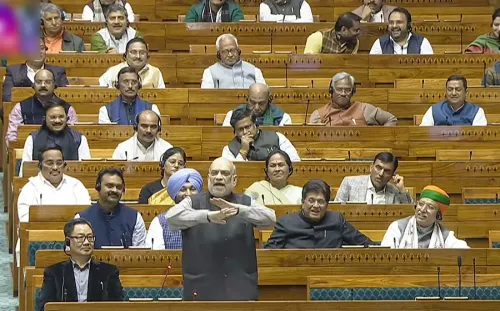
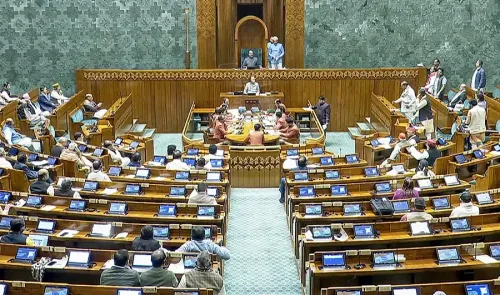
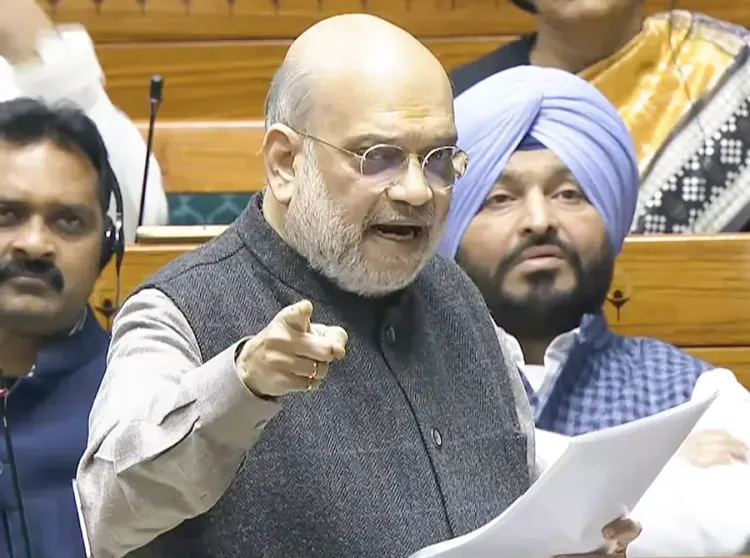
New Delhi, Dec 10 (NationPress) Union Home Minister Amit Shah provided a robust defense of the Special Intensive Revision (SIR) of voter lists, tracing its roots to the formative years of India's democracy and accusing the Congress party of misleading the public regarding this important exercise.
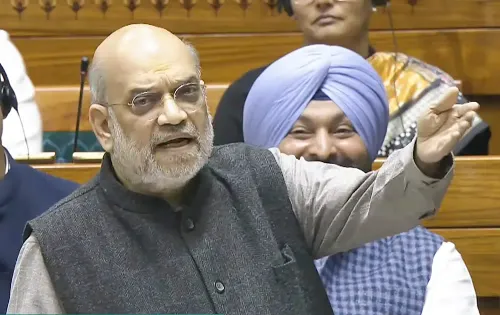
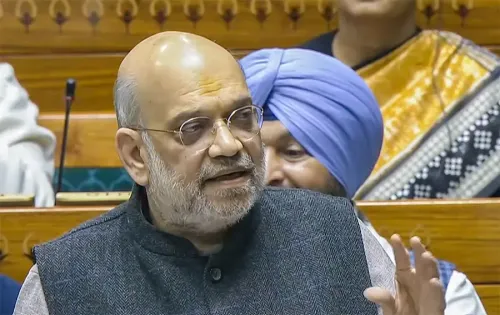
“Up until 2004, there were no objections to SIR. This process is essential for enhancing elections and fostering a healthy democracy. If the voter list is compromised, how can we expect to hold free and fair elections?” Shah questioned.
He emphasized that the Constitution distinctly outlines the Election Commission's powers, the methodology for preparing voter lists, and the provisions for adjustments or enhancements.
“When these provisions were established, our party was not even in existence,” he noted.
Shah contended that duplicate entries are a prevalent issue that needs rectification.
“Should a voter have the ability to vote in multiple locations? This initiative aims to purify the electoral process,” he asserted.
During the ongoing debate on electoral reforms in the Lok Sabha, Shah stated that the initial SIR was conducted in 1952 under Prime Minister Jawaharlal Nehru, followed by updates in 1957 and 1961.
The revisions continued under Prime Minister Lal Bahadur Shastri in 1965 and 1966, and later under Prime Minister Rajiv Gandhi in 1983-84, 1987, and 1989. It was also executed during the tenure of Prime Minister PV Narasimha Rao in 1992–93 and 1995, and under Prime Minister Atal Bihari Vajpayee in 2002-03. Following 2004, Shah noted that the latest revision is scheduled for 2025 under Prime Minister Narendra Modi.
He claimed that the Opposition is anxious because SIR would eliminate the names of illegal immigrants, whom he alleges constitute part of their support base.
“Should illegal immigrants have the right to participate in elections in India?” he queried.
The debate, which began on Tuesday, has been marked by intense exchanges between the Treasury and Opposition benches.
Rahul Gandhi, visibly frustrated by Shah's comments, challenged him to debate the Congress's press conference statements. Shah countered that Gandhi's remarks from November 5 were exaggerated, referencing cases such as Bihar voter Minta Devi, who admitted to mistakenly completing her online form.
“When you win, the Election Commission is commendable; when you lose, it is deemed incompetent. Such double standards will not prevail,” Shah asserted.
Intensifying his critique, Shah suggested that “certain families are hereditary vote thieves,” naming Jawaharlal Nehru and Indira Gandhi.
As Gandhi attempted to interject, Shah shot back, “Do not interrupt.”
The exchanges highlighted the growing rift between the ruling NDA and the opposition INDIA Bloc concerning electoral reforms, with SIR becoming the latest flashpoint in the ongoing struggle for credibility and transparency within India's democratic framework.
Point of View
It is crucial to recognize that the ongoing discussions surrounding the Special Intensive Revision of voter lists are not merely political skirmishes but fundamental to upholding the sanctity of our electoral process. Both the ruling and opposition parties must prioritize transparency and integrity to foster trust in our democratic framework.
NationPress
9 Oct 2026
Frequently Asked Questions
What is the Special Intensive Revision (SIR)?
The Special Intensive Revision (SIR) is a process for updating and improving voter lists in India to ensure free and fair elections.
Why is the SIR process important?
SIR is crucial for maintaining the integrity of the electoral process by eliminating duplicate entries and ensuring that only eligible voters can participate.
Who conducted the first SIR?
The first Special Intensive Revision was conducted in 1952 under Prime Minister Jawaharlal Nehru.
What are the criticisms against the SIR?
Critics, particularly from the opposition, argue that SIR could disenfranchise certain groups, including illegal immigrants, and question its implementation.
How often is the SIR conducted?
SIR has been conducted periodically, with the last major revision before 2025 occurring in 2004.