Will Lok Sabha Discuss SIR Today with Amit Shah Speaking at 5 PM?
Synopsis
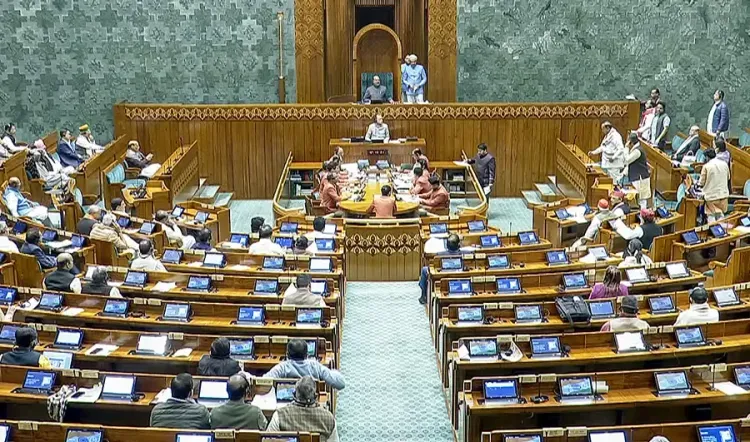
The Lok Sabha continues its debate on the Special Intensive Review (SIR) with significant political tensions. Union Home Minister Amit Shah is set to address the House at 5 PM regarding electoral reforms amidst heated discussions on the integrity of the electoral process and transparency in the Election Commission.
Key Takeaways
Ongoing debate in Lok Sabha on Special Intensive Review (SIR).
Amit Shah scheduled to speak at 5 PM.
Concerns raised about electoral integrity .
Opposition demands greater transparency from ECI.
Historical references to vote theft made by BJP MPs.
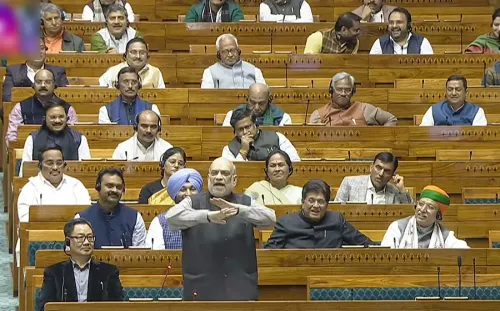
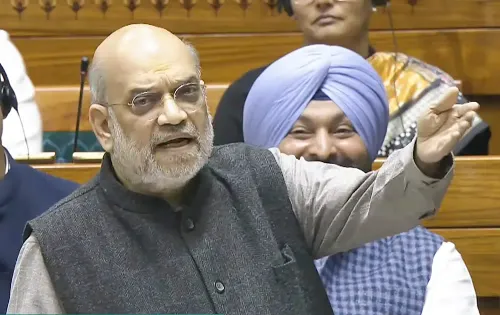
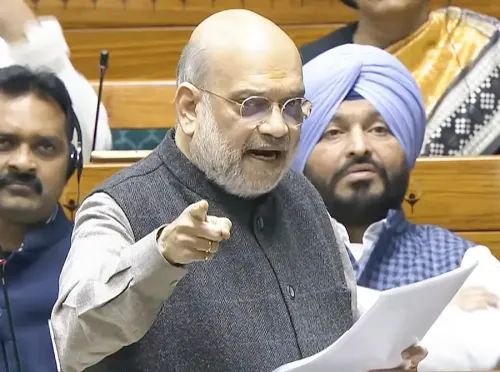
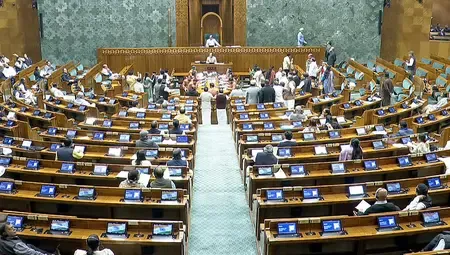
New Delhi, Dec 10 (NationPress) The debate surrounding the Special Intensive Review (SIR) in the Lok Sabha will proceed on Wednesday, with Union Home Minister Amit Shah set to address the assembly regarding electoral reforms at 5 p.m.
The discussion commenced on Tuesday concerning the SIR initiative being conducted by the Election Commission of India (ECI) across 12 states and union territories, a move that has faced significant backlash from the Opposition.
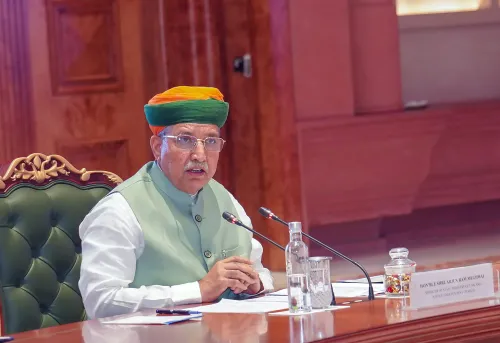
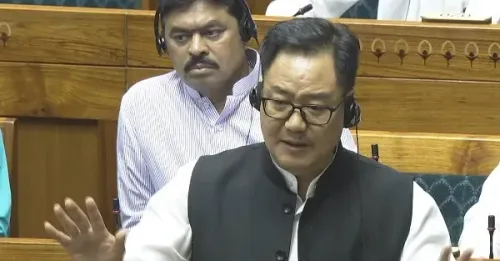
Kiren Rijiju, the Union Minister for Parliamentary Affairs, announced on social media that Amit Shah would be speaking on the SIR initiative at the scheduled hour.
During the session on Tuesday, Congress MP Manish Tewari initiated the conversation, expressing concerns regarding the allocation of public funds in the lead-up to elections, questioning the legitimacy of cash transfers to voters.
"Elections should not be won at the expense of the national or state treasury. This practice could jeopardize our democracy and our nation," he stated, emphasizing that such practices erode the integrity of the electoral system. He further claimed that the ECI lacks a legal foundation to carry out the SIR and called for increased transparency, questioning the absence of machine-readable voter lists for political parties.
His demands included: amending the selection law for ECI officials, ensuring the Chief Justice of India and the Leader of the Opposition in the Rajya Sabha are part of the selection panel, halting the SIR process immediately, and instituting a blanket ban on direct cash transfers prior to elections, which he deemed undemocratic.
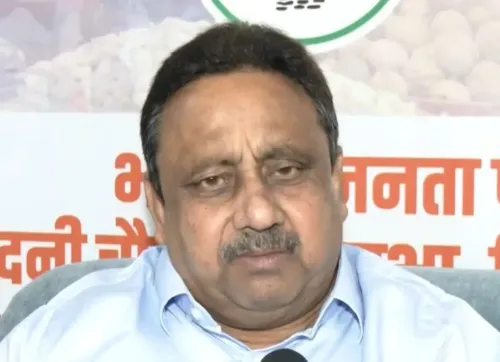
In response, BJP MP Sanjay Jaiswal accused the Opposition of raising concerns about the SIR and allegations of "vote theft" merely to distract from their substantial losses in the recent Bihar elections.
Jaiswal asserted that the first instance of "vote theft" occurred in 1947 when Jawaharlal Nehru was appointed Prime Minister despite a majority within the Congress Working Committee favoring Sardar Vallabhbhai Patel.
He elaborated his case by referencing various incidents he termed as examples of Congress-led "vote theft," including the Emergency of 1975 and the contentious 1987 elections in Jammu and Kashmir.
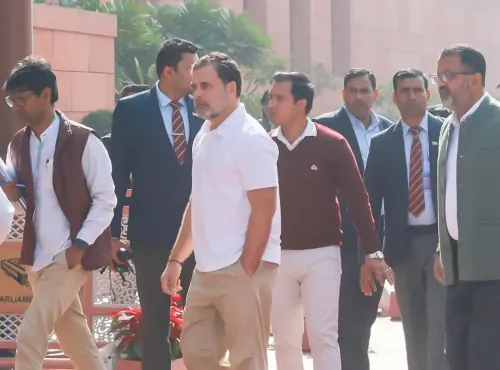
Furthermore, during the electoral reforms discussion, often labeled by Congress as the SIR debate, Lok Sabha LoP Rahul Gandhi posed critical queries: "What prompted the removal of the Chief Justice of India from the Election Commissioner selection panel? What could possibly be the reasoning behind this removal? Are we questioning the integrity of the CJI? If not, why is he excluded from this process?"
"I am in that room, which should represent a democratic decision, yet on one side are Prime Minister Narendra Modi and Amit Shah, while the Leader of the Opposition sits on the other. My voice is absent, and their decisions prevail. Why are the Prime Minister and Amit Shah so intent on selecting the Election Commissioner?" he elaborated.
"This is unprecedented. No Prime Minister in India's history has acted this way. In December 2025, this government altered the law to ensure that no Election Commissioner could face repercussions for any actions taken while in office. Why would the Prime Minister and Home Minister grant such immunity? What privilege has ever been extended by any Prime Minister before?" he alleged.
Rahul Gandhi sharply criticized the BJP, stating: "There is no greater anti-national act than stealing votes."
Meanwhile, BJP MP Nishikant Dubey, participating in the SIR debate, accused Congress of undermining key constitutional institutions through amendments made during the 1970s. He firmly dismissed Rahul Gandhi's assertion that national institutions have been "captured by the Rashtriya Swayamsevak Sangh (RSS)".
In his address, Dubey referred to the 1976 Swaran Singh Committee and the subsequent 42nd Constitutional Amendment, arguing that these moves significantly undermined the autonomy of institutions during the Emergency period.
He contended that even the Presidential office was relegated to a ceremonial position due to Congress-led amendments.
Point of View
It is vital to acknowledge the complexities surrounding the Special Intensive Review debate in the Lok Sabha. The ongoing discussions reflect significant concerns regarding electoral integrity and transparency, a matter that resonates deeply with the democratic values we uphold. Ensuring a fair electoral process is essential for the health of our democracy, and all voices deserve to be heard in this critical dialogue.
NationPress
30 Sept 2026
Frequently Asked Questions
What is the Special Intensive Review (SIR)?
The Special Intensive Review (SIR) is a process initiated by the Election Commission of India to scrutinize electoral practices and ensure transparency in elections across various states and union territories.
Why is the Lok Sabha discussing SIR?
The Lok Sabha is discussing SIR to address concerns raised by various political parties about the integrity of the electoral process and the use of public funds in elections.
What are the main concerns raised by the Opposition?
The Opposition has raised concerns regarding the legality of cash transfers to voters and the lack of transparency from the Election Commission, questioning its authority to conduct the SIR.
What role does Amit Shah play in this discussion?
Amit Shah, the Union Home Minister, is expected to provide insights and address the House regarding electoral reforms related to the Special Intensive Review.
How does this debate impact democracy?
This debate highlights critical issues regarding electoral integrity, transparency, and the potential misuse of public funds, ultimately shaping the democratic process in India.