Sharjeel Imam to Surrender at Tihar as Bail Expires Amid Riot Conspiracy Case

Synopsis
As the deadline for his interim bail approaches, Sharjeel Imam prepares to surrender to Tihar Jail authorities on March 30. His temporary release allowed him to support his family, but the court imposed strict conditions amid serious allegations regarding the 2020 riots.
Key Takeaways
Sharjeel Imam to surrender at Tihar Jail as bail expires.
Interim bail granted for attending a family wedding and caring for his mother.
Strict conditions included media restrictions and limited contact with others.
Imam faces serious allegations related to the 2020 North-East Delhi riots .
Supreme Court dismissed his bail plea, affirming the prosecution's evidence.
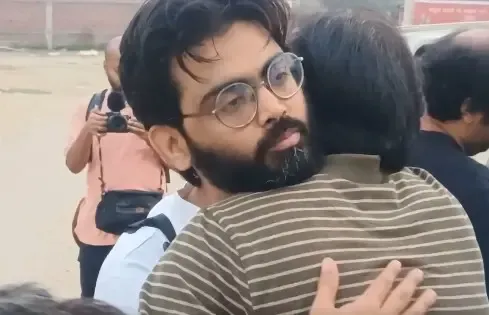
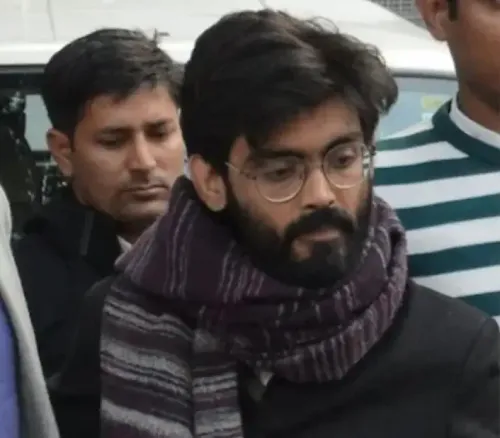
New Delhi, March 29 (NationPress) Student activist Sharjeel Imam is preparing to turn himself in to the officials at Tihar Jail on Monday, coinciding with the conclusion of the 10-day interim bail that was provided to him by a Delhi court. This bail was granted in relation to the alleged large-scale conspiracy tied to the 2020 North-East Delhi riots.
Imam was permitted to leave jail by the Karkardooma Court from March 20 to March 30, allowing him to attend his younger brother's wedding and assist with his ailing mother's care, under strict stipulations.
Additional Sessions Judge Sameer Bajpai approved this temporary relief, mandating Imam to submit a personal bond of Rs 50,000 along with two sureties of the same amount. The court enforced rigorous limitations, including a ban on media interactions and social media usage throughout the bail duration.
Furthermore, the court stipulated that Imam could only meet immediate family members, relatives, and friends, explicitly prohibiting any contact with witnesses or individuals connected to the case.
Imam was also instructed to keep his mobile phone operational at all times and share the number with the investigating officer. During the interim bail, he was allowed to stay either at his home or at designated wedding locations, as per his application.
Having been in custody for over five years, Imam argued for the interim bail, citing his role as the sole sibling tasked with managing the wedding preparations and supporting his family, particularly his sick mother.
The prosecution opposed the request, arguing that his presence was not crucial for the ceremonies and that the family had adequately prepared for the events. They also claimed that no urgent medical circumstances warranted his release.
Imam is among several student activists who have been charged under the UAPA and various sections of the Indian Penal Code concerning the alleged conspiracy behind the February 2020 riots.
According to the Delhi Police, the violence was orchestrated, not a spontaneous eruption, resulting from a premeditated plan involving mobilization, road blockades, and coordinated protests aimed at disrupting everyday life and attracting international scrutiny during then-President Donald Trump's visit.
This year, the Supreme Court rejected Imam's and his co-accused Umar Khalid's bail applications, asserting that the prosecution's evidence collectively indicated reasonable grounds to believe that the allegations against them were prima facie valid, thus invoking the statutory restriction on bail under Section 43D(5) of the UAPA.
Point of View
It is crucial to approach this story with an unbiased perspective. Sharjeel Imam's surrender at Tihar Jail underscores significant legal and societal issues surrounding political activism and the implications of the UAPA in India. The court's stringent bail conditions reflect ongoing tensions in the discourse surrounding protests and civil liberties.
NationPress
1 Oct 2026
Frequently Asked Questions
Why was Sharjeel Imam granted interim bail?
Sharjeel Imam was granted interim bail to attend his younger brother's wedding and to care for his ailing mother, subject to strict conditions imposed by the court.
What are the allegations against Sharjeel Imam?
Sharjeel Imam faces allegations of being part of a larger conspiracy related to the 2020 North-East Delhi riots, which the Delhi Police claim involved premeditated actions to disrupt public life.
What conditions were placed on Imam's interim bail?
The conditions included restrictions on media interaction, prohibiting contact with witnesses, and requirements to keep his mobile phone active at all times.
What did the Supreme Court decide regarding Imam's bail plea?
The Supreme Court dismissed Imam's bail plea, indicating that the prosecution's evidence provided reasonable grounds to believe the allegations against him were prima facie true.