Silk yarn spinning creates jobs for women SHGs in Kumaon, Uttarakhand
Synopsis
For the first time, Uttarakhand's Kumaon Division Silk Department has moved up the sericulture value chain — from cocoon production to spinning finished yarn — with 14 women from the 'Maa Durga New Resham SHG' already earning ₹4,500 per kg through the Uttarakhand Cooperative Federation. A small but telling model for rural women's economic integration.
Key Takeaways
Uttarakhand's Kumaon Division Silk Department has launched silk yarn spinning for the first time, based at the Government Silk Farm, Haldwani .
The 'Maa Durga New Resham Self-Help Group' currently employs 14 women , who have collectively earned approximately ₹25,000 in a short period.
Silk yarn is priced at approximately ₹4,500 per kilogram and marketed through the Uttarakhand Cooperative Federation, Dehradun .
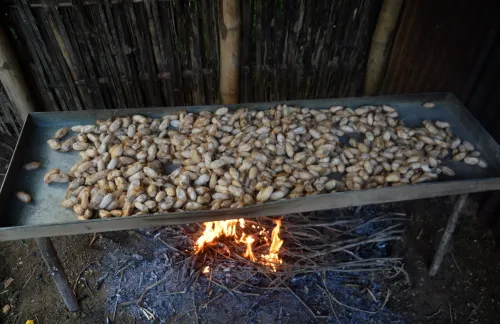
Women undergo a five-day training programme covering cocoon boiling, spinning, yarn preparation, and quality maintenance.
The department plans to scale up the initiative to remote rural areas, enabling women to earn without leaving their communities.
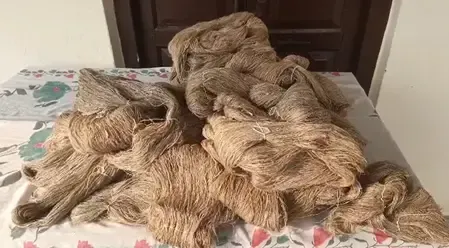
Uttarakhand's Silk Department has launched silk yarn spinning operations in Kumaon Division for the first time, engaging women members of Self-Help Groups (SHGs) at the Government Silk Farm in Haldwani. The initiative is generating direct employment and income for local women while building a distinct market identity for Uttarakhand-produced silk yarn.
A First for Kumaon's Silk Sector
Hemchandra, Deputy Director of the Silk Department (Kumaon Division), confirmed that this marks the first time silk yarn production has been launched in the division with active participation from SHG women members. The project, which began in 2025, started with just one or two women before expanding as the income potential became evident.
A dedicated group — the 'Maa Durga New Resham Self-Help Group' — has been formed, currently comprising 14 women. In a short span, the group has collectively earned approximately ₹25,000, with silk yarn fetching around ₹4,500 per kilogram in the market. Hemchandra expressed optimism that prices could rise further as the product gains recognition.
Training, Technique and Quality Control
Rahul Pal, a scientist with the Sericulture Department, said that women undergo a five-day training programme covering cocoon boiling, spinning, yarn preparation, and quality maintenance. The structured training ensures consistency in output and helps women meet market standards from the outset.
Group member Vimal Jeena said that co-operative support made it possible for women to take up the work and begin producing silk yarn. Fellow member Sunita noted that the initiative is providing income and creating genuine pathways to self-employment for participating women.
Marketing and Distribution
The finished yarn is being marketed through the Uttarakhand Cooperative Federation in Dehradun, which also removes the burden of women having to travel to multiple markets to sell their products. This integrated marketing arrangement is considered key to the model's sustainability and scalability.
Scaling Up and What Comes Next
Previously, the Sericulture Department had trained SHGs in the Haldwani region to produce handmade decorative items, jewellery, and other cocoon-based products, enabling several women to become self-reliant. The department now plans to scale up the yarn spinning initiative to reach women in remote rural areas, ensuring that employment opportunities are available close to their homes.
This initiative represents a broader shift in Uttarakhand's sericulture policy — moving up the value chain from raw cocoon production toward finished silk yarn, with rural women at the centre of that transition.
Point of View
SHG models in rural crafts typically collapse at the last mile. The ₹4,500-per-kg price point is encouraging, but scalability will hinge on whether quality consistency holds as membership grows beyond 14. The real test arrives when the department tries to replicate this in more remote clusters where training infrastructure is thinner and market access harder.
NationPress
7 Oct 2026
Frequently Asked Questions
What is the silk yarn spinning initiative launched in Uttarakhand's Kumaon Division?
It is a first-of-its-kind project launched in 2025 by the Kumaon Division Silk Department at the Government Silk Farm in Haldwani, where women members of Self-Help Groups are trained to spin silk yarn from cocoons. The finished yarn is sold through the Uttarakhand Cooperative Federation at around ₹4,500 per kilogram.
How many women are currently employed in the scheme?
The 'Maa Durga New Resham Self-Help Group' currently has 14 women members who are actively producing silk yarn. The group started with just one or two members in 2025 and grew as income generation became evident.
How much have the women earned so far?
According to the Deputy Director of the Silk Department (Kumaon Division), the women in the group have collectively earned approximately ₹25,000 in a short period since operations began.
What training do women receive for silk yarn spinning?
Women undergo a five-day training programme covering cocoon boiling, spinning, yarn preparation, and quality maintenance, as described by Rahul Pal, a scientist with the Sericulture Department.
How is the silk yarn marketed, and do women need to travel to sell it?
The silk yarn is marketed through the Uttarakhand Cooperative Federation in Dehradun, which handles distribution and eliminates the need for women to travel to multiple markets to sell their products.