Sitharaman: Digital economy taxation needs cool-headed study, global lens

Synopsis
Finance Minister Nirmala Sitharaman's call to 'coolly study' digital taxation is a quiet signal that India is not ready to commit prematurely on a policy that could shape billions in future tech investment. With cloud services, AI, the gig economy, and virtual digital assets all on the table — and a global two-pillar deal still in flux — the stakes of getting this wrong are enormous.
Key Takeaways
Finance Minister Nirmala Sitharaman called for careful, evidence-based study of digital economy taxation at an ITRAF event in Bengaluru on 16 September 2026 .
India withdrew two taxes on digital companies during global two-pillar tax negotiations to build confidence in the emerging international agreement.
The government is open to an institutional mechanism to clarify whether digital transactions are treated as goods or services under GST and income tax law.
The next GST Council meeting on 7 October will take up GST 2.0 process reforms, including e-invoicing issues.
Sitharaman highlighted India's attractiveness to global investors via FDI liberalisation since 2014 and the role of GIFT City in offshore capital flows.
Industry was urged to contribute to evidence-based tax policy , including flagging provisions that should be removed even when they currently benefit from them.
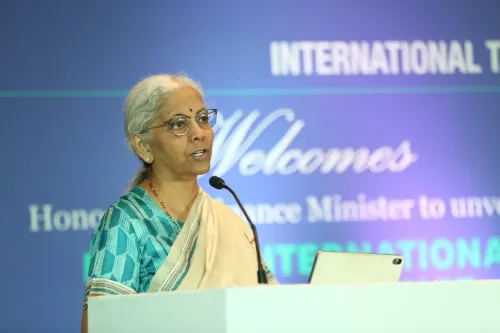
Finance Minister Nirmala Sitharaman on Wednesday, 16 September 2026, called for a careful, evidence-based approach to taxing the digital economy, warning that any policy decisions must account for their impact on India, other jurisdictions, and the country's future investment climate. She was speaking at an event organised by the International Tax Research and Analysis Foundation (ITRAF) in Bengaluru.
Why Digital Taxation Is Uniquely Complex
Sitharaman underscored that digital economy taxation raises fundamental questions about where tax liability falls and on whom — particularly in areas such as cloud services, digital products, and cross-border consumption of digital services. 'The complexity has to be coolly studied, the implications for India and implications for outside, and above all, the implication that it can have in terms of further investments coming into India, must be coolly studied as well,' she said.
The minister also flagged emerging issues that tax policy will increasingly need to address, including significant economic presence, virtual permanent establishments, taxation of artificial intelligence and robotics, the gig economy, global mobility, virtual digital assets, global capability centres, and the treatment of goods and services in digital transactions.
India's Role in Global Two-Pillar Tax Talks
Sitharaman acknowledged India's active role in the ongoing global two-pillar tax negotiations, noting that the country had withdrawn two taxes on digital companies during the process — a step taken, she explained, to build confidence in the emerging international agreement. She cautioned against reducing the debate to a simple question of whether India was losing revenue, framing digital taxation instead as part of a broader, ongoing global negotiation.
GST Clarity and the Goods vs Services Debate
The Finance Minister said the government was open to establishing an institutional mechanism that would provide greater clarity on whether digital transactions should be classified as goods or services under both GST and income tax laws. She invited industry to submit proposals and suggestions on the matter, acknowledging that this distinction has grown increasingly complex as businesses operate across borders.
Sitharaman also confirmed that the next GST Council meeting, scheduled for 7 October, would take up process reforms under GST 2.0, including issues related to e-invoicing. She noted that the previous Council meeting had focused on rate rationalisation, with process reforms deferred to the upcoming session. Industry was additionally invited to flag specific anomalies in the GST framework that may not yet have been addressed.
FDI, GIFT City, and the Investment Climate
Turning to investment, Sitharaman highlighted that the government had progressively widened foreign direct investment (FDI) limits since 2014, with most inflows now arriving through the automatic route, barring sectors with security considerations. She pointed to global supply-chain diversification under the 'China plus one' strategy as a tailwind for India, and cited GIFT City as a key conduit for channelling offshore capital into sectors such as maintenance, repair and overhaul, shipbuilding, and fintech.
A Call for Substantive Policy Engagement
Sitharaman urged tax professionals, industry bodies, and researchers to move beyond routine requests for lower rates, exemptions, and concessions, and instead contribute to evidence-based tax policy. She called on industry associations to be willing to flag provisions that should be removed — even when those provisions currently benefit them. 'Consultation must mean more than giving everyone an opportunity to place a representation on record. It should be a genuine exercise of evidence, experience, and ideas,' she said. The remarks signal a shift in the government's expectations from the private sector ahead of what could be a significant round of digital tax reform.
Point of View
The margin for further retreat without a clear revenue alternative is shrinking. The admission that cloud services, AI, and virtual digital assets raise 'difficult questions' about tax jurisdiction is accurate, but the absence of a firm timeline or institutional mandate risks leaving businesses in prolonged uncertainty. More striking is her challenge to industry: stop asking only for concessions and start helping identify dead-weight provisions. If industry associations take that seriously, it could mark a genuine shift in the quality of tax consultation in India — though past experience suggests the instinct to lobby for exemptions runs deep.
NationPress
16 Sept 2026
Frequently Asked Questions
What did Finance Minister Sitharaman say about taxing the digital economy?
Sitharaman said decisions on digital economy taxation must be studied carefully for their implications on India, other jurisdictions, and future investment. Speaking at an ITRAF event in Bengaluru on 16 September 2026, she flagged issues including cloud services, AI, robotics, gig economy taxation, and virtual digital assets as areas requiring urgent policy attention.
Why did India withdraw two digital taxes during global negotiations?
India withdrew two taxes on digital companies as part of the global two-pillar tax negotiations to build confidence in the emerging international agreement. Sitharaman cautioned against viewing this purely as a revenue loss, framing it as part of a broader global tax negotiation process.
What will the GST Council discuss at its October 2026 meeting?
The GST Council meeting scheduled for 7 October 2026 will take up process reforms under GST 2.0, including issues related to e-invoicing. The previous meeting had focused on rate rationalisation, with process reforms deferred to the upcoming session.
What is the government's position on classifying digital transactions as goods or services?
The government is open to creating an institutional mechanism to provide greater clarity on whether digital transactions should be treated as goods or services under GST and income tax laws. Sitharaman invited industry to submit proposals and flagged the issue as increasingly complex given cross-border business operations.
What did Sitharaman say about India's investment climate and FDI?
Sitharaman said the government has progressively widened FDI limits since 2014, with most investments now routed through the automatic route. She cited global supply-chain diversification under the 'China plus one' strategy and GIFT City's role in sectors like fintech, shipbuilding, and maintenance, repair and overhaul as signals of India's attractiveness to global investors.