Are ASHA and Anganwadi Workers Being Underpaid in Key Government Schemes?
Synopsis
Sonia Gandhi highlights the distress of frontline female workers, calling for immediate reforms for ASHA and Anganwadi workers, vital for women’s empowerment. With significant vacancies and outdated staffing norms, she urges urgent action to enhance their roles in public health and child development.
Key Takeaways
Sonia Gandhi emphasizes the plight of ASHA and Anganwadi workers.
Calls for urgent reforms to improve their working conditions and pay.
Over 300,000 vacancies in ICDS services highlight the need for immediate action.
Strengthening this workforce is essential for India's future health outcomes.
Protests reflect the ongoing struggle for better wages and job security.
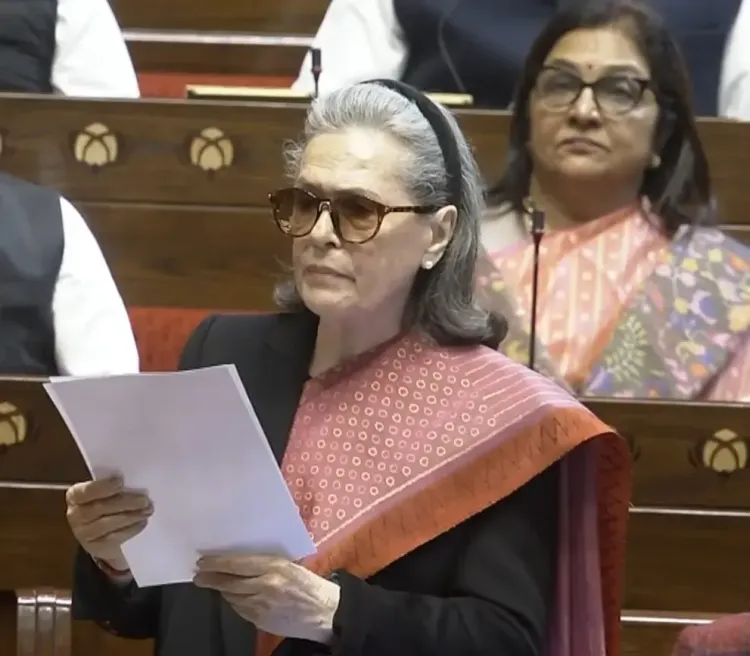
New Delhi, Dec 16 (NationPress) Former Congress President and Rajya Sabha member Sonia Gandhi brought attention to the ongoing struggles faced by millions of female frontline workers during Zero Hour. She emphasized the need for immediate reforms to assist ASHA (Accredited Social Health Activists), Anganwadi workers, helpers, and community resource personnel under the National Rural Livelihood Mission (NRLM).
Gandhi characterized these government programs as crucial avenues for women's empowerment but expressed concern that these workers are overloaded with responsibilities, undercompensated, and undervalued, despite their essential roles in public health, nutrition, and child development.
ASHA workers, designated as volunteers, perform critical functions such as immunization campaigns, maternal health support, and family welfare initiatives, yet they receive minimal honoraria with insufficient social security, she noted.
Anganwadi workers and helpers, pivotal to the Integrated Child Development Services (ICDS) scheme, earn a basic honorarium from the Union government of around Rs 4,500 for workers and Rs 2,250 for helpers monthly, frequently augmented by varying amounts from states, according to the Congress leader.
She highlighted nearly 300,000 vacancies across ICDS levels nationwide, leading to deficiencies that deprive countless children and mothers of vital nutrition, health check-ups, and early education services.
Gandhi pointed out that the staffing norms rely on outdated 2011 census data, neglecting to consider population growth.
Calling for better coordination between the Centre and states, Gandhi proposed five priority actions: immediate filling of all vacancies, ensuring timely payments, doubling the Union government's contribution to honoraria, appointing additional ASHA workers in villages with populations exceeding 2,500, and broadening Anganwadi staffing to integrate early childhood education with existing nutrition and health focuses.
Stressing the wider implications, she asserted that strengthening and expanding this workforce represents a strategic investment in India's future, particularly in improving maternal and child health outcomes.
This intervention arises amid persistent demands from these workers for employment status, minimum wages, and enhanced benefits, with recent protests in various states highlighting issues of low pay and job insecurity.
Point of View
It is crucial to acknowledge the significant contributions of ASHA and Anganwadi workers. Their roles in public health and child nutrition are indispensable, yet their current conditions highlight systemic issues that need urgent attention. As such, addressing their demands for fair compensation and job security is not just a matter of justice but also vital for the overall well-being of society.
NationPress
30 Sept 2026
Frequently Asked Questions
What roles do ASHA and Anganwadi workers play?
ASHA and Anganwadi workers are vital in providing healthcare, nutrition, and education services to mothers and children in India.
What reforms are being proposed for these workers?
Proposed reforms include filling vacancies, ensuring timely pay, and increasing honorarium contributions from the government.
Why are these workers demanding better pay?
They are advocating for fair compensation due to their significant responsibilities and contributions, which are often undervalued.