Sonia Gandhi's memoir reveals anguish over DMK alliance after Rajiv's assassination
Synopsis
Sonia Gandhi's memoir lays bare what official histories of the UPA have always glossed over: that its founding alliance came at a profound personal price. Her account of trembling hands and a tormented conscience before calling Karunanidhi is the most candid admission yet that India's most consequential coalition was forged despite — not beyond — a wound that never fully healed.
Key Takeaways
Sonia Gandhi reveals in her memoir Belonging: A Journey of Love the deep moral conflict she faced over allying with the DMK after Rajiv Gandhi's 1991 assassination .
She writes that DMK cadre supported the LTTE during the 1991 elections and that some had openly threatened Rajiv Gandhi .
The Jain Commission report (1997) had previously implicated a DMK leader in tacitly aiding the assassins, prompting Congress to withdraw support from the IK Gujral government.
Gandhi made the first call to M.
Karunanidhi with 'heart in her mouth and hands trembling,' reasoning that Rajiv himself might have approved the move against the BJP.
The alliance was formalised as the United Progressive Alliance (UPA) on 4 May 2004 .
DMK leader TKS Elangovan maintained the party never endorsed Rajiv Gandhi's assassination and had supported Sri Lankan Tamils , not the LTTE's methods.
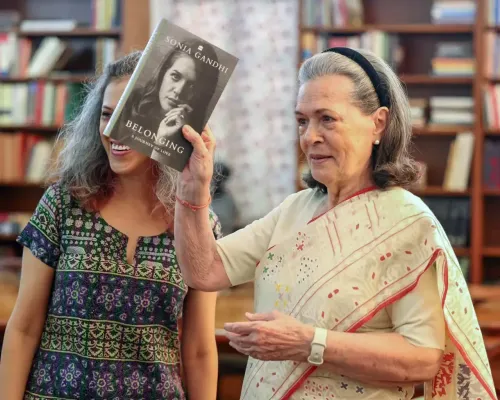
Congress president emeritus Sonia Gandhi has disclosed, in her memoir Belonging: A Journey of Love, the profound moral conflict she endured when the party weighed forming an alliance with the Dravida Munnetra Kazhagam (DMK) — the very party whose cadre had, in her account, openly supported the Liberation Tigers of Tamil Eelam (LTTE), the group responsible for the 1991 assassination of Rajiv Gandhi. The revelation offers an unusually candid window into the personal cost of coalition-building in post-liberalisation Indian politics.
The Wound That Would Not Heal
Gandhi writes that the early 2000s presented what seemed like an opportune moment for opposition forces to consolidate against the Bharatiya Janata Party (BJP)-led government. Yet the prospect of partnering with the DMK triggered a deep personal crisis. She recounts that DMK cadre had been vocal backers of the LTTE during the 1991 elections, and that some within the party had gone so far as to openly threaten Rajiv Gandhi.
The Jain Commission report of 1997, which held a DMK leader responsible for tacitly aiding the Tamil assassins, had already forced the Indian National Congress (INC) to withdraw support from the IK Gujral government — a precedent that made any reconciliation even more fraught. 'With those painful memories returning to torment me, I'd ask myself, "What should I do? If I join hands with them, won't it amount to a betrayal of Rajiv?"' Gandhi writes in the memoir.
A Pragmatic Calculation — and a Difficult Call
Gandhi then describes how she weighed a counterfactual: 'Perhaps Rajiv himself would have gone ahead with this alliance, if he knew it was necessary to strengthen our front against the BJP.' That reasoning, however tentative, helped tip the balance. She describes making the first telephone call to DMK patriarch M. Karunanidhi with 'her heart in her mouth and hands trembling.'
Despite the two leaders sharing no common language, Gandhi writes that the initial conversation was cordial. Over subsequent meetings, they reportedly discovered common ground in the arts, literature, and Tamil heritage, gradually building a working relationship that transcended its turbulent origins.
From Personal Reconciliation to the UPA
Party colleagues on both sides eventually worked out seat-sharing arrangements and campaign coordination. The process culminated in the formal launch of the United Progressive Alliance (UPA) on 4 May 2004 — a coalition that went on to form the government at the Centre for two consecutive terms. The Congress-DMK partnership proved electorally decisive in Tamil Nadu, a state the BJP has historically struggled to penetrate on its own.
This is the first time Gandhi has spoken at length about the psychological toll that forging this alliance exacted. Earlier accounts of the UPA's formation had largely focused on its structural architecture rather than the intimate deliberations behind it.
DMK's Response
DMK leader TKS Elangovan responded to the memoir's revelations, stating that Gandhi had aligned with the DMK because it was the only viable path to challenging the BJP in Tamil Nadu. He reiterated that the DMK had always championed the cause of Sri Lankan Tamils and categorically rejected any suggestion that the party had endorsed the assassination of Rajiv Gandhi.
What This Means for India's Coalition History
The passages Gandhi devotes to this episode shed rare light on how personal grief and political necessity intersect at the highest levels of Indian governance. They also underscore how the UPA's founding was not merely a transactional exercise but one laden with emotional and ethical stakes that leaders rarely acknowledge publicly. As India's coalition era continues to evolve, Gandhi's account serves as a reminder that the architecture of alliances is often built on deeply personal — and deeply painful — compromises.
Point of View
The Congress-DMK alliance was presented as a pragmatic masterstroke; the memoir reveals it was also a moral crucible. The Jain Commission episode is worth revisiting here: Congress withdrew support from Gujral over DMK's alleged LTTE links in 1997, then reversed course within seven years for electoral survival — a tension the party has never publicly resolved. That silence has cost it in Tamil Nadu whenever the LTTE question resurfaces. Gandhi's candour is overdue, but it also raises a question the memoir may not fully answer: what institutional safeguards, if any, governed the alliance to prevent a repeat of the concerns that triggered the 1997 rupture?
NationPress
10 Nov 2026
Frequently Asked Questions
What does Sonia Gandhi reveal in her memoir about the DMK alliance?
In her memoir Belonging: A Journey of Love , Sonia Gandhi discloses that she faced intense moral anguish before agreeing to ally with the DMK, given the party's cadre ties to the LTTE — the group that assassinated Rajiv Gandhi in 1991. She describes making the first call to Karunanidhi with trembling hands, ultimately reasoning that Rajiv himself might have approved the alliance to counter the BJP.
What was the Jain Commission and why does it matter here?
The Jain Commission was a judicial inquiry whose 1997 report held a DMK leader responsible for tacitly supporting the Tamil assassins who killed Rajiv Gandhi. The report's findings prompted the Congress to withdraw support from the IK Gujral government, making the subsequent decision to ally with the DMK for the 2004 elections especially fraught for Gandhi.
How did the Congress-DMK alliance lead to the formation of the UPA?
After Gandhi overcame her reservations and initiated contact with DMK patriarch M. Karunanidhi, the two sides found common ground over meetings centred on arts, literature, and Tamil heritage. Party colleagues finalised seat-sharing and campaign arrangements, and the United Progressive Alliance (UPA) was formally constituted on 4 May 2004.
What has the DMK said in response to Sonia Gandhi's memoir?
DMK leader TKS Elangovan stated that Gandhi allied with the DMK because it was the only viable way to take on the BJP in Tamil Nadu. He reiterated that the DMK had supported the cause of Sri Lankan Tamils but had never endorsed Rajiv Gandhi's assassination.
Why is this memoir significant for understanding Indian coalition politics?
The memoir is one of the first first-person accounts to detail the personal and emotional cost behind the UPA's formation — a coalition that governed India for two consecutive terms from 2004. Gandhi's candid account highlights how grief, conscience, and political necessity collided in shaping alliances that defined a generation of Indian governance.