CM Majhi ends Odisha's pension quota, opens door for all eligible
Synopsis
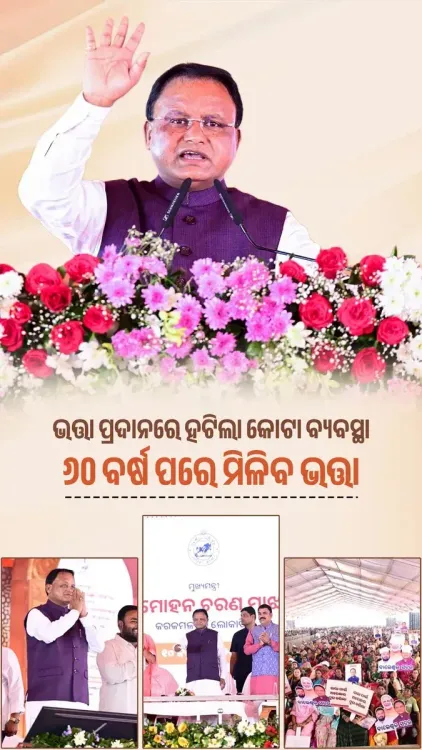
Odisha Chief Minister Mohan Charan Majhi announced the abolition of a quota-based pension cap that forced applicants to wait for a sitting beneficiary's death under BJD's 24-year rule. Every eligible person aged 60 and above can now receive state social security pension based solely on eligibility.
Key Takeaways
Odisha CM Mohan Charan Majhi announced the abolition of the quota-based pension system on 10 November 2026 .
The quota system was maintained throughout the BJD's 24-year rule from 2000 to 2024, capping the number of pension beneficiaries.
Under the old system, new applicants often had to wait for an existing beneficiary to die before a slot opened.
The reform applies to elderly persons aged 60 and above , widows, and persons with disabilities.
Pension eligibility is now merit- and criteria-based, with no administrative cap on beneficiary numbers.
The move is part of the BJP government's broader commitment to expand social security coverage after its 2024 assembly election victory in Odisha.
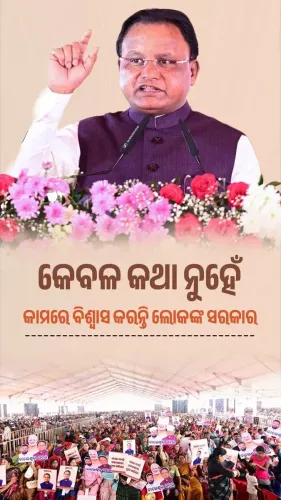
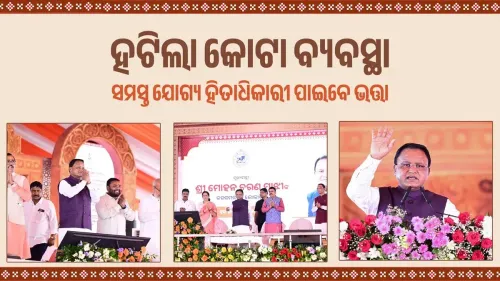
For decades in Odisha, an elderly widow waiting for a pension had to wait for something else first — another beneficiary's death. That grim arithmetic is now over. Odisha Chief Minister Mohan Charan Majhi announced on Tuesday, 10 November 2026 that his government has abolished the quota-based pension system that capped social security allowances for the elderly, widows, and persons with disabilities across the state.
The quota that made the living wait for the dead
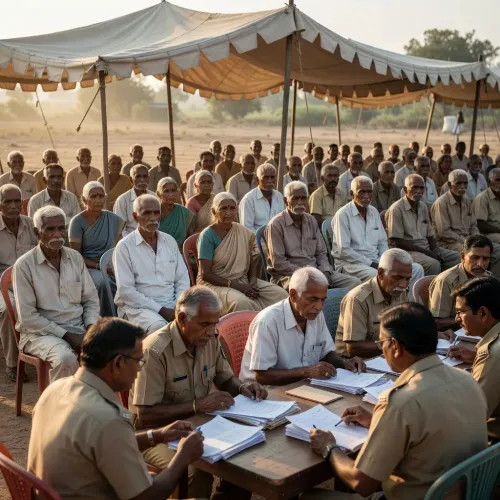
The mechanics were as bleak as they sound. Under the system maintained throughout the Biju Janata Dal (BJD)'s uninterrupted 24-year rule in Odisha — from 2000 to 2024 — the total number of pension beneficiaries was administratively capped. A new applicant could only enter the system when an existing beneficiary exited it, most often through death. Eligibility was never the barrier. The wait list was.
CM Majhi framed the abolition as a direct contrast to the previous administration. In his post, he wrote in Odia: 'ଏଣିକି କୋଟା ନୁହେଁ, ଯୋଗ୍ୟତା ଆଧାରରେ' — 'From now on, not quota but eligibility is the basis.' Every eligible person aged 60 and above, along with widows and persons with disabilities who qualify, can now receive a state pension without waiting for a slot to open up.
BJP's 2024 victory and the promise of saturation coverage
The move is rooted in the political shift of 2024, when the BJP ended the BJD's quarter-century hold on Odisha's assembly and Majhi became Chief Minister. Expanding social security coverage was among the BJP's stated commitments heading into that election. Abolishing the quota system directly targets one of the most visible administrative failures of the previous regime — the kind of bureaucratic bottleneck that is easy to attack in a campaign and hard to defend in office.
The hashtags attached to the post — #PensionForAll, #PensionSaturation, and the Odia phrase #ଭତ୍ତାପାଇଁଅପେକ୍ଷାରଯୁଗଶେଷ ('the era of waiting for a pension is over') — signal that this is being positioned as a flagship welfare delivery moment, not a quiet administrative order.
What changes on the ground
In practical terms, any Odia resident aged 60 or above who meets the state's eligibility criteria — along with qualifying widows and persons with disabilities — can now apply and receive social security pension without being turned away because a quota is full. The state's social security department will be expected to release updated beneficiary counts and process new applicants under the revised framework.
The fiscal weight of this expansion is real. Absorbing an uncapped number of eligible beneficiaries requires sustained budget allocation — supplementary estimates and eventual mainstreaming into the state's annual welfare expenditure will be the test of whether the promise holds. The announcement has been made. The numbers will tell the rest of the story.
Point of View
The Majhi government converts an administrative change into a moral indictment of its predecessor. The real test, however, is fiscal: uncapping beneficiary numbers demands sustained budget commitment, and the gap between announcement and implementation will define whether this becomes a durable legacy or an aspirational headline.
NationPress
10 Nov 2026
Frequently Asked Questions
What was Odisha's pension quota system?
It was an administrative cap on the number of social security pension beneficiaries in Odisha. Under this system, a new applicant could only receive a pension when an existing beneficiary — usually an elderly person, widow, or person with disability — stopped receiving it, most often due to death. This system was in place throughout the BJD government's rule from 2000 to 2024.
What has CM Mohan Majhi changed about Odisha pensions?
CM Mohan Charan Majhi has abolished the quota system. Any eligible Odia resident aged 60 and above, along with qualifying widows and persons with disabilities, can now receive a state social security pension based purely on eligibility criteria — without waiting for a quota slot to become available.
Who benefits from the pension quota abolition in Odisha?
The primary beneficiaries are elderly citizens aged 60 and above, widows, and persons with disabilities across Odisha who previously met the eligibility criteria but were denied pensions because the quota was full.
How long was the pension quota system in place in Odisha?
The quota system was maintained throughout the Biju Janata Dal's 24-year rule in Odisha, covering the period from 2000 to 2024, before the BJP government under Mohan Charan Majhi took office and subsequently abolished it.
What is the PensionSaturation scheme in Odisha?
'Pension Saturation' is the goal articulated by the Majhi government — ensuring that every eligible person in Odisha who qualifies for a social security pension actually receives one, with no administrative cap or quota restricting access.