South Korea, East Timor expand ties in climate, infra, education
Synopsis
East Timor's foreign minister made his country's first official ministerial visit to Seoul since 2002, sealing agreements on climate tech, infrastructure, and education. With East Timor now ASEAN's 11th member, South Korea is moving quickly to deepen ties — and its peacekeeping history in Dili gives Seoul a head start few other partners can claim.
Key Takeaways
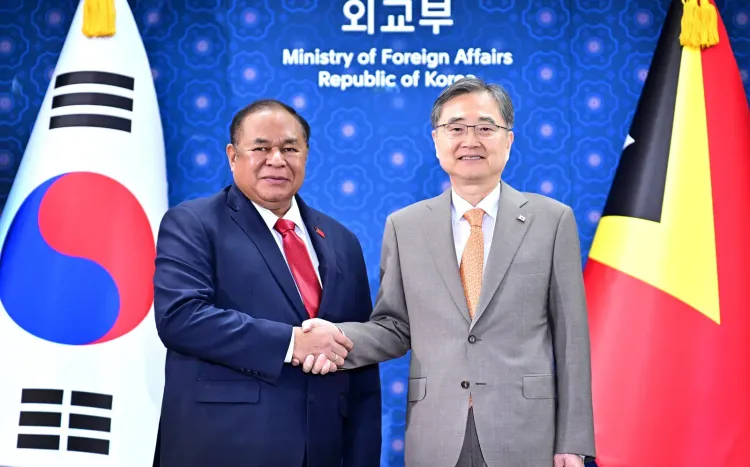
South Korean FM Cho Hyun and East Timorese FM Bendito dos Santos Freitas met in Seoul on 29 June to expand bilateral cooperation.
This was the first official visit by an East Timorese foreign minister to South Korea since diplomatic relations were established in 2002 .
Cooperation agreed upon spans climate change , carbon capture and storage (CCS) , infrastructure , education , and human resource development .
East Timor joined ASEAN as its 11th member in October 2025 ; Seoul reaffirmed support for its regional integration.
South Korea recalled its deployment of the Sangnoksu peacekeeping unit to East Timor from 1999 to 2003 as a foundation for the bilateral relationship.
South Korean Foreign Minister Cho Hyun and his East Timorese counterpart Bendito dos Santos Freitas agreed on Monday, 29 June to deepen bilateral cooperation across climate change, infrastructure, human resource development, and education, according to Seoul's foreign ministry. The meeting, held in Seoul, marks a significant step in the two nations' relationship since they established diplomatic ties in 2002.
A Historic First Official Visit
Freitas' trip to Seoul was the first official visit by an East Timorese foreign minister to South Korea since the establishment of diplomatic relations. He had previously travelled to the country twice — in 2010 and 2011 — in his capacity as head of East Timor's vocational training and employment agency, making this visit a formal diplomatic milestone.
Key Areas of Cooperation
The two sides agreed to broaden collaboration in education, human resource development, and government capacity building — areas East Timor identifies as central to its national development agenda. On the environmental front, the ministers discussed cooperation in greenhouse gas reduction projects and carbon capture and storage (CCS) technology. Discussions also covered maritime affairs, infrastructure development, and law enforcement measures targeting transnational crime.
ASEAN Integration and Regional Ties
Minister Cho reaffirmed Seoul's backing for East Timor's integration into the Association of Southeast Asian Nations (ASEAN) and pledged continued support for the country's participation in the regional bloc. East Timor formally became ASEAN's 11th member in October 2025. Freitas, in turn, expressed support for South Korea's vision for a comprehensive strategic partnership with ASEAN and its various cooperation frameworks.
Historical Bonds and North Korea Dialogue
During the talks, Cho highlighted the longstanding humanitarian and peacekeeping ties between the two countries, recalling South Korea's deployment of the Sangnoksu peacekeeping unit to East Timor during its independence and nation-building process from 1999 to 2003. Cho also outlined Seoul's policy vision for peaceful coexistence with North Korea, to which Freitas expressed support. 'The two ministers also agreed to continue working together to promote regional and global peace and stability,' the ministry said in a release.
What Comes Next
The agreement signals a broadening of South Korea's diplomatic footprint in Southeast Asia as East Timor settles into its new role as an ASEAN member. Analysts note that Seoul's emphasis on capacity building and green technology aligns with its wider Indo-Pacific engagement strategy, while East Timor gains a development-oriented partner with proven peacekeeping credentials in the region.
Point of View
And pairing it with green technology and capacity-building offers is a calculated move. What remains to be seen is whether these agreements translate into funded, time-bound projects or remain aspirational frameworks. For East Timor, the real test is whether external partnerships accelerate institutional capacity or create dependency. The inclusion of CCS in the agenda is notable: it reflects South Korea's own energy transition anxieties as much as East Timor's development needs.
NationPress
28 Sept 2026
Frequently Asked Questions
What did South Korea and East Timor agree to during the 29 June meeting?
The two countries agreed to expand cooperation in climate change, carbon capture and storage (CCS), infrastructure, maritime affairs, education, human resource development, and government capacity building. The agreement was reached during a meeting between Foreign Minister Cho Hyun and his East Timorese counterpart Bendito dos Santos Freitas in Seoul.
Why is this East Timorese foreign minister's visit to Seoul significant?
It was the first official visit by an East Timorese foreign minister to South Korea since the two countries established diplomatic relations in 2002. The visit marks a formal diplomatic upgrade in bilateral ties, coinciding with East Timor's recent entry into ASEAN as its 11th member.
When did East Timor join ASEAN?
East Timor became ASEAN's 11th member in October 2025. South Korea reaffirmed its support for East Timor's integration into the regional bloc during the Seoul talks.
What is the historical connection between South Korea and East Timor?
South Korea deployed the Sangnoksu peacekeeping unit to East Timor during its independence and nation-building process from 1999 to 2003. This peacekeeping legacy was highlighted by Foreign Minister Cho as a foundation for the bilateral relationship.
What role does North Korea play in the South Korea–East Timor talks?
Foreign Minister Cho outlined Seoul's policy vision for peaceful coexistence with North Korea during the meeting, and Freitas expressed support for the initiative. The two ministers also agreed to collaborate on promoting regional and global peace and stability.