Steven Spielberg on AI in cinema: 'No substitute for the soul'
Synopsis
Steven Spielberg, one of cinema's most authoritative voices, has flatly rejected AI as a creative decision-maker — calling the idea of algorithmic sentience 'anathema' to his craft. With studios pushing AI to cut costs and creatives pushing back, Spielberg's IMO podcast remarks add the industry's heaviest name yet to a debate that is reshaping Hollywood's future.
Key Takeaways
Steven Spielberg spoke out against AI in filmmaking on Michelle Obama and Craig Robinson 's 'IMO' podcast.
Spielberg said he does not believe there is 'any substitute for the soul' and called algorithmic sentience 'anathema' to his craft.
He drew a clear line: AI may assist with tasks like location scouting, but must never be 'the final word on anything creative.' Leonardo DiCaprio separately told Time magazine that AI-generated work lacks humanity and cannot be 'authentically' considered art.
The remarks come amid ongoing industry tension over AI use following the 2023 SAG-AFTRA and WGA strikes .
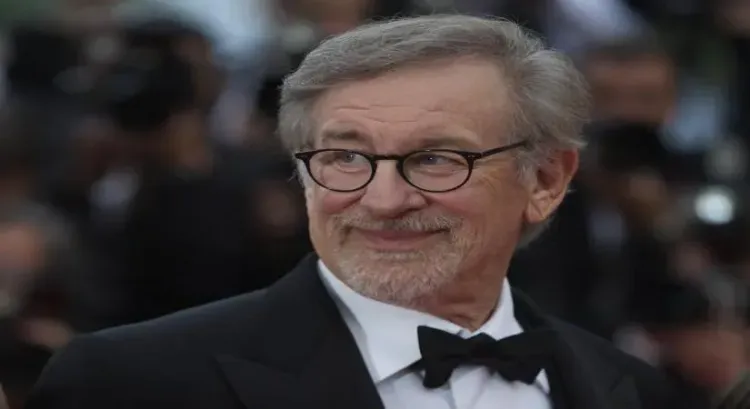
Legendary filmmaker Steven Spielberg has delivered a pointed rebuke of Artificial Intelligence in Hollywood, insisting that no algorithm can replace human creativity — and drawing a firm line between AI as a tool and AI as a creative authority. His remarks came during an appearance on Michelle Obama and Craig Robinson's 'IMO' podcast.
What Spielberg Said
'Where I don't love AI is where it takes a position or there's an empty chair at a writer's table,' Spielberg said. The director of Jaws was unequivocal about the limits he would accept: 'I'm not willing to substitute, you know, because I don't really believe in sentience. I don't believe there is any substitute for the soul. I don't think that is an algorithm that's inventible.'
He went further, describing the idea of a computer claiming to feel more than humans as 'anathema to the way I was raised and how I'll practice my own trade of producing and directing in the future.'
Where He Draws the Line
Spielberg acknowledged that AI could serve a legitimate supporting role — helping with tasks like location scouting and saving production teams 'a lot of legwork.' But he was categorical about creative boundaries. 'Don't tell me how to write my dialogue for this character. Don't tell me where the camera has to go. And also don't tell me what the set should look like, unless AI is simply a tool in a large tool chest of the production designer,' he said.
His bottom line: 'Use AI as a tool, but do not use AI as the final word on anything creative. That's where I draw the line.'
A Broader Hollywood Conversation
Spielberg is far from alone in this position. Leonardo DiCaprio told Time magazine in December that AI is incapable of possessing humanity, and therefore anything it produces cannot be 'authentically' considered art. 'I think anything that is going to be authentically thought of as art has to come from the human being,' DiCaprio said.
DiCaprio illustrated his point with AI-generated music mashups — noting that while technically impressive, they 'dissipate into the ether of other internet junk' because 'there's no anchoring to it. There's no humanity to it, as brilliant as it is.'
Why This Matters for the Industry
The debate over AI's role in Hollywood has intensified following the 2023 SAG-AFTRA and WGA strikes, in which AI protections were a central demand. Spielberg's remarks carry particular weight given his five-decade career spanning blockbuster entertainment and prestige cinema. This comes amid growing pressure from studios to use generative AI tools to cut production costs — a direction that writers, directors, and actors have consistently pushed back against.
As AI capabilities advance rapidly, the creative community's resistance — now voiced by figures of Spielberg's stature — is likely to shape how studios negotiate its use in coming contract cycles.
Point of View
And the economic incentive to expand that use is real. When the director of Jaws and Schindler's List says AI at the writer's table is a red line, it reframes the debate from a labour grievance into an artistic principle — harder to dismiss. Yet the tension is unresolved: Spielberg himself concedes AI has utility in logistics. The industry's challenge is that the line between 'tool' and 'creative authority' is precisely what studios and AI vendors are working to blur. Without contractual specificity, goodwill statements from celebrated directors may not hold.
NationPress
11 Oct 2026
Frequently Asked Questions
What did Steven Spielberg say about AI in filmmaking?
Spielberg said he does not believe there is any substitute for the human soul in creative work, and that AI must never be 'the final word on anything creative.' He made these remarks on Michelle Obama and Craig Robinson's 'IMO' podcast, drawing a clear boundary between AI as a production tool and AI as a creative decision-maker.
Where did Spielberg make these comments about AI?
Spielberg spoke about AI during his appearance on the 'IMO' podcast hosted by Michelle Obama and Craig Robinson. The remarks were reported in May 2025.
Does Spielberg think AI has any legitimate use in Hollywood?
Yes, Spielberg acknowledged AI could help with practical tasks such as location scouting, describing it as potentially saving productions 'a lot of legwork.' His objection is specifically to AI making creative decisions — on dialogue, camera placement, or set design.
What did Leonardo DiCaprio say about AI and art?
DiCaprio told Time magazine in December that AI is incapable of possessing humanity, and therefore cannot produce work that is 'authentically' considered art. He argued that AI-generated music mashups, however technically impressive, lack the human anchoring that defines genuine artistic expression.
Why is the Hollywood debate over AI significant?
AI protections were a central demand during the 2023 SAG-AFTRA and WGA strikes, and studios are under commercial pressure to use generative AI to reduce costs. Statements from figures like Spielberg and DiCaprio carry weight in shaping public and contractual norms around AI's permissible role in film and television production.