Did Sri Lanka Achieve Record Foreign Tourist Arrivals in 2025?
Synopsis
Sri Lanka has made headlines with its record-breaking foreign tourist arrivals in 2025, achieving over 2.36 million visitors and earning 3.2 billion USD in tourism revenue despite the calamities caused by Cyclone Ditwah. As authorities set ambitious targets for 2026, the tourism sector is poised to play a vital role in the nation's economic recovery.
Key Takeaways
Sri Lanka recorded over 2.36 million foreign tourist arrivals in 2025.
Tourism revenue reached 3.2 billion US dollars.
Despite Cyclone Ditwah, tourist inflows remained robust.
Sri Lanka targets 3 million tourist arrivals for 2026.
The cyclone caused an estimated 4.1 billion US dollars in damages.
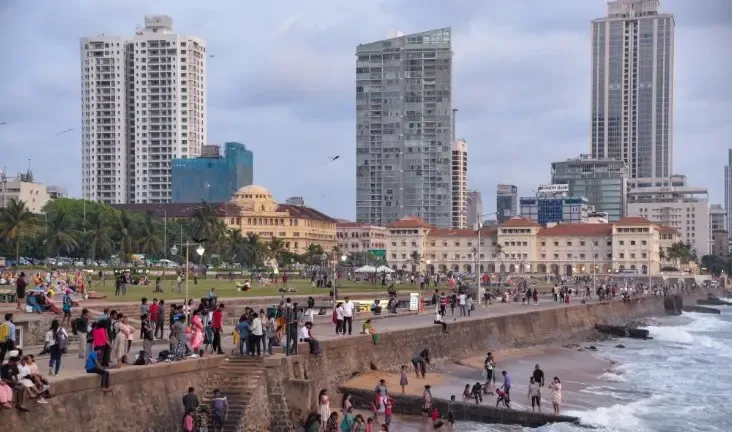
Colombia, Jan 6 (NationPress) In an impressive turn of events, Sri Lanka achieved its highest-ever record for foreign tourist arrivals in 2025, with tourism revenues soaring to unprecedented levels despite the challenges posed by Cyclone Ditwah, as disclosed by the nation's foreign minister during a media conference.
The Minister of Foreign Affairs, Foreign Employment and Tourism, Vijitha Herath, announced on Monday that the country welcomed over 2.36 million foreign tourists throughout the year, marking the largest figure documented in a single calendar year.
Tourism earnings reached 3.2 billion US dollars in 2025, solidifying the sector's role as the second-largest source of foreign currency for the nation, the minister noted.
Despite the adverse effects of Cyclone Ditwah, which impacted the island at the close of November, tourist inflows remained robust. The minister indicated that arrival numbers persisted following the calamity, bolstered by supportive policies and promotional initiatives, according to reports from Xinhua news agency.
Sri Lanka has set a target of a minimum of 3 million foreign tourist arrivals for 2026, representing an increase of roughly 27 percent compared to 2025 statistics. Authorities anticipate that this tourism growth will assist in the nation's economic recovery efforts, especially as the overall growth forecasts for 2026 were downgraded to 2.9 percent by the International Monetary Fund in the wake of the cyclone.
Additionally, a report from the World Bank estimates that the direct physical damage caused by Cyclone Ditwah in Sri Lanka amounts to 4.1 billion US dollars, roughly 4 percent of the country's GDP.
The Global Rapid Post-Disaster Damage Estimation (GRADE) report presents an initial evaluation to aid emergency response and recovery planning. This model-based analysis estimates direct damages to physical assets but does not account for income losses, production losses, or comprehensive recovery and reconstruction costs.
The Central Province suffered the most severe impacts, with damages in the Kandy district alone estimated at 689 million dollars, primarily due to flooding and landslides, as reported.
Infrastructure sustained the highest share of damage, estimated at around 1.74 billion dollars, which constitutes 42 percent of total losses. Damage to residential properties and personal belongings was estimated at 985 million dollars.
Agriculture faced losses of approximately 814 million dollars, impacting paddy and vegetable farming, livestock, inland fisheries, and agricultural infrastructure, raising alarms regarding food security. Non-residential buildings, including schools, hospitals, and businesses, experienced damages estimated at 562 million dollars, according to the World Bank.
The report cautioned that existing poverty and susceptibility to climate risks could hinder recovery efforts, particularly affecting women, children, the elderly, and female-headed households. The World Bank has mobilized up to 120 million dollars from ongoing projects to facilitate immediate recovery and restore essential services.
The cyclone, among the most intense and devastating in the country’s recent history, impacted nearly 2 million people and approximately 500,000 families across all 25 districts.
Point of View
This remarkable achievement in tourism reflects the resilience and determination of Sri Lanka. Despite facing significant challenges such as Cyclone Ditwah, the country has managed to attract millions of tourists, showcasing its appeal and the effectiveness of its recovery strategies. The target for 2026 is ambitious but necessary for economic revitalization, particularly in the wake of recent disasters.
NationPress
4 Oct 2026
Frequently Asked Questions
What was the record number of foreign tourists in Sri Lanka for 2025?
Sri Lanka welcomed over 2.36 million foreign tourists in 2025, marking its highest number ever recorded in a single year.
How much revenue did Sri Lanka's tourism sector generate in 2025?
The tourism sector in Sri Lanka generated approximately 3.2 billion US dollars in 2025.
What impact did Cyclone Ditwah have on tourism?
Despite the challenges posed by Cyclone Ditwah, tourist arrivals remained strong due to supportive policies and promotional initiatives.
What is Sri Lanka's target for foreign tourist arrivals in 2026?
Sri Lanka aims to achieve a minimum of 3 million foreign tourist arrivals in 2026, representing a 27 percent increase from 2025.
What damage did Cyclone Ditwah cause in Sri Lanka?
Cyclone Ditwah caused an estimated 4.1 billion US dollars in direct physical damage, affecting infrastructure, agriculture, and residential properties.