Delhi Assembly students get democracy lesson; girls tie rakhi on Speaker
Synopsis
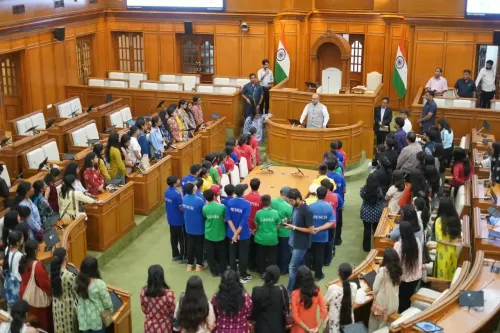
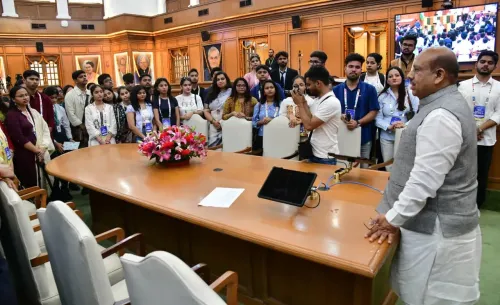
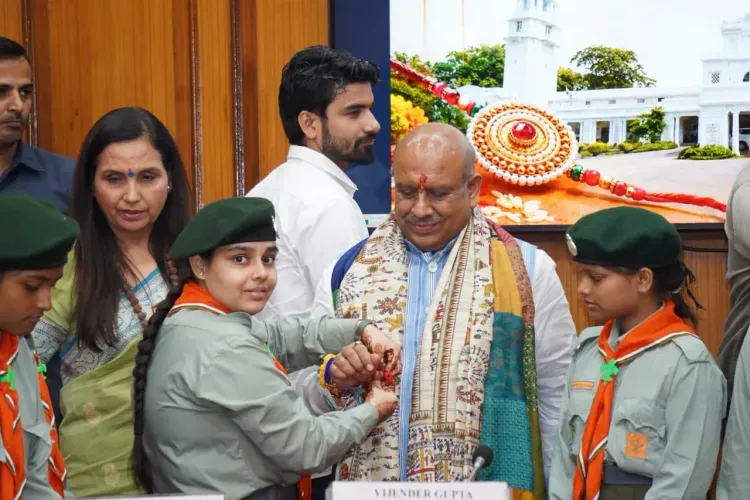
Girls tied rakhis on Delhi Assembly Speaker Vijender Gupta's wrist as students from 15 schools got a rare inside look at the legislature — touring the 1912-built chamber, watching a film narrated by Anupam Kher, and receiving a century-spanning commemorative book. It was civics class, live.
Key Takeaways
Students from 15 Delhi schools visited the Delhi Legislative Assembly on 27 August .
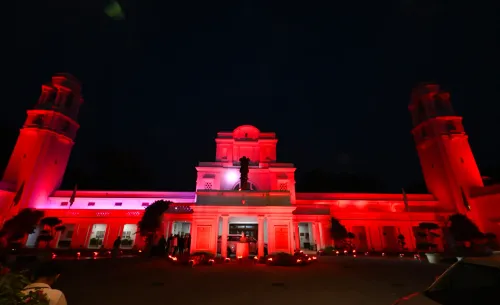
Girl students tied rakhis on the wrist of Speaker Vijender Gupta , who called it 'a binding promise between democratic institutions and the future generation.' The Assembly building, constructed in 1912 , once housed the Central Legislative Assembly and carries the legacy of Vitthalbhai Patel .
Students received Ek Shatabdi Yatra , a commemorative publication documenting 100 years of legislative history.
A short film on the Assembly's evolution, narrated by Padma Bhushan awardee Anupam Kher , was screened during the visit.
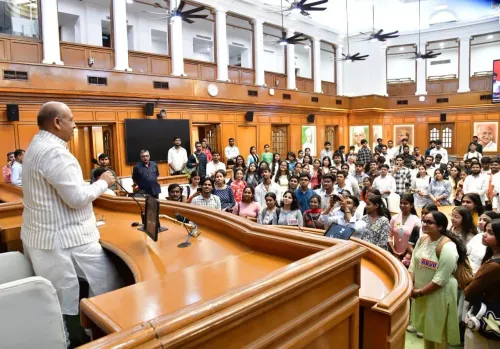
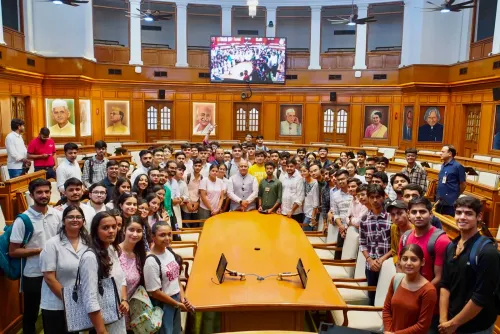
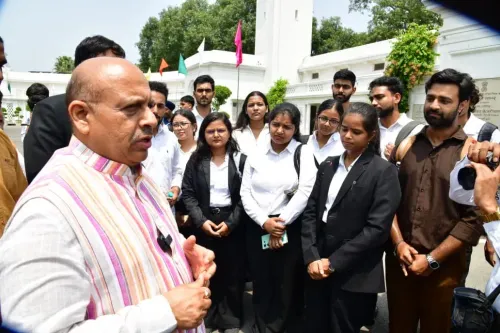
Students from over a dozen Delhi schools visited the Delhi Legislative Assembly on 27 August, receiving a first-hand introduction to India's parliamentary processes — and marking the occasion with a Raksha Bandhan gesture as girls tied rakhis on the wrist of Speaker Vijender Gupta. The visit offered young citizens a rare, immersive look at the institution that governs the capital.
Speaker's Message to Students
Speaker Vijender Gupta welcomed the students warmly, saying the thread of Rakhi is 'not just a symbol of protection, but a binding promise between our democratic institutions and the future generation to build a strong, aware, and responsible India.' He urged students to excel in academics and lead with high moral values, underscoring that the vitality of a democratic society depends on an informed, aware, and active youth.
A Journey Through Parliamentary Heritage
The visit began with an orientation on the historical significance of the Assembly building itself. Constructed in 1912, the structure once housed the historic Central Legislative Assembly and carries the legacy of figures such as Vitthalbhai Patel. Students also learned about the Delhi Assembly's role in democratic governance since its re-establishment in 1993.
A comprehensive briefing on legislative procedures explained how laws are crafted, debated, and passed. This was complemented by a short film on the institution's evolution, featuring a voice-over by Padma Bhushan awardee Anupam Kher.
Commemorative Publication and Chamber Tour
Each student was presented with Ek Shatabdi Yatra, a commemorative coffee table publication documenting a century of legislative history. The visit concluded with a guided walkthrough of the Assembly House chamber, giving students a direct look at the operational heart of local governance.
Schools That Participated
The event drew enthusiastic participation from students across 15 institutions, including Mount Abu Public School, Mahavir Senior Model School, Lovely Public School, Evergreen Public School, Mayur Public School, Jain Bharti Public School, Remal Public School, Vidhya Bharti School, Hansraj Model School, DAV School, ASN Senior Secondary School, Greenfields School, Abhinav Public School, Bal Bhavan Public School, and Saraswati Public School.
Initiatives like these reflect a broader push to connect young citizens with democratic institutions early, with Speaker Gupta noting that direct exposure can channel youth curiosity into meaningful civic engagement and public service. Further such outreach programmes are expected in the coming months.
Point of View
A balance that most such visits fail to strike. The participation of 15 schools in a single session also signals scale, not tokenism. The real test is whether these visits are one-off optics or part of a structured, recurring curriculum that the Assembly commits to year-round.
NationPress
11 Oct 2026
Frequently Asked Questions
What happened during the Delhi Assembly student visit on 27 August?
Students from 15 Delhi schools visited the Delhi Legislative Assembly on 27 August for an immersive civic education programme. Girl students tied rakhis on the wrist of Speaker Vijender Gupta, and the visit included a tour of the Assembly chamber, a screening of an institutional film narrated by Anupam Kher, and a briefing on how laws are made.
Who is Vijender Gupta and what did he say at the event?
Vijender Gupta is the Speaker of the Delhi Legislative Assembly. At the event, he said the rakhi thread represents 'a binding promise between democratic institutions and the future generation' and encouraged students to pursue academics with high moral values.
What is the historical significance of the Delhi Assembly building?
The Delhi Assembly building was constructed in 1912 and originally housed the Central Legislative Assembly. It is associated with figures like Vitthalbhai Patel and has served as the seat of Delhi's legislative governance since the Assembly was re-established in 1993.
What is 'Ek Shatabdi Yatra'?
Ek Shatabdi Yatra is a commemorative coffee table publication documenting a century of legislative history in Delhi. It was presented to students as part of the 27 August visit to the Delhi Assembly.
Which schools participated in the Delhi Assembly visit?
Fifteen schools participated, including Mount Abu Public School, Mahavir Senior Model School, Lovely Public School, Evergreen Public School, Mayur Public School, Hansraj Model School, DAV School, Greenfields School, and several others.