Supreme Court Dismisses Challenge to Vande Mataram Directive
Synopsis
The Supreme Court has dismissed a petition against the government's advisory on singing 'Vande Mataram', stating it is not mandatory and contains no penalties. The directive aims to promote respect for the national song, not enforce compliance.
Key Takeaways
Supreme Court dismissed a plea regarding Vande Mataram.
The Centre's circular is advisory and does not mandate compliance.
Concerns about social pressure were deemed speculative .
Vande Mataram has significant historical importance .
Prime Minister Modi emphasized its role in national unity.
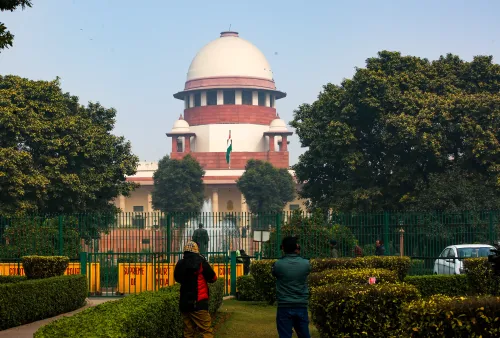
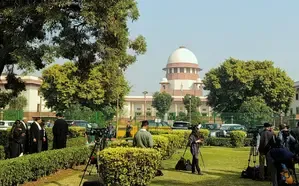
New Delhi, March 25 (NationPress) The Supreme Court on Wednesday rejected a petition that contested the Centre’s recent directive concerning the performance of the national song ‘Vande Mataram’ at public and official gatherings, stating that the plea was “premature” since the guidelines do not enforce compliance or suggest any penalties.
A Bench led by Chief Justice of India (CJI) Surya Kant, alongside Justices Joymalya Bagchi and Vipul M. Pancholi, noted that the notification issued on January 28 by the Union government was merely advisory in nature.
During the hearing, CJI Kant emphasized that the circular does not impose a requirement to sing ‘Vande Mataram’. “We will address these concerns when there are penalties or if it becomes mandatory. This notification is advisory and carries no penalties,” the Supreme Court stated.
Senior advocate Sanjay Hegde, representing the petitioner, contended that even without explicit penalties, the advisory could create a scenario of indirect coercion.
He claimed that individuals who decline to sing or show respect for the national song might face social pressure or discrimination. “There exists a burden on those who refuse. Under the guise of an advisory, individuals can be coerced into compliance,” Hegde argued, asserting that patriotism cannot be enforced and the Constitution must safeguard individual beliefs.
However, the CJI Kant-led Bench remarked that the fears expressed by the petitioner about potential discrimination were speculative at this moment. “Should there be any penalties or instances of discrimination, you are welcome to return to this Court,” the Supreme Court concluded, dismissing the plea.
The petition questioned the Centre’s circular, which recommended that ‘Vande Mataram’ be performed in educational settings and public events.
The government has clarified that the guideline aims to foster respect for the national song and is not legally enforceable. This matter also arises in the context of a renewed focus on the historical and cultural significance of ‘Vande Mataram’.
Recently, Prime Minister Narendra Modi referenced the “enduring spirit” of ‘Vande Mataram’ during a Lok Sabha discussion commemorating 150 years since its inception.
He characterized it as a unifying anthem that played a crucial role in India’s independence struggle and continues to motivate future generations.
Originally composed by Bankim Chandra Chattopadhyay in 1875 and later featured in his novel Anandamath, ‘Vande Mataram’ was set to music by Rabindranath Tagore and was first presented at the 1896 Indian National Congress session.
The song emerged as a significant rallying cry during the independence movement, inspiring leaders such as Lala Lajpat Rai, Bal Gangadhar Tilak, Bhagat Singh, and Subhas Chandra Bose. In 1950, India’s first President, Rajendra Prasad, recognized ‘Vande Mataram’ as the national song.
Point of View
It's essential to view this ruling as a balancing act between promoting national pride and safeguarding individual freedoms. The Supreme Court's decision reflects a cautious approach, stressing non-mandatory compliance while acknowledging concerns about potential social pressure.
NationPress
23 Sept 2026
Frequently Asked Questions
What was the Supreme Court's ruling on the Vande Mataram plea?
The Supreme Court rejected the petition, stating the Centre's advisory on singing Vande Mataram is not mandatory and does not impose penalties.
Who represented the petitioner in the Supreme Court?
Senior advocate Sanjay Hegde represented the petitioner during the proceedings.
What did the Centre's circular suggest?
The circular recommended that Vande Mataram be sung in educational institutions and public functions to promote respect for the national song.
What historical significance does Vande Mataram hold?
Vande Mataram, composed by Bankim Chandra Chattopadhyay, served as a rallying cry during India's independence movement and was recognized as the national song in 1950.
Did the Supreme Court mention any consequences for non-compliance?
The Supreme Court clarified that there are no penal consequences associated with the advisory on singing Vande Mataram.